



Posted in البوابات, بوابات الشبوك on نوفمبر 04, 2026
Sliding & Swing Fence Gates in Saudi Arabia

How to Choose Sliding and Swing Fence Gates in Saudi Arabia
A gate is not simply an opening in a fence. In many projects, it is the component that moves the most, receives the most daily stress, and reveals the quality of installation after months of use. A fence may remain straight and solid, while a heavy gate that is poorly balanced or installed on an unsuitable surface begins to sag, rub against the ground, or become difficult to open.
Gate selection starts with the movement type: do you have enough side space for a sliding gate, or is the site better suited to a swing gate that opens inward or outward? What type of vehicles will pass through? Cars only, or trucks and heavy equipment? Will the gate operate ten times a day or once a week? Do you need a manual lock, or should the system be prepared for future automation?
A common mistake is choosing the gate based only on appearance or price, then discovering that the ground is uneven, the leaf collides with the road, the sliding track fills with sand, the gate post is not designed to carry the load, or the locking system is unsuitable for actual operation.
This guide explains a practical approach to selecting, designing, installing, and maintaining sliding and swing fence gates in Saudi Arabia, covering dimensions, movement type, posts, foundations, locks, automation, maintenance, and handover, with a focus on real-world use across warehouses, commercial sites, residential properties, projects, farms, and other fenced locations without repeating previously covered general fencing topics.
 Call Now
 WhatsApp
Choose the gate movement type before choosing its appearance. A swing gate requires clear space in front of or behind the opening, while a sliding gate requires side clearance and a suitable movement path. Ignoring this point may force major modifications to the fence or entrance later.
Gate width should not be based on vehicle width alone. Turning space, entry angle, vehicle type, road width, and post locations must also be considered. A truck entering at an angle requires more clearance than a vehicle entering in a straight line.
Gate posts are not the same as standard fence posts. They receive movement loads, weight, and torque, so foundations, posts, hinges, or sliding systems must match the gate weight and operating method.
For maintenance, focus on moving parts: hinges, rollers, tracks, locks, alignment, and welds. Correcting early sagging or friction is far better than waiting until the system suffers major damage.
What is the real role of a gate within a fence system?
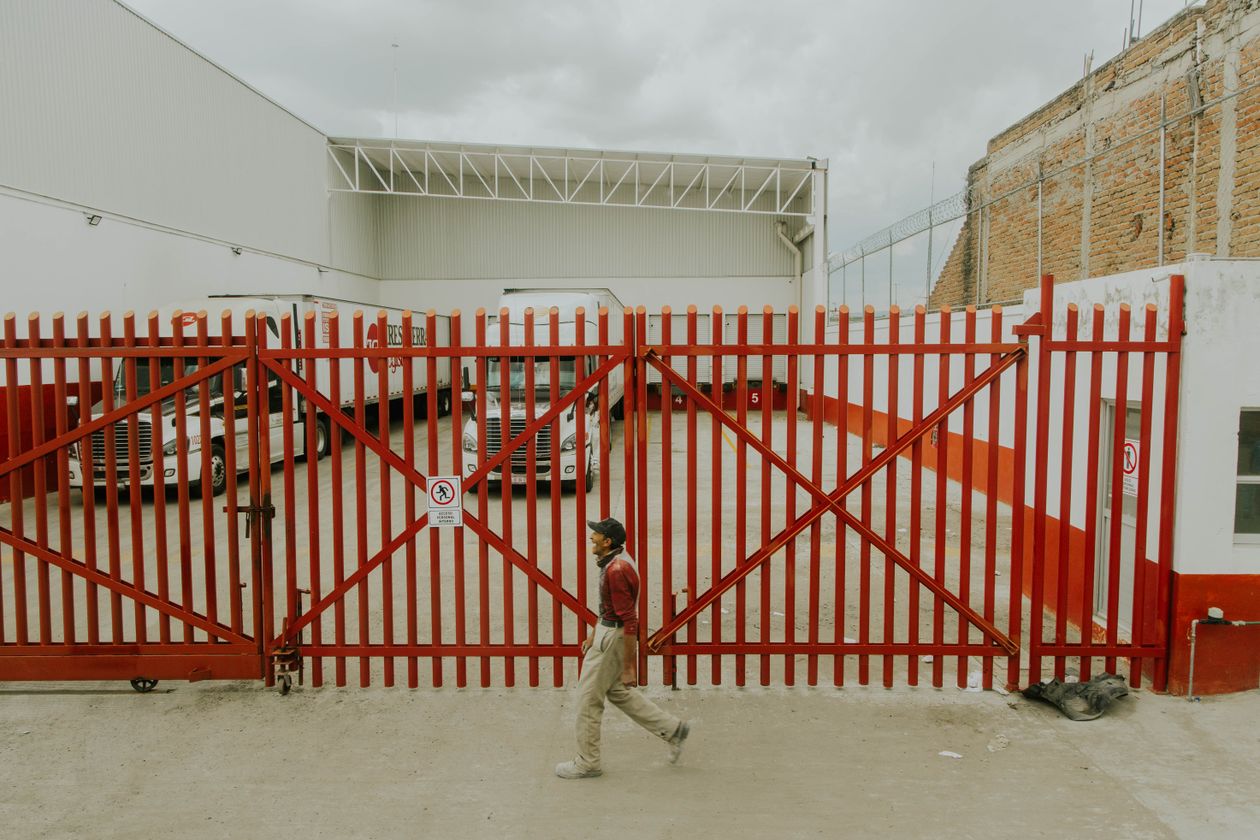
The fence defines the perimeter, but the gate controls movement. Vehicles, people, maintenance crews, and equipment pass through it, so it receives more repeated mechanical stress than most fixed parts of the fence.
Gate quality directly affects daily site operation. A heavy, slow, or misaligned gate makes access difficult even if the surrounding fence is excellent.
The gate can also become a weak point if the lock, posts, or hinges are unsuitable.
For this reason, it should be designed as its own system within the fencing project rather than simply as an empty space left between two posts.
What are the main types of fence gates?
The two most common types are Swing Gates and Sliding Gates.
Swing gates rotate around hinges fixed to the post and may consist of one leaf or two leaves.
Sliding gates move horizontally along the fence line, either on a ground track or through another supporting system depending on the design.
The choice depends on available space, ground conditions, opening width, operating frequency, and vehicle type.
When is a swing gate the better option?
A swing gate is suitable when there is enough clear space in front of or behind the opening for the full movement of the leaf.
It is often mechanically simpler than a sliding system, especially for medium-sized openings and relatively light usage.
A single leaf can be used for smaller openings, while two leaves reduce the length and load of each side.
However, wind and ground slope must be considered because large swing leaves are more sensitive to both.
When is a sliding gate more practical?
A sliding gate is useful when there is not enough room for leaves to swing inward or outward.
It can also work well for wide entrances and frequent vehicle movement when properly designed.
It requires enough side space for the gate leaf to travel, and that area must remain free from buildings, trees, services, or other obstacles.
If the gate uses a ground track, drainage and regular cleaning become important to prevent sand, gravel, or debris from affecting operation.
How do you compare sliding and swing gates before choosing?
| Factor | Swing Gate | Sliding Gate | Decision Note |
|---|---|---|---|
| Movement Space | Needs front or rear clearance | Needs side clearance | Inspect the site first |
| Ground Conditions | Affected by slope | Track depends on cleanliness and alignment | Levels are important |
| Wide Openings | May need two leaves | Often practical | Depends on site conditions |
| Maintenance | Hinges and alignment | Rollers, track, alignment | Operating frequency matters |
How do you determine the opening direction of a swing gate?
Review vehicle movement, pedestrian paths, and the road outside the property before deciding.
An outward-opening gate may conflict with a public road or vehicle path, while an inward-opening gate requires enough clear space inside the site.
Make sure the fully open gate does not block an internal access road or hit parked vehicles.
In busy sites, draw the movement path before installation instead of making the decision during construction.
How do you determine the clear gate opening width?
Clear width is the actual usable opening after the gate is fully open, not simply the approximate distance between posts before hinges or sliding components are installed.
Identify the largest vehicle expected to use the entrance, then review how it will approach.
A vehicle entering directly needs less space than one turning in from a narrow road at a sharp angle.
Add a suitable operating margin instead of designing the gate to match vehicle dimensions exactly.
How does vehicle type affect gate design?
Passenger cars are very different from trucks, tractors, and project equipment.
Large vehicles need wider openings and more turning space, and the gate may also need greater durability because of higher operating frequency.
If the site receives tankers or long trailers, their movement path should be reviewed on the plan before approving the gate opening.
Do not design the entrance around an office vehicle if trucks are the largest actual users.
Why is turning space around the gate as important as gate width?
The gate opening may be wide, but the vehicle may still be unable to approach it at a suitable angle.
This often happens when the outside road is narrow or there are walls, curbs, or parked vehicles opposite the entrance.
Review the clear area in front of the gate, nearby corners, and parking positions.
On larger projects, relocating the gate by a few meters can sometimes be more effective than increasing its width unnecessarily.

How do you determine gate height relative to the fence?
In many cases, matching the gate height with the surrounding fence creates a more consistent system, but some projects may require a different treatment.
If the gate is significantly higher, weight and wind exposure increase.
If the gate is much lower than the fence, it may become a visual and functional weak point.
If privacy panels or upper extensions are included, their effect on structure and movement must be considered.
How do you select gate posts and why are they different from standard fence posts?
A gate post receives repeated weight and torque, especially with swing gates.
A standard fence post should not automatically be used simply by adding heavy hinges to it.
The post section, wall thickness, and fixing method should match the gate leaf width, height, and weight.
In sliding gates, guide posts and receiving posts perform different functions and should be designed as part of one system.
How do concrete foundations affect gate life?
If the post moves or tilts, the problem quickly appears in the hinges, lock, or sliding track.
The foundation should therefore be designed according to soil conditions, gate size, and actual loads.
Do not use a small foundation simply because the surrounding fence posts use something similar.
Filled ground or weak soil may require additional attention to support and stability.
How do you choose hinges for swing gates?
Hinges must support the gate weight and allow smooth movement without excessive play.
Adjustable hinges can be useful where the system allows them because alignment may require correction after operation begins.
Check fixing method, weld quality, and lubrication requirements.
Weak hinges can cause the far end of the gate to sag even when the gate frame itself is strong.
How do you plan the track for a sliding gate?
The track should be straight and level according to the requirements of the selected system.
Review drainage and prevent sand, gravel, or debris from collecting in the movement path.
If vehicles cross the track, it must be designed for that operating condition.
Avoid placing a track in an area constantly exposed to dirt from an unpaved road without planning regular cleaning.
When should you consider a Cantilever sliding gate?
This type is used when sliding movement is required without a ground track crossing the vehicle opening.
It can be useful in locations with heavy dirt, frequent vehicle movement, or where maintaining a ground track is difficult.
However, it requires sufficient side space and a properly designed supporting structure and is generally more complex than basic sliding systems.
It should therefore be selected because it suits the site conditions, not simply because it is a more advanced system.
| Gate Component | What Affects It? | Problem Sign | What Should Be Checked? |
|---|---|---|---|
| Gate Post | Weight and torque | Tilting or alignment change | Post and foundation |
| Hinges | Weight and operating frequency | Friction or sagging | Lubrication, welds, adjustment |
| Rollers | Load and track | Noise or resistance | Wear and alignment |
| Lock | Alignment and usage | Difficulty closing | Receiving point and alignment |
How does the ground surface affect gate selection?
A level concrete surface creates very different operating conditions from soil, gravel, or uneven asphalt.
Swing gates need enough clearance throughout the opening path so the leaves do not scrape the ground.
Sliding gates with ground tracks require a surface that can remain straight and reasonably clean.
If the ground level will change later due to asphalt or paving, the final finished level should be considered before gate installation.
What should you do if the entrance is sloped?
A slope can prevent a swing gate from opening if the leaf touches the ground during movement.
The opening direction may need to change, ground clearance may need adjustment, or another gate system may be more suitable.
For sliding gates, the effect of the slope on movement and track installation should also be reviewed.
Do not solve the problem by randomly cutting the bottom of the gate after fabrication. Site levels should be included in the design from the beginning.
How do you choose the right gate lock?
The selection depends on the number of users, the required level of control, and site operation.
A simple mechanical lock may be enough for a low-use site, while locations with frequent movement may need a more organized access solution.
The locking point should align naturally and should not require the user to lift or push the leaf into place.
If the lock does not line up easily with its receiver, the underlying alignment problem should be corrected instead of forcing the lock to work.
When is manual gate operation the better choice?
Manual operation can be appropriate when usage is limited and there is no need to open the gate repeatedly from inside a vehicle.
It is mechanically simpler and reduces the number of devices that require maintenance.
However, the gate should not be so heavy that daily use becomes difficult.
If two people are required to move it, the design or balance should be reviewed.
When is gate automation a practical choice?
Automation is useful when the gate operates frequently or needs to be controlled remotely or from a dedicated access point.
Before adding a Motor, confirm that the gate itself moves smoothly by hand. Automation does not fix a poor mechanical gate.
Power supply, control devices, sensor locations, and cable routes should be planned during the design stage.
There should also be a suitable method for manual operation during power failure according to the site's requirements.

What safety considerations apply to moving gates?
Any heavy moving gate should be treated carefully, especially when automated.
Review movement zones, potential pinch points, and areas where people or vehicles may stand.
Do not place control devices where the user is forced to stand inside the path of the moving leaf.
Safety sensors or protection systems depend on the automation type and project requirements and should be handled by a qualified specialist.
How does wind affect large gates?
An open chain-link gate is generally less affected by wind than a gate covered with solid panels.
Adding Privacy Panels or solid sheets creates a larger surface that receives more wind load.
This affects hinges, posts, and the motor if the gate is automated.
Do not add full privacy cladding to a gate originally designed as an open mesh gate without reviewing the structural and operating impact.
When can privacy panels be added to a fence gate?
They can be useful where visibility needs to be reduced, such as selected private properties or commercial sites.
The added weight and increased wind exposure must be reviewed.
Hinges and posts may require stronger specifications if the gate becomes heavier.
On sliding gates, extra weight also affects rollers, motor sizing, and movement performance.
How do you choose the finish for an outdoor gate in Saudi Arabia?
Outdoor gates are exposed to sun, dust, rain, and repeated use, so surface protection matters.
Galvanizing or coating systems should be selected according to the project environment and required specification.
Welding and cutting areas should be checked after fabrication and installation.
Hinges, rollers, and moving components need suitable protection and maintenance because they operate more actively than fixed fence sections.
How is a fence gate installed in an organized way?
Installation begins by confirming levels, clear opening dimensions, and post locations.
Foundations are then completed and allowed to reach an appropriate condition before the gate load is applied.
Posts are installed and checked for vertical alignment, followed by hinges or the sliding track depending on the gate type.
After the gate leaf is mounted, alignment, locking points, and Stops are adjusted.
Final handover should not occur until the gate has been opened and closed repeatedly under realistic operating conditions.
How do you know if the gate alignment is correct?
The gate should move smoothly from fully closed to fully open without a significant change in resistance.
It should not need lifting or extra force at the locking point.
Gaps between the gate leaf and posts should remain reasonably consistent.
A sliding gate should move in a straight line without noticeable side movement or derailment.
Any repeated friction should be corrected before final handover.
How do you inspect a fence gate at handover?
Open and close it several times.
Test the lock repeatedly without pushing or lifting the leaf.
Check that the posts remain stable and do not move.
Inspect welds, paint, edges, and fixing points.
For sliding gates, check rollers, track, guides, and final Stops.
For swing gates, inspect hinges and the stop point in the fully open position.
| Handover Test | Expected Result | Rejection Sign | Action |
|---|---|---|---|
| Opening and Closing | Smooth movement | Friction or resistance | Readjust |
| Lock | Direct alignment | Leaf must be lifted to lock | Correct root cause |
| Posts | Stable and vertical | Movement or tilt | Inspect foundation |
| Finish | Protected and complete | Scratches or exposed welds | Repair before handover |
How do you maintain sliding and swing gates?
Inspect moving components regularly because most gate problems begin there.
On swing gates, check hinges, welds, alignment, and the lock.
On sliding gates, inspect rollers, track, upper guides, and stopping points.
Clean ground tracks from sand, gravel, and debris where applicable.
Address rust or damaged coating early, especially around moving components and welded areas.
What early signs of gate failure should not be ignored?
A new noise during movement.
Increased resistance when opening.
Sagging at the end of the leaf.
A lock that no longer aligns properly.
Vibration in a sliding gate.
A new gap between double leaves.
A gate post beginning to lean.
These signs may appear minor, but they often indicate alignment, hinge, roller, or foundation problems before the issue becomes severe.
What factors determine the cost of fence gates?
Width and height are major factors, but they are not the only ones.
Gate type, frame thickness, mesh or infill material, posts, foundations, hinges or rollers, locking systems, finish, and automation all affect cost.
Sliding gates may require tracks and additional mechanical components, while large swing gates may require stronger posts and hinges.
Ground conditions, slope, and site access difficulty can also affect execution.
This is why two quotations should not be compared only as “a 6-meter gate.” The complete system specification should be reviewed.
| Cost Factor | When It Increases | What Should Be Compared? | Common Mistake |
|---|---|---|---|
| Size | Wider or higher opening | Weight and frame design | Comparing width only |
| Movement Type | Sliding with additional components | Track and rollers | Treating both types as equal |
| Posts and Foundations | Higher weight or weaker soil | Size and fixing method | Using standard fence-post specifications |
| Automation | Motor, control, sensors | Complete system | Comparing motor price only |
| Finish | Harsh outdoor environment | Coating and protection | Ignoring future maintenance |
Do you have a project that needs a sliding or swing fence gate and want to choose the right type, size, and preparation before fabrication?
What are the most common mistakes in fence gates?
The first mistake is selecting the gate type before studying available movement space.
The second mistake is choosing width from vehicle dimensions alone without considering turning movement.
The third mistake is using standard fence posts for a heavy gate.
The fourth mistake is building foundations that do not match the gate load.
The fifth mistake is ignoring the final ground level.
The sixth mistake is installing a swing gate on sloped ground without testing the opening path.
The seventh mistake is placing a sliding track in an area that constantly collects sand without a cleaning plan.
The eighth mistake is using hinges that are not suitable for the gate weight.
The ninth mistake is not providing a proper Stop for the fully open position.
The tenth mistake is ignoring the side space needed for a sliding gate.
The eleventh mistake is adding privacy panels after fabrication without reviewing wind load.
The twelfth mistake is installing a Motor on a gate that does not move smoothly by hand.
The thirteenth mistake is not planning power and control cable routes before installation.
The fourteenth mistake is placing the lock where the leaf must be lifted to engage it.
The fifteenth mistake is ignoring hinge adjustment after the initial operating period.
The sixteenth mistake is failing to clean the sliding-gate track.
The seventeenth mistake is leaving scratches or exposed welded areas untreated.
The eighteenth mistake is not testing the largest expected vehicle at handover.
The nineteenth mistake is comparing quotations only by gate width without reviewing posts and movement systems.
The twentieth mistake is treating the gate as a minor component even though it is often the most actively used part of the fence.
What is the complete checklist before fabricating and installing a fence gate?
Usage:
☐ Site type is known.
☐ Daily opening frequency is known.
☐ Vehicle types are known.
☐ Largest vehicle is identified.
☐ Separate pedestrian access is considered where required.
Gate Type:
☐ Swing or Sliding is selected.
☐ Movement space is available.
☐ Opening direction is clear.
☐ Side clearance for sliding gate is available.
Dimensions:
☐ Clear opening width is defined.
☐ Height is defined.
☐ Road width is known.
☐ Entry angle is reviewed.
☐ Turning space is available.
Posts and Foundations:
☐ Gate posts have dedicated specifications.
☐ Foundations are appropriate.
☐ Soil conditions are known.
☐ Final ground levels are known.
Swing Gate:
☐ Hinges match the weight.
☐ Opening direction is suitable.
☐ Ground does not block movement.
☐ Open-position Stop is provided.
Sliding Gate:
☐ Track is straight.
☐ Drainage is suitable.
☐ Rollers are appropriate.
☐ Side space is available.
☐ End Stops are installed.
Lock:
☐ Lock type is suitable.
☐ Alignment is correct.
☐ Opening and closing are easy.
☐ Keys or access permissions are organized.
Automation:
☐ Actual need is defined.
☐ Manual movement is already smooth.
☐ Power source is planned.
☐ Control system is planned.
☐ Sensors or safety devices are considered.
Handover:
☐ Opening is smooth.
☐ Closing is smooth.
☐ Lock works without lifting the leaf.
☐ Posts are stable.
☐ Welds are complete.
☐ Finish is complete.
☐ Largest vehicle has been tested where required.
How does gate selection change by site type?
Warehouse with Daily Truck Traffic
A wide opening and a movement system that does not obstruct truck access are usually required.
A sliding gate can be practical when sufficient side space is available and the track conditions are suitable.
Small Site with Employee Vehicles
A swing gate may be simpler when there is enough space to open it.
A complex sliding system may not be necessary when usage is limited.
Private Property or Rest House
Appearance and privacy may matter more than in an industrial site.
Double swing gates or sliding gates can both work depending on space, while the weight of privacy panels must be considered.
Large Project Site
The gate should withstand frequent use by trucks and equipment.
Posts, foundations, and tracks should be designed for heavy operational use.
Farm or Service Land
Simplicity and durability are often more important than decorative appearance.
Tractors, tankers, and agricultural equipment should be considered when selecting the opening width.
Site with Frequent Opening Throughout the Day
Ease of operation, automation, and maintenance become major priorities.
The system should not require excessive effort for every opening and closing cycle.
| Site | Likely Movement Type | Priority | Main Challenge |
|---|---|---|---|
| Warehouse | Sliding | Truck movement | Dust and track maintenance |
| Small Site | Swing | Simple operation | Opening space |
| Private Property | Either | Appearance and privacy | Weight and wind |
| Heavy Project Site | Often Sliding | Durability | High-frequency operation |

What are the most common questions about sliding and swing fence gates?
1. Which is better: a sliding gate or a swing gate?
Neither is always better. The correct choice depends on space, ground conditions, opening size, and operating frequency.
2. When should I choose a swing gate?
When enough opening space is available and the entrance width and operating frequency suit this type.
3. When should I choose a sliding gate?
When front or rear opening space is limited or when a wide opening is needed with organized side movement.
4. Does a sliding gate require a lot of side space?
Yes. Side clearance is a fundamental part of the system and must be confirmed before fabrication.
5. How do I determine gate width?
Based on the largest vehicle, its approach path, and turning angle rather than vehicle width alone.
6. Can a normal fence post be used as a gate post?
Not in every case. Many gates require stronger posts because they receive movement loads, weight, and torque.
7. Why does a swing gate sag over time?
The cause may be hinges, the post, foundation, gate weight, or alignment.
8. Why does a sliding gate become difficult to move?
Sand, damaged rollers, a misaligned track, or changed alignment can all increase resistance.
9. Can a swing gate be installed on sloped ground?
In some situations yes, but the slope direction and leaf movement path must be reviewed before fabrication.
10. What is the advantage of a double-leaf swing gate?
It reduces the length and load of each leaf and may work better for some wide openings compared with one very long leaf.
11. Can any gate be automated?
Many gates can be automated, but the mechanical movement must first be suitable and the automation system must match the gate weight and operating frequency.
12. Does the motor solve a heavy gate problem?
No. The gate should move properly by hand before automation is added.
13. Do privacy panels affect the gate?
Yes. They increase weight and wind load and may require stronger hinges, posts, or motor capacity.
14. Does a sliding gate ground track require maintenance?
Yes, especially in dusty or sandy locations where debris can collect in the track.
15. What is the best gate lock?
It depends on access control requirements, user count, and site operation. There is no single lock suitable for every project.
16. How do I know when a gate needs adjustment?
When it begins to rub, requires more force, the lock no longer aligns easily, or new noises appear during movement.
17. How often does a gate need maintenance?
It depends on operating frequency and environmental conditions, but moving parts should be inspected regularly, especially at high-use sites.
18. Is gate price based only on width?
No. Type, height, weight, posts, foundations, hinges or rollers, finish, locking system, and automation all affect cost.
19. What should be tested during handover?
Full opening and closing movement, lock alignment, posts, finish, track or hinges, and vehicle passage where relevant.
20. What information is required to quote a fence gate?
Project location, gate type, width, height, operating frequency, vehicle types, ground condition, slope, automation requirements, lock type, and required finish.

What is the final approach to choosing and installing sliding and swing fence gates?
Start with site movement and gate usage, not appearance.
Choose a swing gate when there is suitable opening space, and a sliding gate when side movement is more practical.
Determine clear opening width based on the largest vehicle and its turning path.
Review gate height and its effect on weight and wind exposure.
Use posts and foundations designed specifically for gate loads rather than automatically using standard fence-post specifications.
For swing gates, focus on hinges, opening direction, and site levels.
For sliding gates, focus on the track, rollers, side space, drainage, and alignment.
Do not select Cantilever or another more complex system unless it clearly solves a real site condition.
Review ground levels and finished surfaces before fabrication.
Choose the lock according to required control and operating conditions.
Do not add a Motor to a gate that does not already move smoothly by hand.
Plan automation, power, controls, and cable routes from the beginning if automation is required.
Review movement zones and safety considerations around heavy or automated gates.
Do not add privacy panels without reassessing weight and wind load.
Choose an appropriate outdoor finish and treat welded or damaged areas after installation.
Accept the gate only after testing its actual operation repeatedly.
Treat noise, friction, sagging, or lock misalignment as early maintenance indicators.
Keep sliding tracks clean and inspect swing-gate hinges regularly.
Compare gate quotations as complete systems including leaves, posts, foundations, movement systems, locks, and finishes, not only by width and height.
At Shobok Rayat Najd, fence gates are treated as a critical operational component within the project. The process begins with studying vehicle movement, available space, ground levels, and operating requirements, followed by selecting the correct sliding or swing system, dimensions, posts, foundations, and locking method, then installation, testing, and maintenance, with the goal of delivering a gate that remains smooth, practical, and durable under real use.
This post is part of a series called Post