

How to Choose Fence Wire Thickness and Galvanizing Type for Saudi Fencing Projects
When evaluating a steel mesh fence, two specifications deserve careful attention: the diameter of the wire and the type of corrosion protection applied to its surface.
A fence can appear strong and professionally finished when newly installed, yet differences in wire diameter, mesh geometry, coating quality, connection details, and environmental exposure can significantly affect its long-term performance.
For contractors and project owners in Saudi Arabia, selecting the right wire thickness is not simply a matter of choosing the largest available diameter. A complete fencing system must balance structural requirements, mesh dimensions, post spacing, support details, corrosion protection, installation conditions, maintenance expectations, and cost.
Galvanizing introduces another important technical consideration. Not all products described as galvanized have the same zinc-coating thickness, manufacturing process, or protection characteristics.
A wire that was galvanized before being welded, for example, may have different protective conditions at its welds than a fabricated mesh galvanized after welding.
The correct selection therefore requires a clear technical specification rather than relying on appearance, marketing terminology, or the quoted price per linear meter.
This guide from Shobok Rayat Najd explains wire diameter, gauge terminology, galvanizing processes, corrosion resistance, inspection methods, procurement requirements, and practical decision-making for fencing projects across Saudi Arabia.
 Call Now
 WhatsApp
Quick Answer: Which Wire Thickness and Galvanizing Type Should You Choose?
Choose fence wire thickness according to the required fencing performance, mesh type, opening dimensions, fence height, support design, and anticipated service conditions.
Specify wire diameter in millimeters rather than relying on an ambiguous gauge description.
For corrosion protection, distinguish between electro-galvanized and hot-dip galvanized products, and verify whether galvanizing occurs before or after mesh fabrication.
In exposed or demanding environments, the appropriate zinc-coating specification and quality of application can be just as important as wire diameter.
No single wire diameter or galvanizing method is universally suitable for every Saudi fencing installation. The final choice should be supported by project specifications, relevant material standards, and site conditions.
1. Why Does Fence Wire Thickness Matter?
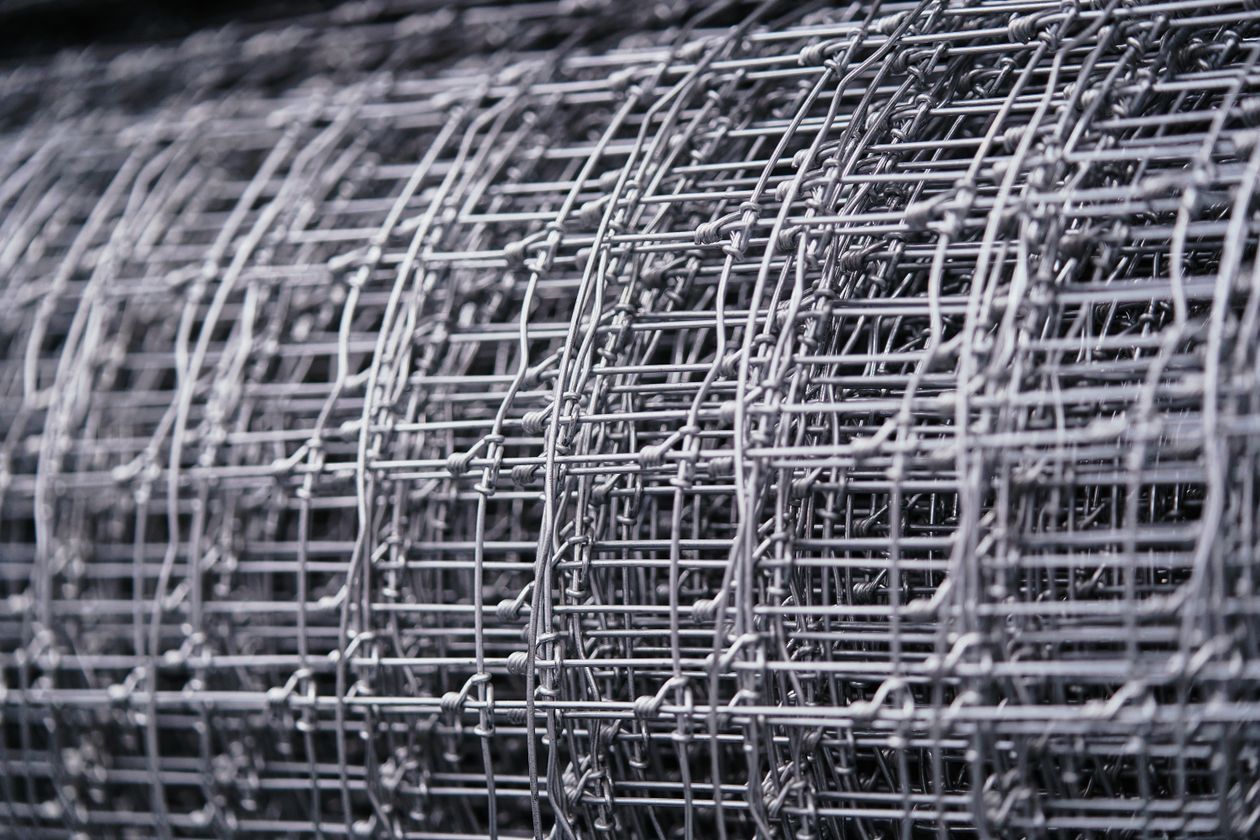
Wire thickness is one of the fundamental physical characteristics of a metal mesh fence.
When other material properties and geometric conditions are comparable, increasing the wire diameter generally increases the metallic cross-sectional area of each wire.
This can influence resistance to deformation and the forces that individual wires can carry.
However, the performance of an installed fence is not determined by wire thickness alone.
A fence with thick wire but poorly designed posts, weak connections, or inadequate foundations may perform worse than a complete system with smaller wire that has been designed correctly for its intended use.
The project should therefore specify wire thickness as part of the overall fence-system requirements.
2. What Is Fence Wire Diameter?
Wire diameter is the dimension measured across the circular cross-section of an individual wire.
It is normally expressed in millimeters in technical specifications used for fencing procurement.
For example, a supplier may offer steel mesh manufactured using nominal wire diameters of 2.5 mm, 3.0 mm, or 4.0 mm.
These values are illustrative examples of specification formats, not recommendations for every application.
Two additional questions are important:
- Is the specified diameter measured before or after coating?
- What manufacturing tolerance applies to the declared diameter?
If suppliers use different measurement definitions, two products advertised with apparently identical diameters may contain different amounts of steel.
For accurate procurement, the technical documentation should clearly distinguish the steel-core diameter, the finished coated diameter where applicable, and the permitted tolerances.
3. Wire Gauge vs Millimeters: Why the Difference Matters
Fencing materials are sometimes advertised using wire-gauge numbers.
The difficulty is that different gauge systems exist, and the numerical relationship between gauge and physical diameter depends on the system being used.
As a result, a description such as "10-gauge fence wire" is incomplete unless the applicable gauge system is identified.
A project owner comparing quotations should ask for the actual wire diameter in millimeters.
This removes ambiguity and allows the materials to be compared using a common measurement.
The same principle applies when reviewing imported fencing products advertised using unfamiliar regional gauge conventions.
4. How Does Wire Thickness Affect Fence Strength?
For a circular wire, the cross-sectional area increases with the square of the diameter.
The relationship is:
Wire cross-sectional area=π × diameter² ÷ 4
Therefore, increasing diameter can produce a proportionally larger increase in steel cross-sectional area.
For example, a 4 mm wire has approximately 1.78 times the cross-sectional area of a 3 mm wire.
This comparison concerns cross-sectional area only. It does not mean that every complete fence built with 4 mm wire will be exactly 1.78 times as strong as one built with 3 mm wire.
Installed performance also depends on steel grade, mesh geometry, connections, posts, foundations, and loading conditions.
Wire diameter should therefore be selected through a complete technical evaluation.
5. Why Must Mesh Opening Size Be Considered With Wire Diameter?
A fencing mesh consists of wires and the spaces between them.
The size and geometry of those openings influence the structure, appearance, material quantity, and suitability of the fence for its intended application.
A thick wire combined with very large openings may behave differently from a smaller wire used with closely spaced openings.
Mesh opening size also affects the ability of objects to pass through the fence and the visual transparency of the installation.
Consequently, a technical specification should not identify wire diameter while leaving mesh size undefined.
The combination of these parameters is more informative than either measurement on its own.
| Specification | What It Describes | Why It Matters | What to Verify |
|---|---|---|---|
| Wire Diameter | Thickness of each steel wire | Material quantity and mechanical behavior | Millimeter measurement and tolerance |
| Mesh Opening | Distance and geometry between wires | Fence function and structure | Nominal opening dimensions |
| Steel Grade | Mechanical characteristics of the wire | Strength and deformation behavior | Material documentation |
| Coating Type | Method of corrosion protection | Resistance to environmental deterioration | Process and coating specification |
| Post Spacing | Distance between supports | Overall system stability | Approved installation design |
| Fence Height | Installed vertical dimension | Loading and support requirements | Project drawings |
6. Selecting Wire Thickness for Chain-Link Fencing
Chain-link fencing is commonly manufactured from interwoven steel wires that form diamond-shaped openings.
Because the wires are woven rather than rigidly joined at every crossing, the installed system relies on appropriate tensioning and supporting components.
When selecting chain-link wire thickness, evaluate the intended height, opening size, expected use, exposure conditions, and the supporting post arrangement.
A heavier wire may be appropriate for certain demanding applications, but it also affects material weight and handling.
The performance of the chain-link system depends on terminal posts, intermediate posts, tension components, and installation quality.
The wire diameter cannot compensate for inadequate tensioning or unsuitable support details.
7. Selecting Wire Thickness for Welded Mesh Fencing
Welded mesh fencing consists of wires joined at their intersections.
Depending on the product, the mesh may be supplied in rolls or manufactured as more rigid panels.
Wire thickness influences the weight and mechanical behavior of the mesh, but the integrity of welded intersections is also important.
A thicker wire does not automatically compensate for poor weld quality.
For welded mesh panels, the frame or panel geometry, fixing system, post design, and spacing may significantly influence performance.
It is therefore necessary to compare the complete panel specification rather than selecting a welded mesh product using diameter alone.
8. How Does Fence Height Influence Wire Selection?
Increasing fence height changes the geometric and loading conditions of the installation.
A taller fence may require stronger or differently spaced posts, additional bracing, modified foundations, or a different mesh specification.
The appropriate design depends on the intended function, environmental exposure, and applicable project requirements.
It is not sound practice to take a specification intended for a low fence and simply increase the height without reviewing the supporting system.
The complete assembly must remain suitable for its new configuration.
9. Why Are Fence Posts and Supports Important?
Fence posts transfer forces from the mesh and connections into the ground or foundation system.
If posts are insufficiently sized or poorly installed, the fence may develop leaning, excessive movement, or connection failures.
Post spacing also affects the length of mesh supported between structural elements.
An evaluation of wire thickness should therefore be coordinated with post diameter or section, wall thickness, spacing, foundations, and bracing.
This is particularly important for projects with unusual heights, exposed locations, or special security requirements.
10. Tensioning, Clamps, and Connection Details
The way wire mesh is connected to a fence support system influences its performance and maintainability.
Chain-link fencing may use tension bars, ties, tension wires, and terminal fittings.
Welded panels may use brackets, clamps, bolts, or proprietary connection systems.
Connections should be compatible with the wire diameter, support structure, and required corrosion protection.
A technically appropriate mesh can still experience problems if the fasteners loosen, corrode prematurely, or fail to hold the mesh in the intended position.
11. What Is Galvanizing and Why Is It Used?
Galvanizing is a process that applies zinc to steel to provide corrosion protection.
Zinc offers a protective barrier and can provide sacrificial protection to adjacent exposed steel under suitable conditions.
The effectiveness of the coating depends on the process, coating amount, continuity, environmental exposure, and damage sustained during fabrication and installation.
For fencing projects, galvanizing can be applied to wire, mesh, posts, and certain accessories.
However, the word "galvanized" alone does not identify the exact coating specification.
A purchasing document should define the required process and relevant technical criteria.
12. What Is Hot-Dip Galvanizing?
Hot-dip galvanizing involves exposing suitably prepared steel to molten zinc under a controlled manufacturing process.
The resulting coating is intended to protect the steel against corrosion.
Hot-dip galvanizing is widely used for exposed steel components, but coating characteristics depend on the product form, process, and applicable standard.
For fence mesh and wire, it is important to distinguish between products made from continuously galvanized wire and fabricated assemblies that receive batch galvanizing after manufacturing.
These are not necessarily interchangeable processes, and their coating requirements may be governed by different material standards.
The project specification should identify which process and performance criteria are required.
13. What Is Electro-Galvanizing?
Electro-galvanizing uses an electrochemical process to deposit zinc onto the surface of steel.
It can produce a relatively uniform and controlled finish.
However, coating thickness and durability must be evaluated through the actual product specification rather than assumed from the appearance of the finished material.
Some electro-galvanized products have lighter zinc coatings than products manufactured under heavier hot-dip specifications.
That distinction can matter when choosing fencing materials for prolonged outdoor exposure.
The appropriate process depends on the environmental conditions, required service life, budget, and product standards.
14. What Does Galvanized Before Fabrication Mean?
A product described as galvanized before fabrication is manufactured using steel wire that has already received its protective zinc coating.
The coated wire is then woven, welded, bent, or otherwise processed into its final mesh configuration.
In chain-link manufacturing, galvanized wire may be woven into the finished diamond-pattern mesh.
In welded mesh manufacturing, welding coated wire can affect coating conditions around the welded intersections.
The significance depends on the manufacturing method and the applicable product specification.
For this reason, the purchasing team should not assume that every point of a fabricated mesh retains identical coating conditions simply because the original wire was galvanized.
15. What Does Galvanized After Fabrication Mean?
Galvanizing after fabrication means the mesh or steel assembly is produced before the protective coating process.
For appropriately designed and processed fabricated assemblies, coating after fabrication can provide zinc protection across exposed manufactured surfaces, including weld regions.
However, the result still depends on preparation, geometry, drainage, process control, and compliance with the relevant standard.
The method is not automatically appropriate for every mesh design or manufacturing arrangement.
Project specifications should define the intended fabrication and coating sequence clearly.
| Galvanizing Method | General Process | Main Consideration | Procurement Check |
|---|---|---|---|
| Electro-Galvanizing | Electrochemical zinc deposition | Required coating level and environment | Coating specification and test evidence |
| Hot-Dip Galvanized Wire | Zinc coating applied to wire before mesh production | Wire coating class and fabrication effects | Relevant wire-product standard |
| Galvanized After Fabrication | Finished assembly receives zinc treatment | Coating coverage and manufacturing suitability | Fabricated-article specification |
| Duplex Protective System | Galvanizing combined with a compatible coating system | Surface preparation and coating compatibility | Approved complete coating system |
16. What Is Zinc Coating Mass or Thickness?
Zinc-coating specifications may describe the amount of zinc applied to a steel surface using coating mass per unit area or an equivalent thickness, depending on the product and standard.
For example, some steel-wire product specifications identify coating classes using zinc mass per unit area.
Fabricated steel-article standards may instead use local or average coating thickness requirements.
These measurements are related but should not be compared without understanding how the particular standard defines them.
A heavier zinc coating generally provides a larger reservoir of protective zinc under otherwise comparable conditions.
Nevertheless, service life also depends on environmental corrosivity, coating continuity, mechanical damage, and maintenance.
A procurement document should state the required coating class or standard rather than using vague descriptions such as "extra galvanized."
17. Which Galvanizing Standards Should Be Reviewed?
Standards are useful because they replace vague commercial terms with measurable requirements.
For example, ISO 1461 addresses hot-dip galvanized coatings on fabricated iron and steel articles.
EN 10244-2 covers certain non-ferrous metallic coatings on steel wire, including zinc and zinc-alloy coatings.
ASTM A641/A641M addresses zinc-coated carbon steel wire.
ASTM A392 addresses zinc-coated steel chain-link fence fabric.
ASTM A123/A123M addresses zinc coatings applied by hot-dip galvanizing to iron and steel products under its specified scope.
These standards do not necessarily apply to every material in the same way.
The engineer or procurement specialist should select the relevant current standard according to whether the item is wire, mesh, a fabricated panel, a post, or another steel component.
The contract should also define the applicable edition and required compliance evidence.
18. How Does Saudi Arabia's Environment Affect Corrosion Protection?
Saudi Arabia contains different environmental conditions, and fencing requirements should reflect the actual installation location.
Inland urban and desert environments may involve dust, solar exposure, temperature variation, and occasional moisture.
Other areas may experience stronger moisture-related or salt-related corrosion risks.
The performance of a galvanized fence depends on the combined exposure conditions rather than temperature alone.
It is inaccurate to assume that high temperature automatically causes the same corrosion behavior as a humid, salt-laden environment.
A site-specific assessment should consider moisture, salts, industrial exposure where relevant, coating damage, and maintenance accessibility.
19. Coastal vs Inland Fencing: Does the Coating Requirement Change?
Coastal installations may be exposed to airborne chlorides and higher levels of moisture, depending on distance from the sea and local conditions.
Such environments can increase corrosion pressure on exposed steel components.
Inland fencing may face different combinations of dust, heat, mechanical wear, and intermittent moisture.
Consequently, the same coating specification should not automatically be assumed appropriate for every Saudi location.
The project should establish its corrosivity conditions and select a protective system accordingly.
For particularly demanding environments, a compatible duplex coating system may be considered where supported by the design and product specifications.
20. Why Are Welds, Cuts, and Damaged Coatings Important?
Protective coatings can be affected by fabrication, handling, installation, and later use.
Cut wire ends, drilled components, damaged weld regions, and areas where protective finishes have been mechanically removed deserve particular attention.
A fence should not be accepted solely because its large visible surfaces appear shiny.
Inspect exposed ends, connectors, and locations where components were modified on site.
Where repair is permitted and necessary, use an appropriate repair system consistent with the specified coating and relevant technical requirements.
The correct repair method should be agreed in the project documents rather than improvised after damage occurs.
21. Why Must Fasteners and Accessories Match the Fence Specification?
A fencing system contains more than the mesh itself.
Posts, bolts, clamps, tension wires, ties, brackets, and other fittings are exposed to the same general environment.
If the mesh has substantial corrosion protection but its fasteners have inadequate protection, corrosion may first become visible around the connections.
The specification should therefore address the coating requirements of the complete system.
Material compatibility should also be reviewed where different metals or protective systems are combined.
A durable fence requires consistent attention to the principal components and the smaller connection details.
22. What Material Certificates Should the Supplier Provide?
Documentation helps project owners verify that the delivered fencing materials match what was ordered.
Depending on the project and the applicable standards, relevant documents may include:
- Product identification and manufacturer information.
- Declared steel-wire diameter and tolerance.
- Relevant steel grade or mechanical-property information.
- Mesh dimensions and manufacturing details.
- Galvanizing process and coating class.
- Applicable material standards.
- Inspection or test certificates where required.
- Traceability information linking the delivered materials to the documentation.
Not every small installation requires the same level of documentation as a major industrial project.
Nevertheless, important claims about wire thickness and corrosion protection should be supported by an appropriate specification rather than promotional wording alone.
23. How Should Fence Wire Diameter Be Inspected?
A suitable measuring instrument, such as a calibrated micrometer or appropriate caliper, can be used to check wire diameter according to the project inspection procedure.
The measurement method must account for whether the specification refers to the steel core or the finished coated wire.
Measuring only the outside of a coated wire does not automatically establish the underlying steel diameter.
For mesh products, inspect several representative locations rather than relying on one convenient measurement.
Where formal acceptance is required, sampling, tolerances, and measurement procedures should follow the applicable product standard or contract requirements.
The aim is to verify compliance, not to create an arbitrary rejection threshold on site.
24. How Can Galvanizing Quality Be Inspected?
Start with visual inspection for obvious coating discontinuities, handling damage, unsuitable bare areas, or defects covered by the applicable acceptance criteria.
Visual inspection alone cannot establish the exact coating thickness or mass.
Depending on the material and specification, appropriate testing may involve coating-thickness measurements, coating-mass assessment, or other prescribed methods.
Test procedures should be selected according to the actual standard governing the product.
A coating measurement technique suitable for a large fabricated post is not necessarily the correct acceptance method for every coated wire product.
Project acceptance should combine documentation, representative inspection, and the relevant requirements rather than relying on surface color alone.
25. How Does Installation Workmanship Affect Fence Durability?
Even correctly specified materials can underperform when installation workmanship is poor.
Improper tension, misaligned posts, inadequate supports, damaged coatings, and incompatible fasteners may introduce avoidable weaknesses.
Handle coated mesh carefully during transportation and installation to reduce unnecessary mechanical damage.
Where materials require cutting or other modifications, ensure the treatment of exposed areas follows the approved specification.
Final inspection should include alignment, fastening, tension or panel stability, and visible coating condition.
Material quality and installation quality must be evaluated together.
| Inspection Item | What to Check | Possible Problem | Recommended Verification |
|---|---|---|---|
| Wire Diameter | Actual diameter and tolerance | Material does not match specification | Approved measurement procedure |
| Mesh Openings | Dimensions and consistency | Incorrect mesh configuration | Representative physical measurements |
| Zinc Coating | Specified class and condition | Inadequate or damaged protection | Certificates and relevant coating tests |
| Welded Intersections | Connection quality | Weak or defective joints | Product-standard inspection |
| Fasteners | Compatibility and coating | Premature local corrosion | Material and installation review |
| Posts and Foundations | Alignment and approved details | Excessive movement or instability | Site inspection against drawings |
26. What Maintenance Does Galvanized Fencing Require?
Galvanized fencing is often selected to reduce corrosion-related maintenance, but this does not mean that the system requires no inspection throughout its life.
Maintenance requirements depend on environmental exposure, accidental damage, material specification, and site use.
A practical inspection may include examining:
- Visible coating damage.
- Signs of corrosion around cuts and connections.
- Loose ties, clamps, or fasteners.
- Broken wire or damaged welded joints.
- Post alignment and foundation condition.
- Unapproved alterations or additional coverings.
Issues should be documented and assessed before they develop into more extensive damage.
Any repair should be appropriate to the actual coating system and the damaged component.
27. How Do Wire Thickness and Galvanizing Affect Fence Service Life?
The expected service life of a fence is influenced by both its mechanical condition and its resistance to environmental deterioration.
Wire thickness affects the quantity of steel available to carry forces and resist certain forms of damage.
Galvanizing protects the steel against corrosion, helping preserve the underlying material under appropriate conditions.
However, a heavy wire with inadequate corrosion protection may deteriorate prematurely in a demanding environment.
Likewise, a well-galvanized but mechanically unsuitable wire may fail to meet the structural or functional requirements of the fence.
The useful design objective is therefore a balanced specification that addresses both mechanical performance and environmental durability.
Service life should not be presented as a universal fixed number without a defined environment, material specification, inspection regime, and supporting evidence.
For substantial projects, lifecycle evaluation should consider the expected inspection and maintenance requirements as well as the original purchase price.
28. How Do Wire Thickness and Galvanizing Affect Project Cost?
Increasing wire diameter generally increases the amount of steel used in a comparable mesh geometry.
This can affect material weight, purchasing cost, handling, transportation, and installation requirements.
The galvanizing process and required coating class can also influence the price of the finished material.
However, comparing only the cost of wire is not sufficient to understand total fencing expenditure.
The complete system may include posts, bracing, foundations, accessories, installation labor, transportation, site preparation, and inspection.
For a fair comparison, suppliers should quote against the same technical and commercial requirements.
An inexpensive mesh with poorly defined coating requirements should not automatically be treated as equivalent to a fully documented product with a specified corrosion-protection standard.
Where the project has unusual conditions, a site survey can help establish the appropriate scope before pricing.
29. What Should the Fencing Bill of Quantities Include?
A Bill of Quantities, or BOQ, translates the design requirements into clear purchasing and installation items.
A useful fencing BOQ should identify the mesh type, wire diameter, mesh opening dimensions, fence height, and required protective finish.
It should also define the supporting structure, including posts, spacing, braces, foundations, and connections.
Where applicable, additional items may address site preparation, transportation, installation, testing, and acceptance requirements.
Without these details, two quotations may use the same phrase "galvanized mesh fence" while describing materially different products.
A clear BOQ makes the comparison more transparent and reduces disagreement over excluded work.
| BOQ Item | Required Description | Unit | Common Omission |
|---|---|---|---|
| Fence Mesh | Type, wire diameter, openings, height, galvanizing class | Specified project unit | Coating or diameter not defined |
| Fence Posts | Section, dimensions, spacing, coating | Each or project unit | Insufficient post specification |
| Foundations | Approved dimensions and materials | Each or volume | Ground conditions ignored |
| Bracing and Tensioning | End supports, ties, clamps, tension components | Set or each | Accessories excluded |
| Transportation | Delivery to specified site | Lump sum or defined basis | Remote-site cost excluded |
| Installation | Setting out, fixing, alignment, workmanship | Linear meter or defined basis | Unclear installation scope |
| Inspection | Applicable acceptance checks and documentation | Defined basis | No compliance evidence |
30. How Do You Choose the Right Wire and Galvanizing Combination?
The appropriate specification should result from an organized assessment.
Step 1: Define the Fence Function
Determine whether the fence is intended primarily for boundary definition, controlled access, protection of an operational area, or another project-specific purpose.
Different functions can require different mechanical and geometric characteristics.
Step 2: Establish the Mesh Configuration
Select the type of mesh, opening size, height, and supporting structure based on the project requirements.
Step 3: Review Environmental Exposure
Consider site location, moisture, salt exposure, industrial conditions where relevant, and the likely need for maintenance access.
Step 4: Specify Wire Diameter Precisely
Use millimeter-based measurements and the applicable manufacturing tolerances.
Step 5: Define Corrosion Protection
State the galvanizing process, relevant coating standard, and required class or coating characteristics.
Step 6: Check the Complete Fence System
Verify post dimensions, foundations, bracing, fasteners, and installation requirements.
Step 7: Compare Equivalent Quotations
Evaluate compliant proposals with similar scopes rather than selecting only the lowest headline price.
This process helps balance technical suitability, procurement clarity, expected durability, and lifecycle cost.
31. Twenty Common Mistakes When Selecting Fence Wire and Galvanizing
- Choosing wire by appearance alone. A visually thick wire may not meet the required documented specification.
- Relying on gauge without defining the system. Gauge terminology can be ambiguous.
- Ignoring manufacturing tolerances. Nominal dimensions should be evaluated against the applicable standard.
- Comparing coated and uncoated diameters directly. The measurement basis must be clear.
- Ignoring mesh opening dimensions. Wire thickness does not describe the entire mesh geometry.
- Assuming thicker wire guarantees a stronger fence. Posts, foundations, connections, and steel properties also matter.
- Using the same specification for every fence height. Different heights can require different support designs.
- Assuming all galvanized products are identical. Processes and coating specifications vary.
- Confusing electro-galvanizing with hot-dip galvanizing. The processes and resulting coating characteristics can differ.
- Ignoring whether galvanizing occurs before or after fabrication. The manufacturing sequence may affect protective conditions.
- Specifying "heavy galvanizing" without measurable requirements. Such wording is insufficient for technical acceptance.
- Failing to identify an applicable product standard. Different materials may require different standards.
- Ignoring coastal and inland environmental differences. Corrosion exposure varies by location.
- Overlooking welded joints and wire ends. Fabrication and installation can affect protective coatings.
- Using poorly protected fasteners. Local corrosion may begin at connections.
- Accepting materials without relevant documentation. Important specifications should be verifiable.
- Measuring only one wire location. Acceptance should use appropriate representative inspection.
- Damaging coatings during installation. Unnecessary handling damage can reduce protection.
- Comparing material price instead of full system cost. The installation scope can change overall expenditure.
- Assuming galvanized fencing never requires inspection. Mechanical damage and environmental conditions still need attention.
32. Complete Technical Checklist Before Buying Galvanized Fence Wire
Wire Specifications
☐ The mesh type is identified.
☐ Wire diameter is expressed in millimeters.
☐ Steel-core and coated-diameter definitions are clear.
☐ Diameter tolerances are specified.
☐ Mesh opening dimensions are documented.
☐ Steel properties are defined where required.
Galvanizing
☐ The galvanizing process is identified.
☐ The fabrication and coating sequence is clear.
☐ The required coating class is specified.
☐ The applicable standard is identified.
☐ Welds and exposed edges are addressed.
☐ Coating repair requirements are documented.
Site Conditions
☐ The installation environment is assessed.
☐ Potential coastal or salt exposure is considered.
☐ Site access is evaluated.
☐ Fence height and route geometry are documented.
☐ Post and foundation requirements are reviewed.
Procurement
☐ Supplier quotations use equivalent specifications.
☐ Material documentation is available as required.
☐ Posts and accessories are included.
☐ Transportation and installation scope are clear.
☐ Inspection and acceptance criteria are defined.
Installation Quality
☐ Materials are handled without avoidable coating damage.
☐ Posts are installed according to approved details.
☐ Tensioning or panel fixing is appropriate.
☐ Connection components are compatible.
☐ Final alignment and coating condition are checked.
Official Shobok Rayat Najd Contact
☐ Company: Shobok Rayat Najd.
☐ Website: https://shboknajd.com.
☐ Telephone: 0555987614.
☐ WhatsApp: https://wa.me/966555987614.
33. Practical Saudi Fencing Scenarios
Scenario One: A Long Straight Fence in an Inland Location
A project involves a long, relatively straight fencing route in an inland Saudi area.
The selection process begins with the intended fence function, height, mesh geometry, and supporting post design.
The environmental assessment then determines the required corrosion-protection specification.
The contractor should compare total installed costs for technically equivalent systems rather than choosing the wire with the lowest purchasing price.
Scenario Two: A Commercial Site Near a Coastal Environment
A coastal or salt-exposed environment may require greater attention to coating performance.
The specification should consider the applicable environmental conditions and a protective system suited to the expected exposure.
Posts, connections, cut ends, and fasteners must be included in the protection strategy.
Scenario Three: A High Fence With Special Structural Requirements
A taller fence may experience different loading and support requirements.
The project should review mesh properties, posts, bracing, foundations, and connections together.
Choosing thicker wire without evaluating the support system is not a sufficient design method.
Scenario Four: Welded Mesh Panel Installation
A project uses welded mesh panels where the appearance of regular geometric sections is important.
The material review should include wire diameter, weld quality, panel geometry, fixing systems, and the effect of fabrication on protective coatings.
Scenario Five: A Site With Frequent Mechanical Contact
Where fencing may be exposed to accidental contact or localized damage, the project should examine mechanical suitability and repairability.
A heavier wire may be considered, but the specification must still address supports, connections, and corrosion protection.
Scenario Six: Replacement of Deteriorated Fence Sections
A replacement project should examine why the previous components deteriorated.
If corrosion occurred around unprotected connections or damaged coatings, simply installing thicker wire may not address the underlying problem.
The replacement specification should respond to the observed failure mechanism.
| Saudi Project Scenario | Primary Concern | Specification Priority | Common Error to Avoid |
|---|---|---|---|
| Long Inland Boundary | Consistent installation and lifecycle cost | Balanced wire and support specification | Choosing on wire price alone |
| Coastal Exposure | Corrosion protection | Appropriate galvanized coating system | Assuming all zinc coatings perform equally |
| High Fence | System stability | Mesh, posts, bracing, foundations | Increasing wire size without redesign |
| Welded Panel Fence | Welds and connections | Fabrication and coating specification | Ignoring coating at welded joints |
| Frequent Mechanical Contact | Damage resistance | Mechanical and connection requirements | Evaluating diameter in isolation |
| Fence Replacement | Preventing repeat deterioration | Failure assessment and improved specification | Replacing materials without identifying cause |
34. Twenty Frequently Asked Questions About Fence Wire Thickness and Galvanizing
1. What Is the Best Wire Thickness for a Fence?
There is no universal best diameter. The appropriate wire thickness depends on the fence function, mesh configuration, height, supports, loading conditions, and project requirements.
2. Is Thicker Fence Wire Always Better?
Not necessarily. Thicker wire generally increases steel cross-sectional area, but complete fence performance depends on several additional factors.
3. What Does Wire Gauge Mean?
Gauge is a wire-sizing convention. Because different gauge systems exist, technical specifications should identify the applicable system or state the diameter directly in millimeters.
4. Should Wire Diameter Be Measured Before or After Galvanizing?
The measurement basis must match the governing product specification. Steel-core diameter and finished coated diameter should not be confused.
5. Does Mesh Opening Size Affect Fence Performance?
Yes. Opening dimensions influence the geometry, function, material quantity, and overall behavior of the mesh.
6. What Is Hot-Dip Galvanizing?
It is a corrosion-protection process in which appropriately prepared steel receives a zinc coating through controlled exposure to molten zinc.
7. What Is Electro-Galvanizing?
It is an electrochemical process used to deposit zinc onto steel. Its suitability depends on the required coating specification and environment.
8. Is Hot-Dip Galvanizing Always Better Than Electro-Galvanizing?
The answer depends on coating requirements, process suitability, product form, and exposure conditions. A technical comparison should refer to measurable specifications.
9. What Does Galvanized Before Welding Mean?
It indicates that coated steel wire was welded or fabricated after the zinc coating was applied. The fabrication process may affect coating conditions at certain locations.
10. What Does Galvanized After Welding Mean?
It generally refers to a fabricated assembly receiving its protective zinc coating after manufacturing. The actual coverage and acceptance requirements depend on the process and applicable standard.
11. Can Galvanized Fencing Rust?
Yes. Zinc protection can deteriorate over time or be damaged. The rate depends on exposure, coating properties, and maintenance conditions.
12. Is Galvanizing Important for Fences in Riyadh?
Corrosion protection remains relevant in inland environments. The required coating should be selected according to actual site conditions rather than assuming that dry weather eliminates all corrosion risks.
13. Do Coastal Fences Need Special Attention?
Yes. Where airborne salts and moisture contribute to corrosion exposure, the protective system should be selected accordingly.
14. Can Wire Thickness Replace Stronger Fence Posts?
No. Posts, bracing, connections, and foundations perform different structural functions and must be suitable for the complete installation.
15. How Do I Check Fence Wire Diameter?
Use an appropriate measuring instrument and a procedure consistent with the declared diameter, coating condition, and specified tolerance.
16. Can Coating Thickness Be Confirmed by Appearance?
No. Appearance alone does not establish coating mass, thickness, or compliance with the applicable standard.
17. Are Material Certificates Necessary?
Documentation requirements depend on the project, but important claims about steel dimensions and coating properties should be supported by suitable evidence.
18. Does Thicker Wire Increase Fence Cost?
Generally, more steel is required for a comparable mesh geometry, which can affect material and handling cost. Total installed cost also includes many other items.
19. Is Galvanized Fencing Maintenance-Free?
No. Periodic inspection helps identify coating damage, loose connections, broken wires, and other problems before they become more serious.
20. What Information Should I Provide When Requesting a Fence Quotation?
Provide the project location, intended fence function, approximate length, required height, mesh type, wire diameter if specified, preferred protective coating, site conditions, and relevant drawings or photographs.
35. Conclusion: Choose Fence Wire and Galvanizing as a Complete Technical System
The selection of fence wire thickness and galvanizing type should be guided by the intended application rather than appearance or headline price.
Wire diameter helps define the amount of steel in the mesh and influences its mechanical characteristics.
Mesh opening dimensions and fabrication methods determine how those wires form the finished fencing material.
The supporting posts, bracing, foundations, tensioning, and connections then determine how the material works as an installed system.
Corrosion protection is equally important because environmental exposure can affect the steel over time.
Hot-dip galvanizing, electro-galvanizing, and different manufacturing sequences should be evaluated according to the product specification and the intended environment.
Terms such as "heavy-duty wire" and "high-quality galvanizing" should not replace measurable technical requirements.
A reliable specification should identify the steel-wire diameter, applicable tolerances, mesh openings, galvanizing process, coating requirements, and relevant material standards.
It should also define the posts, accessories, foundations, installation procedures, and inspection expectations.
For Saudi projects, local conditions can vary significantly between inland locations, exposed industrial areas, and coastal environments.
The coating and material selection should therefore reflect the actual site rather than follow an unsupported assumption that one fencing product suits every location.
When quotations are received, compare complete equivalent systems.
A cheaper material is not automatically the most economical choice if its specification is unclear or if its maintenance and replacement requirements are unsuitable for the project.
Likewise, specifying the thickest available wire may increase cost without addressing the project's most important technical needs.
The objective is to achieve an appropriate balance between performance, corrosion resistance, installation quality, maintenance, and cost.
Shobok Rayat Najd provides a point of contact for discussing fencing requirements and project specifications in Saudi Arabia.
For more information, visit the official Shobok Rayat Najd website or contact the team using the approved telephone and WhatsApp links below.