



Posted in حلول الشبكات, شبكات الشركات on نوفمبر 08, 2026
Network Change Management for Saudi Offices

Future Networks | Business Connectivity
Network Change Management: How Saudi Businesses Can Reduce Configuration Risk
A network can operate reliably for months and then experience disruption after a seemingly minor configuration change. A switch port is modified, a routing policy is adjusted, or a wireless access profile is updated without verifying its effect on other services.
The underlying problem is often not that the change itself was unnecessary. It is that the organization had no consistent process for identifying dependencies, approving work, testing the result, or reverting safely when the outcome was not as expected.
This technical guide from Future Networks explains a practical change-control process for business network infrastructure in Saudi Arabia. It covers decisions before a change, implementation safeguards, acceptance tests, rollback conditions, and reliable documentation.
 Call Now
 WhatsApp
Quick Answer
Before changing a business network, define the exact objective, identify affected devices and services, assess the operational risk, obtain the appropriate approval, prepare a tested restoration path, and schedule a suitable maintenance window. Execute a limited change, perform agreed validation checks, then document the final configuration and any unexpected outcomes.
1. Why Do Network Changes Cause Unexpected Downtime?
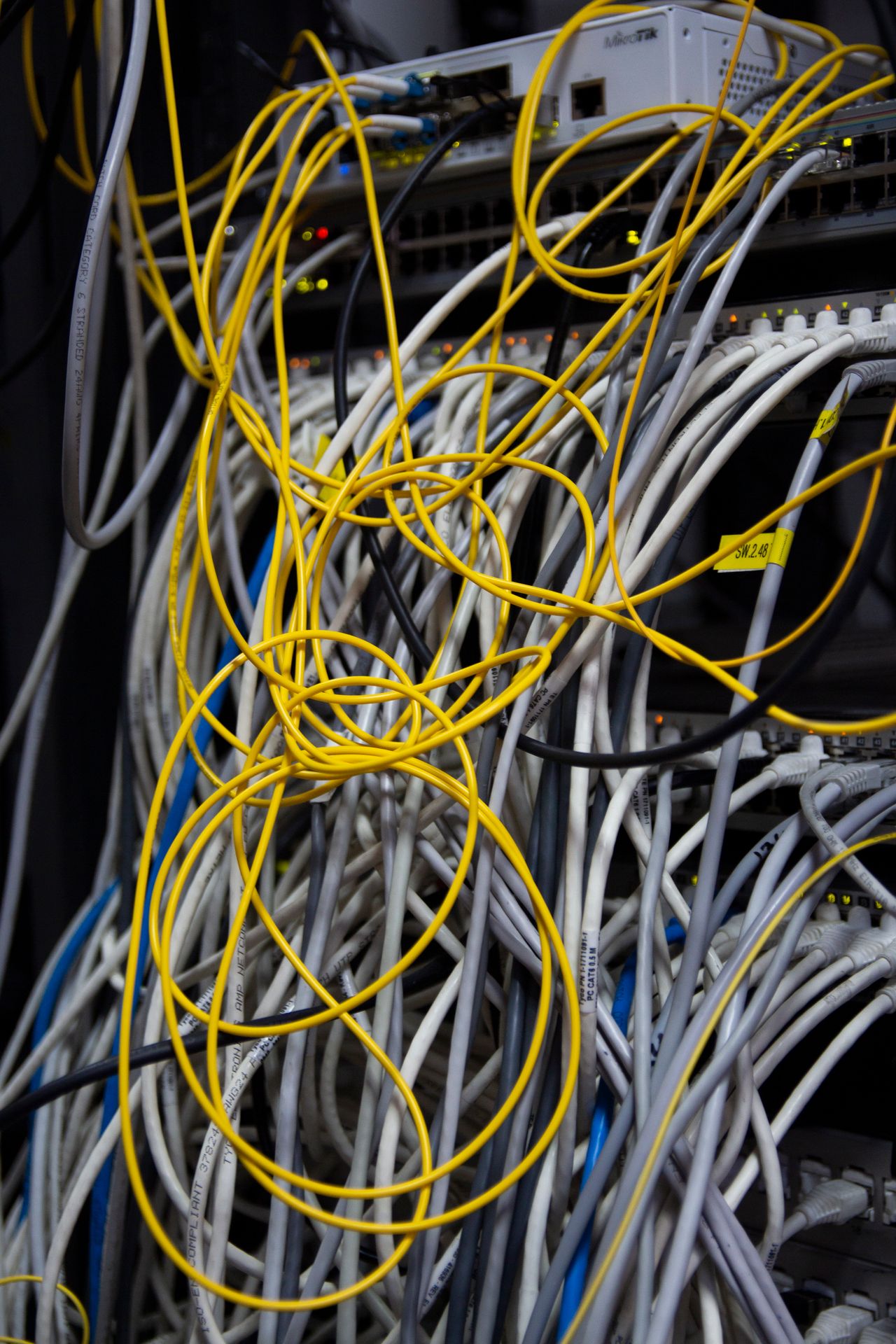
Network infrastructure contains dependencies that are not always obvious from the device being changed. A switch port can serve a downstream access point, a routing adjustment may affect several business applications, and a new access rule can interfere with legitimate traffic.
Changes fail when these relationships are not understood or when technical success is mistaken for service success. A configuration command being accepted does not prove that users can still reach the applications they need.
Controlled change management reduces avoidable risks by connecting technical activity to service requirements and evidence-based validation.
2. What Qualifies as a Network Change?
Changes may include firmware updates, switch configuration adjustments, router replacement, modifications to access policies, port reassignment, wireless configuration updates, or infrastructure expansion.
Routine observation is different from modifying production behavior. The process should distinguish low-impact maintenance from changes that alter how live traffic moves or how users connect.
A change register should record what actually changed, not just the title of the associated support ticket.
3. Classify Changes by Operational Risk
Risk classification should consider affected users, critical services, number of dependencies, reversibility, confidence in the proposed configuration, and available maintenance time.
A limited change to an unused port may be lower risk than replacing a central gateway. However, the final classification should reflect the real topology rather than assume that small changes are always safe.
Define review and approval requirements proportionately to the risk.
4. Identify Dependencies Before Implementation
Map which devices, services, subnets, and teams might be affected. Determine whether the change influences remote sites, wireless clients, business telephony, authentication, or other operational dependencies.
When documentation is incomplete, treat that uncertainty as part of the risk assessment. Do not claim the change is isolated merely because the intended configuration is short.
Identify a reliable way to verify each important dependency after implementation.
| Risk Factor | Question | Evidence | Response |
|---|---|---|---|
| Affected services | What could stop? | Dependency map | Targeted testing |
| Reversibility | Can it be restored? | Rollback procedure | Verify recovery path |
| Timing | Who is active? | Business schedule | Agree change window |
| Unknown topology | Are dependencies verified? | Current documentation | Investigate before change |
5. Create a Useful Change Request
A change request should state the current condition, intended result, devices involved, proposed technical steps, affected services, timing, testing, responsible personnel, and rollback criteria.
A vague description such as "update the network" provides little operational value. A specific request allows reviewers to understand what will change and what evidence will show success.
Include assumptions and unknowns; hiding uncertainty does not reduce risk.
6. Define Approval and Ownership
Different businesses have different governance requirements. The individual implementing the change may not be the person authorized to accept its operational impact.
Define who prepares the change, who approves it, who communicates it, who validates business services, and who decides when rollback must begin.
For critical work, a second technical review can detect a dependency overlooked by the implementer.
7. Select an Appropriate Maintenance Window
The least busy time is not always the safest time if essential support staff or business validators are unavailable. Consider business operations, expected customer impact, remote access, and realistic recovery time.
Communicate any expected interruption accurately. Do not promise zero downtime without a design and test basis supporting that claim.
Reserve time for validation and rollback rather than allocating the entire window to implementation.

8. Protect the Current Configuration
Before changing production equipment, ensure an appropriate, secure record of the current operational state exists and that the authorized team can use it for restoration when needed.
Not every device supports identical backup or rollback capabilities, and restoring an old configuration can itself have consequences. Verify device-specific procedures and protect sensitive configuration data.
For hardware replacement, document compatibility and any differences between old and new software versions.
9. Write a Realistic Rollback Plan
A rollback plan should identify the condition that triggers reversal, the people authorized to act, the restoration steps, the expected service state, and the time required.
Do not assume that repeating the previous command in reverse will restore every dependency. Consider whether the change creates new state or requires other services to be restored.
Rollback should be feasible within the approved operating window, with escalation procedures if restoration fails.
10. Test Before Applying Changes to Production
Where possible, evaluate configuration syntax and expected behavior in a lab or representative environment. Review the change with available technical safeguards, documentation, and vendor recommendations.
A test environment cannot always reproduce production exactly, so residual uncertainty must be stated. Ensure the final test plan includes business-level outcomes rather than device status alone.
For example, a successful connection to a gateway does not prove a critical business application is reachable.
11. Execute the Change With Discipline
Follow the agreed sequence and record deviations. Avoid combining unrelated changes into the same window when that would make troubleshooting difficult.
Check each important stage before continuing. If unexpected behavior appears, assess whether to stop, troubleshoot within the approved scope, or initiate rollback.
Maintain a communication path so decision-makers know whether the change remains within agreed conditions.
| Change Phase | Required Action | Owner | Evidence |
|---|---|---|---|
| Preparation | Scope and dependencies | Change engineer | Reviewed request |
| Authorization | Accept operational risk | Approver | Approval record |
| Implementation | Apply agreed steps | Engineer | Change log |
| Validation | Confirm service outcomes | Technical and business reviewers | Test record |
12. Validate the Result at Service Level
Post-change testing should verify both device functionality and the business services that depend on the network. Confirm the intended change is present and that unrelated essential functions remain available.
Test from representative locations or user contexts, not just from the administrator's workstation. Record pass, fail, and not-tested outcomes honestly.
If the test cannot be performed, document the reason and assess whether the change can be accepted safely.
13. Handle Emergency Changes Separately
Urgent work may require an accelerated process, but it still needs defined responsibility, risk awareness, and a recovery strategy appropriate to the circumstances.
After the emergency, document what was done, why it was necessary, and what remains to be verified. Review whether a recurring issue requires a more permanent solution.
An emergency should not become a permanent excuse for undocumented production changes.
14. Twenty Common Network Change Mistakes
- Making configuration changes without a defined objective.
- Ignoring downstream device dependencies.
- Assuming a short command means low risk.
- Changing multiple unrelated functions together.
- Failing to obtain the appropriate authorization.
- Scheduling changes without operational context.
- Ignoring the time required for validation.
- Not checking the current working configuration.
- Assuming device backups are usable without verification.
- Writing a rollback plan that cannot be executed.
- Failing to establish rollback triggers.
- Testing only device reachability.
- Not testing business applications.
- Changing scope during implementation without review.
- Failing to record deviations.
- Using outdated network documentation.
- Not communicating unexpected impacts.
- Leaving emergency changes undocumented.
- Recording success before acceptance testing.
- Failing to update the final as-built state.
15. Network Change Implementation Checklist
☐ Objective and scope defined. ☐ Affected services identified. ☐ Current network state documented. ☐ Risk assessed. ☐ Approval recorded. ☐ Change window confirmed. ☐ Configuration safeguarded. ☐ Rollback tested where practicable. ☐ Validation plan prepared. ☐ Responsible people available. ☐ Implementation steps recorded. ☐ Business services tested. ☐ Final configuration documented. ☐ Outstanding issues assigned.
Use a repeatable checklist, but allow stronger controls where the consequences of a failure are greater.
| Acceptance Test | Purpose | Result | Action on Failure |
|---|---|---|---|
| Required access | Confirm intended connectivity | Pass/Fail | Investigate or rollback |
| Critical application | Verify business service | Pass/Fail | Escalate impact |
| Unchanged services | Detect collateral impact | Pass/Fail | Follow recovery plan |
| Management access | Ensure continued authorized administration | Pass/Fail | Restore safe access |

16. Frequently Asked Questions and Conclusion
Does every network change need the same approval?
No. Approval requirements should reflect the organization's governance and the operational risk associated with the proposed work.
Can a configuration backup replace a rollback plan?
No. A backup is one possible component of recovery, but restoring service may involve additional steps and dependencies.
When should a change be reversed?
When the agreed rollback conditions are met, taking account of service impact and the time required for a safe restoration.
Are emergency changes exempt from documentation?
No. They may follow an accelerated process, but the resulting operational state must still be recorded and reviewed.
What proves a network change succeeded?
Evidence that the intended technical outcome was achieved and the agreed business services remain functional.
A strong change-management process makes network work predictable and reviewable. It does not eliminate every risk, but it helps teams understand dependencies, respond to unexpected outcomes, and maintain accurate infrastructure records.
Explore business connectivity products and information through the official Future Networks website.
Rollback Decision Matrix
A rollback plan becomes useful when the team knows exactly which conditions require intervention. The following matrix connects observed failures with decision criteria and appropriate recovery actions before the maintenance window closes.
| Observed Condition | Decision Criterion | Required Action | Verification |
|---|---|---|---|
| Critical service unavailable | Failure exceeds the approved service-impact threshold | Initiate the agreed restoration procedure | Confirm service recovery from a representative client |
| Unexpected connectivity loss | Required network paths fail validation | Stop further changes and assess rollback | Retest the affected communication paths |
| Administrative access lost | Authorized recovery access is unavailable | Use the approved out-of-band or recovery procedure | Confirm secure management access is restored |
| Validation remains incomplete | Required acceptance cannot be achieved within the agreed window | Escalate and follow the approved stop-or-rollback decision | Record the final verified operational state |
| Unintended configuration difference | Production state deviates materially from the approved design | Suspend implementation and obtain technical review | Compare the resulting configuration with the approved baseline |
This post is part of a series called Post