
Posted in تصوير الفيديو, تغطية الفعاليات on نوفمبر 10, 2026
How to Film Guest Interviews at Events?

EVENT LIVE | Saudi Corporate Production
To film an effective event interview, establish a quiet and accessible recording position, prioritize intelligible audio, use flattering but natural lighting, select a coherent background, and prepare concise questions that invite complete answers. Obtain appropriate permission for the intended use and confirm the interviewee's name and role before publishing.
Guest interviews can give corporate events a human voice, connecting a program's themes with real perspectives from speakers and participants. Yet the production environment is challenging: noise, changing schedules, limited access, and time-sensitive speakers can compromise results.
This guide from EVENT LIVE outlines a repeatable workflow for Riyadh and Saudi business events without treating staged endorsements as genuine testimonials.
 Call Now
 WhatsApp
What Is the Quickest Reliable Interview Setup?
Prepare one consistent interview station, test audio at the real ambient noise level, and set exposure and framing before the guest arrives. Use three focused questions and record enough context for each answer to stand alone. Review the first clip immediately so technical errors do not affect an entire session.
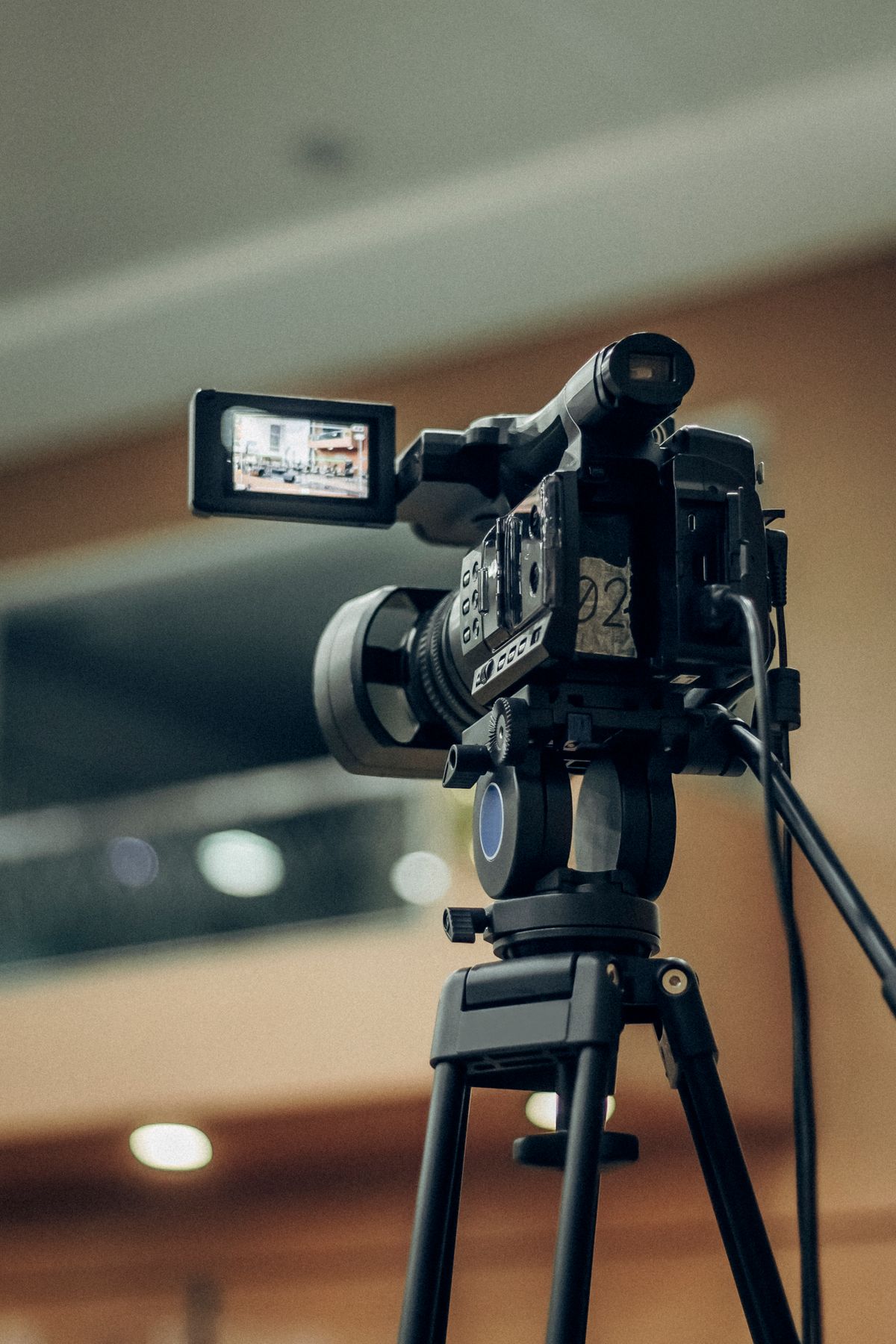
Where Should You Film an Interview Inside a Busy Event?
Choose a location with manageable sound levels, safe movement, adequate space for equipment, and a background that communicates the event's identity. A sheltered section of the venue can be better than a spectacular position directly beside loudspeakers.
Test the actual space during a representative period of event activity. HVAC, public-address systems, and neighboring exhibitions can create intermittent noise that is difficult to remove after recording.
What Makes a Good Corporate Interview Background?
A good background reinforces the setting without competing with the speaker. It may include official event graphics or recognizable venue elements, provided logos and text are displayed accurately and permission is available.
Avoid positioning a large wordmark directly behind the interviewee's head, using excessively bright displays, or showing confidential material in the frame.
Which Microphone Should Be Used for Event Interviews?
A close microphone usually provides more dependable speech capture than distant camera audio. Suitable options can include a lavalier, handheld microphone, or appropriately positioned shotgun microphone.
Each option has limitations. Lavalier microphones may pick up clothing friction, handheld microphones require consistent placement, and directional microphones still record environmental sound. Monitor the recording and test the configuration before the guest arrives.
| Microphone | Typical Use | Risk | Acceptance Test |
|---|---|---|---|
| Lavalier | Seated guest | Clothing noise | Speech with normal movement |
| Handheld | Fast interviews | Changing distance | Question-to-answer handoff |
| Directional | Stable filming position | Ambient noise | Representative room test |
| Backup recorder | Critical interviews | Sync or configuration issue | Verify both recordings |
How Do You Light a Guest Naturally?
Begin with a soft, controlled key light and balance it against the actual venue environment. Check skin tones, reflections on glasses, and differences between foreground and background brightness.
Large LED walls may change brightness or color during the interview. Choose settings that remain usable rather than chasing a cinematic effect that becomes inconsistent across guests.
How Should You Frame the Interviewee?
Decide whether the guest will speak toward an interviewer or directly into the camera. Maintain consistent eyelines and give the subject adequate headroom and space for titles when planned.
Use a composition that supports the story. A tight portrait may be effective for a direct answer, but a slightly wider frame can preserve event context and allow alternative social crops.
What Questions Produce Useful Interview Clips?
Ask focused, open-ended questions that lead to meaningful facts or personal perspectives. Avoid leading a guest toward an unsupported endorsement or putting words in their mouth.
Examples include asking which problem a project addresses, what surprised the speaker about the event, or what practical lesson they would share with attendees. Let the guest respond in their own words.
| Interview Goal | Question | Desired Outcome | Avoid |
|---|---|---|---|
| Event experience | What stood out today? | Specific moment | Forced praise |
| Project context | What need does this address? | Clear explanation | Invented statistics |
| Learning | What idea will you take away? | Practical insight | Generic slogans |
| Next steps | What happens next? | Qualified outlook | Guaranteed promises |
How Can You Manage Multiple Guests Efficiently?
Use scheduled slots when possible and prepare a brief interview sheet for each guest. Confirm approved names and titles, the editorial aim, and any usage restrictions.
Keep the technical setup consistent between guests, but make adjustments where necessary for speaking volume, height, lighting, and individual accessibility requirements.
Should Event Interviews Be Filmed in 9:16 or 16:9?
Choose the aspect ratio according to the intended distribution. Vertical 9:16 works well for many short-form mobile platforms, while horizontal 16:9 may be preferable for a website or corporate presentation.
If both are needed, plan framing or a dedicated secondary recording method that preserves the subject and event identity. Important text and faces must stay clear of interface overlays in the final vertical output.
How Do You Keep Edited Interviews Authentic?
Shortening a response is acceptable when it preserves the intended meaning. Removing a qualification or rearranging statements into a claim the guest did not make is not.
Check subtitles, translated captions, names, and organizational roles against the source recording and approved information. Do not label illustrative footage as an authentic interview.
What Consent Is Needed Before Publishing an Interview?
Confirm the recording's intended purpose, approved distribution channels, and relevant permissions with the guest and organizer. A person's presence at an event is not necessarily consent for the commercial use of their testimonial.
Be particularly careful with private information, employee matters, or confidential project details that may appear in the conversation or surrounding visuals.
| Stage | Required Check | Risk | Approval Standard |
|---|---|---|---|
| Pre-recording | Identity and permission | Unauthorized use | Known distribution scope |
| Recording | Audio and video | Unusable source | Clear full response |
| Editing | Context and accuracy | Misrepresentation | Faithful final clip |
| Publishing | Release and format | Wrong audience or platform | Approved export |
How Should Interview Files Be Organized and Delivered?
Index clips by guest, recording session, intended output, and permission status. Store source material separately from finalized approved videos.
Agree in advance whether the organizer requires complete interviews, short clips, subtitles, translated versions, or separate aspect ratios. Review exports before delivery rather than assuming a completed render is ready for publication.
| Deliverable | Purpose | Quality Check | Release |
|---|---|---|---|
| Full interview | Complete reference | Audio and completeness | Authorized usage |
| Short highlight | Focused storytelling | Context integrity | Editorial approval |
| Vertical version | Mobile social media | 9:16 safe zone | Platform-ready |
| Subtitled version | Accessible comprehension | Text accuracy and sync | Language reviewed |
What Checklist Should the Interview Crew Follow?
☐ Guest and role confirmed. ☐ Purpose documented. ☐ Appropriate permission obtained. ☐ Quiet location selected. ☐ Background verified. ☐ Microphones tested. ☐ Lighting and exposure reviewed. ☐ Eyeline agreed. ☐ Questions prepared. ☐ Final aspect ratios known. ☐ Recordings checked. ☐ Editorial accuracy reviewed. ☐ Exports and captions approved.
Frequent failures include recording near a PA loudspeaker, assuming post-production can eliminate all noise, using a visually distracting background, asking leading promotional questions, and cropping a wide shot so aggressively that the final vertical video loses context.
What Are the Most Common Event Interview Questions?
Can interviews be recorded on the exhibition floor?
Yes, when a suitable location can deliver acceptable sound and visual conditions.
Is a lavalier microphone always the best option?
No. The choice depends on location, clothing, movement, and desired interview style.
Do I need two cameras?
Not necessarily. The needed coverage depends on output and editing requirements.
How many questions should a short interview include?
Use a small number of focused questions that produce relevant, complete answers.
Is a direct-to-camera answer better?
It depends on the story and whether the intended visual language is direct address or a conversation with an interviewer.
Can subtitles change the wording?
They should faithfully represent the original speech and accurately convey meaning in translation.
Can interviews be reused in advertising?
Only when the intended commercial use is appropriately authorized.
What matters most for social-media exports?
Clear audio, appropriate framing, concise authentic content, readable captions, and safe placement of visual elements.
High-quality event interviews depend on preparation and accuracy. The most useful clip is one that communicates a genuine perspective clearly and can be published in an authorized, reliable form.
Learn about corporate filming services at the official EVENT LIVE website.
This post is part of a series called Post