




To prevent a chain-link fence gate from sagging, install gate posts designed to carry the gate's weight and bending loads, use suitable foundations, select correctly rated hinges, reinforce the gate frame, and maintain proper alignment and ground clearance. Regular inspections are also important because loose connections, shifting foundations, worn hinges, and frame deformation can gradually cause the gate to drop or become difficult to operate.
Chain-link fence gates are widely used for agricultural properties, rest houses, equipment yards, warehouses, and perimeter fencing in Saudi Arabia. Although the surrounding fence may remain stable for years, the gate experiences additional mechanical loads every time it opens or closes.
These loads become particularly important for wide farm entrances where tractors, delivery trucks, agricultural machinery, and maintenance vehicles require reliable access.
This guide explains why chain-link gates sag, how to identify the underlying problem, what design and installation details matter, and how to maintain dependable gate operation in Saudi conditions.
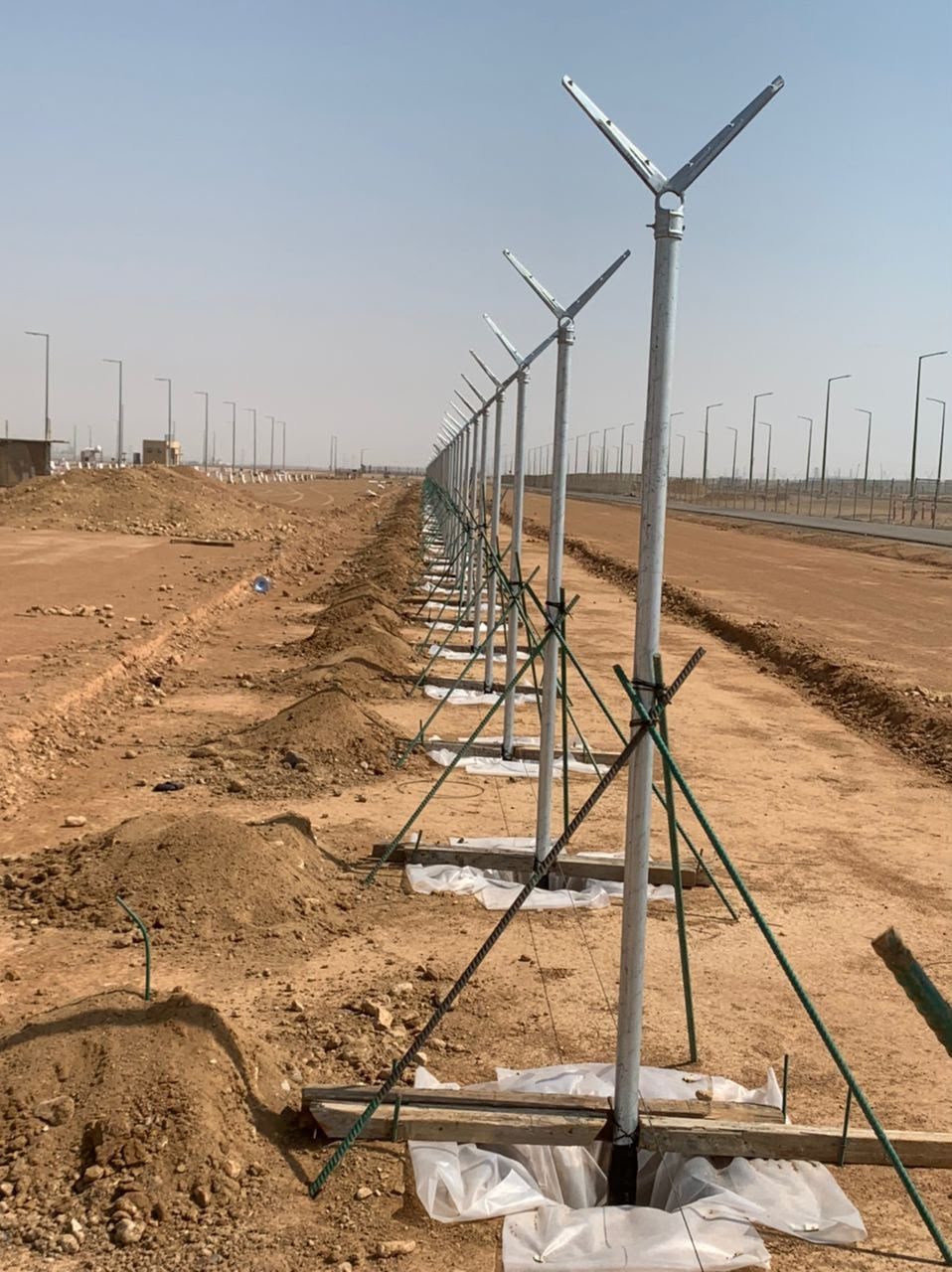
What Is the Quickest Way to Prevent Fence Gate Sagging?
The most effective approach is to ensure that the gate frame, hinges, support posts, and foundations are properly matched to the gate's weight, width, operating conditions, and expected loads.
For a new installation, prioritize the following:
- Choose the correct gate configuration for the entrance width.
- Use gate posts with sufficient structural capacity.
- Design foundations according to soil conditions and loads.
- Select hinges appropriate for the gate weight and geometry.
- Provide effective frame reinforcement.
- Verify frame squareness and proper alignment.
- Allow sufficient ground clearance along the swing path.
- Use appropriate stops and latching hardware.
- Inspect the installation before accepting the work.
- Establish a preventive maintenance procedure.
For an existing sagging gate, identifying the source of movement is more important than adjusting the latch or temporarily lifting the gate.
Why Do Chain-Link Fence Gates Sag Over Time?
Chain-link gates usually sag because one or more structural or mechanical components move, deform, loosen, or wear under repeated loads.
The problem may originate in the gate frame, hinges, supporting post, concrete footing, or connections between these components.
A gate can also appear to sag when the ground level changes or when an opposing gate leaf becomes misaligned.
Can the Gate Sag Even When the Fence Remains Straight?
Yes. A gate is a moving structural assembly, while most of the surrounding fence is stationary. Gate-specific problems can develop without affecting the fence line.
Does Frequent Opening and Closing Increase Wear?
Repeated operation can accelerate wear in hinges, pins, fasteners, and supporting connections, particularly when the gate is heavy or poorly aligned.
How Can You Identify the Cause of a Sagging Gate?
Inspect the gate post, hinge assemblies, frame geometry, latch alignment, and ground clearance separately to determine which part has changed position.
A systematic inspection prevents unnecessary repairs and reduces the risk of overlooking a foundation or structural problem.
| Visible Symptom | Possible Cause | Recommended Inspection |
|---|---|---|
| Free end of gate drops | Frame deformation or hinge movement | Check frame diagonals and hinge positions |
| Gate post leans outward | Foundation movement or insufficient support | Measure post verticality and inspect footing |
| Latch no longer aligns | Gate or opposing post movement | Measure latch height and gate geometry |
| Gate scrapes the ground | Sagging or changed ground elevation | Measure clearance along swing path |
| Gate movement feels loose | Hinge wear or loose hardware | Check pins, bearings, fasteners, and attachments |
| Sagging returns after adjustment | Unresolved structural problem | Review posts, footing, and frame capacity |
How Do You Choose Strong Posts for Chain-Link Gates?
Select gate posts based on the gate leaf's weight, width, height, support geometry, expected wind loading, and operating conditions rather than using ordinary fence post dimensions automatically.
A gate post supports more than vertical weight. It must also resist bending and twisting effects caused by the gate projecting outward from the hinge line.
Can a Regular Fence Post Support a Heavy Farm Gate?
Not necessarily. A line post designed primarily to support stationary fencing may not have adequate capacity for a wide or heavy moving gate.
Is a Thicker Steel Post Always Better?
Not automatically. Structural capacity depends on the complete post section, material strength, unsupported length, connections, foundation, and applied loads.
Should Gate Posts Be Galvanized?
Galvanized steel is commonly used for exterior fencing because zinc coatings provide corrosion protection. Coating selection should reflect the environmental conditions and project specifications.
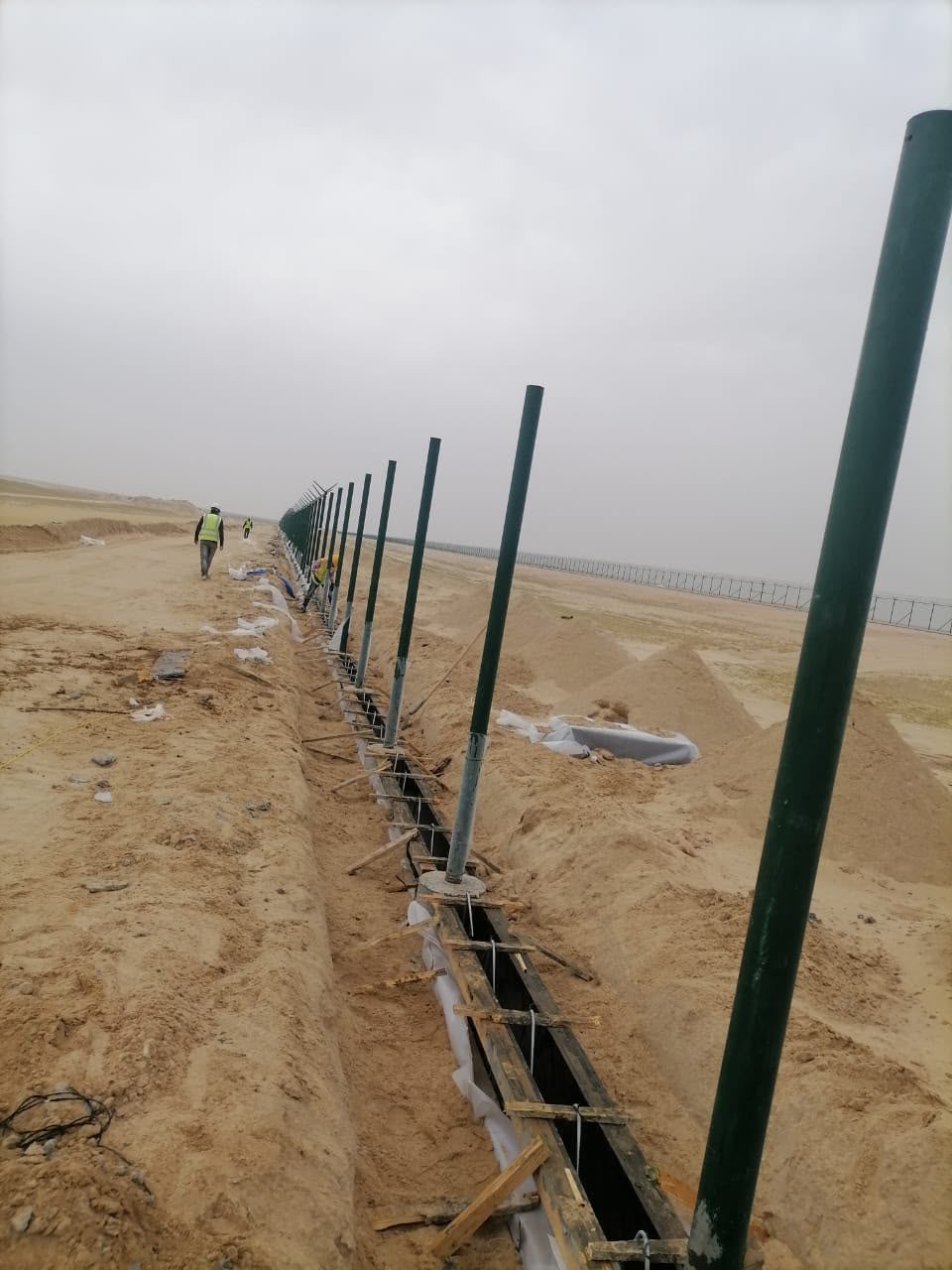
How Do Concrete Footings Prevent Gate Post Movement?
Properly designed and constructed footings transfer gate loads into the supporting ground and help resist post rotation, tilting, and displacement.
The foundation must suit the soil characteristics, gate dimensions, post loads, and applicable engineering requirements.
Sandy soils, uncompacted fill, areas affected by drainage, and sites with variable ground conditions may need different foundation solutions.
Can You Use the Same Footing Size for Every Gate?
No. Foundation dimensions should be determined by the installation requirements and local site conditions, not copied from an unrelated project.
Why Can a Gate Post Lean Even When Surrounded by Concrete?
Possible reasons include an undersized footing, unsuitable ground support, poor installation, settlement, damage, or loads exceeding the original design.
What Is the Difference Between Fence Posts and Gate Posts?
Gate posts are designed to support a moving assembly with concentrated loads and bending moments, while typical line posts primarily support stationary fence materials and environmental loads.
| Feature | Fence Line Post | Gate Post |
|---|---|---|
| Primary function | Support stationary fence | Support moving gate leaf |
| Typical loads | Fence tension and environmental loads | Gate weight, moments, wind, operation |
| Foundation design | Based on fence system | Based on gate-specific demands |
| Mechanical attachments | Fence clips, rails, tension components | Hinges and gate hardware |
| Inspection priorities | Alignment and fence connections | Verticality, movement, hinges, alignment |
The ASTM F567-23 chain-link fence installation standard covers gate posts, post setting, terminal post bracing, and installation practices. Its application should be considered alongside project-specific engineering requirements and applicable local conditions.
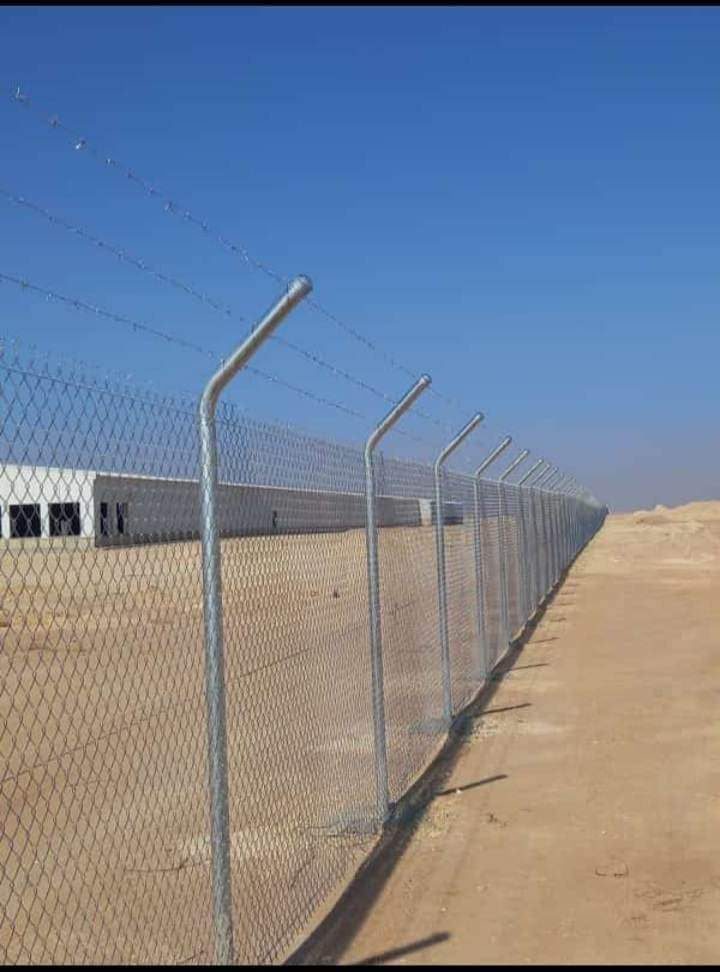
How Does Gate Width Affect Sagging Risk?
Increasing the width of a swing gate leaf generally increases the bending demand on its support system when other design factors remain comparable.
The gate's weight, center of gravity, hinge spacing, and structural stiffness also influence the resulting stresses and movement.
Is a Double Swing Gate Better for a Wide Entrance?
A double swing configuration can divide a large opening between two leaves, potentially reducing the length of each leaf. However, both sides require suitable posts, footings, hinges, and closing arrangements.
When Is a Sliding Gate More Appropriate?
A sliding gate may be preferable when a swing gate's opening radius is impractical. Sliding designs require their own support, guidance, and safety arrangements.
How Do You Reinforce a Chain-Link Gate Frame?
Use appropriately sized structural members, secure connections, controlled fabrication, and bracing designed to resist distortion under the gate's expected loads.
The frame should remain sufficiently square and rigid during installation and normal operation.
The best reinforcement method depends on the frame geometry and whether the bracing component works primarily in tension or compression.
Does a Diagonal Brace Always Stop Gate Sagging?
No. A diagonal brace must have the appropriate configuration and connection details to transfer loads effectively. A rigid compression brace and an adjustable tension member do not work in the same way.
Can Welding Additional Steel Fix a Sagging Frame?
Sometimes, but only after identifying the cause and evaluating the structural design. Poorly planned welding may introduce distortion or damage protective coatings.
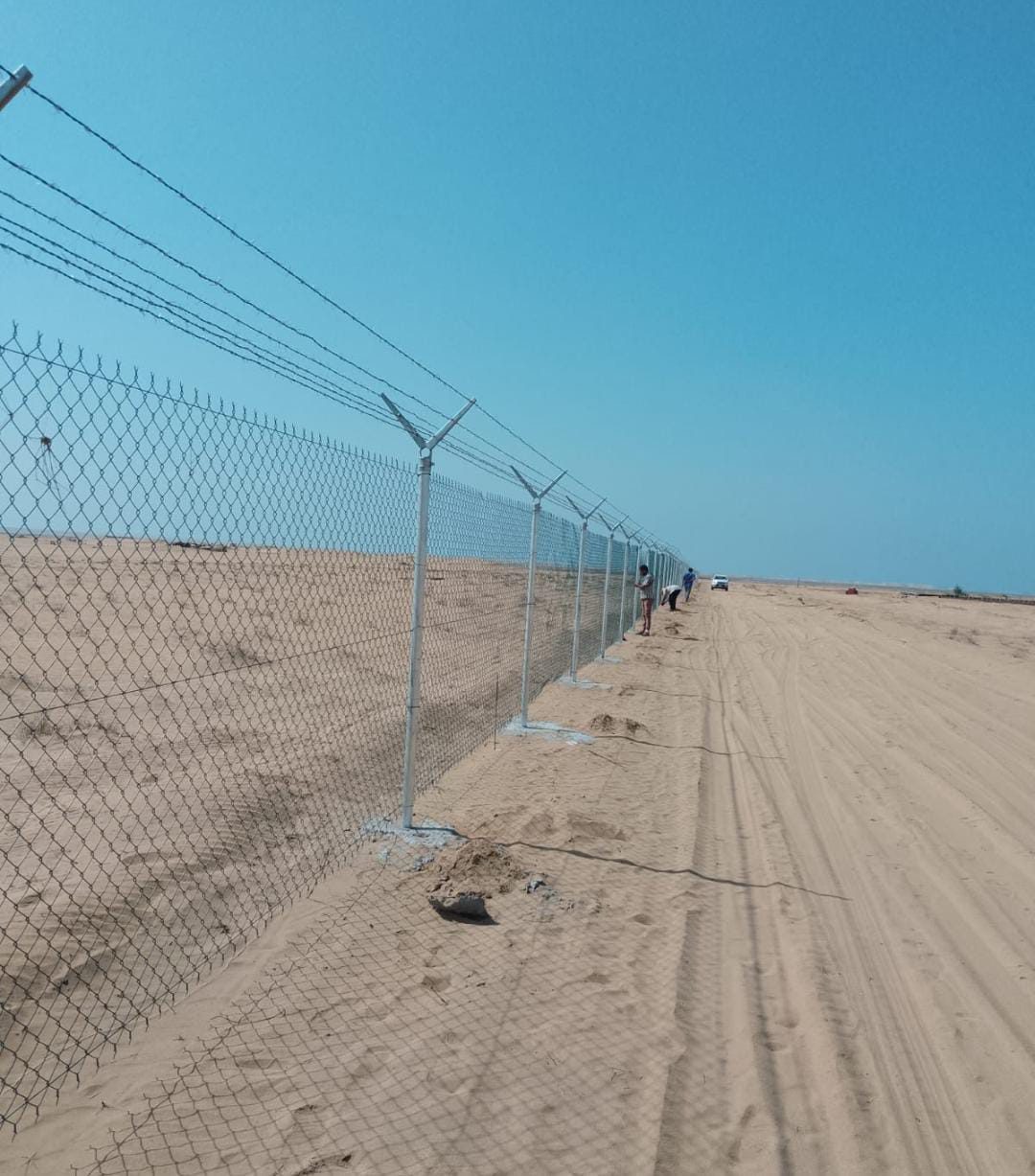
How Do You Choose Hinges for a Heavy Chain-Link Gate?
Choose hinges with suitable load capacity, geometry, fastening methods, corrosion resistance, and compatibility with the gate frame and support posts.
Hinge selection should consider both the weight of the gate and the mechanical loads associated with its width and repeated operation.
Are Adjustable Gate Hinges Recommended?
Adjustable hinges can simplify alignment and minor maintenance corrections, but they cannot compensate for an undersized post, unstable footing, or structurally inadequate gate frame.
What Are Signs of Worn Gate Hinges?
Common signs include excessive movement, grinding or squeaking, visibly worn pins, loose attachments, and repeated changes in latch alignment.
Which Components Are Essential for a Durable Farm Gate?
A durable farm gate requires a coordinated system of structural framing, posts, footings, hinges, bracing, latches, stops, and protective finishes.
Each component should be selected with the expected usage and environmental conditions in mind.
| Component | Selection Criteria | Common Mistake |
|---|---|---|
| Gate frame | Adequate strength and stiffness | Undersized sections for wide leaves |
| Gate posts | Load and moment capacity | Using unsuitable line posts |
| Concrete footings | Soil properties and structural demands | Copying dimensions from unrelated sites |
| Hinges | Rated load and compatible attachments | Selecting based on appearance |
| Frame bracing | Load path and structural behavior | Decorative rather than effective bracing |
| Latch and stops | Secure closure and controlled movement | Using the latch to conceal misalignment |
| Protective coating | Environmental corrosion protection | Leaving cuts and welds unprotected |
How Can You Protect Fence Gate Hinges From Corrosion?
Use suitable galvanized or corrosion-resistant components, maintain protective coatings, inspect exposed joints, and apply manufacturer-recommended lubrication where required.
Outdoor gates in Saudi Arabia may experience dust, humidity, irrigation exposure, and potentially aggressive environmental conditions depending on the location.
Does Galvanized Steel Eliminate Rust Permanently?
No. Zinc coatings provide corrosion protection, but their service life depends on coating condition, environmental exposure, mechanical damage, and maintenance.
How Much Ground Clearance Should a Farm Gate Have?
Ground clearance should be determined by the entrance surface, the full swing path, expected soil accumulation, vehicle access, and security requirements.
There is no universal clearance dimension that works for every agricultural or commercial gate.
A gate installed above uneven soil may need different clearances than one operating over a finished concrete driveway.
Why Does a Gate Scrape the Ground Only While Opening?
The swing path may pass over higher ground, or the gate leaf may change position under load because of hinge movement, frame distortion, or post misalignment.
Can Raising the Hinges Solve Ground Clearance Problems?
It may resolve a minor alignment issue, but it should not be used to conceal foundation movement or an unsafe structural condition.
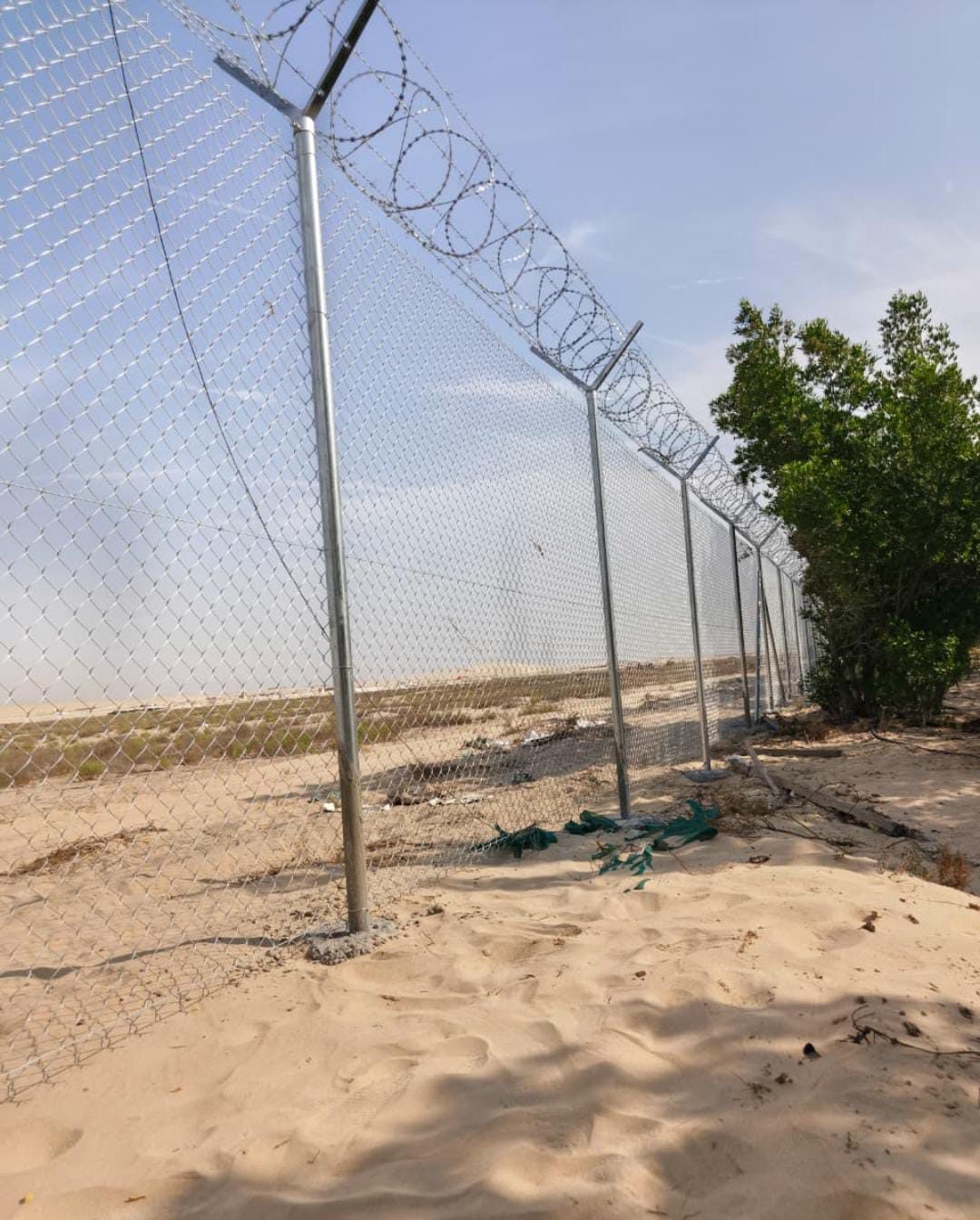
How Do You Keep Double Swing Gate Leaves Aligned?
Ensure that both support posts remain stable and that each leaf has properly positioned hinges, controlled frame geometry, and compatible latching and stopping hardware.
Small movements on either side can affect the point where the leaves meet, so both sides should be inspected during troubleshooting.
Are Drop Rods Necessary for Double Farm Gates?
They are commonly used to help secure a gate leaf in the closed position where the design calls for them. Their dimensions, sockets, and use should match the gate and site requirements.
Can Strong Winds Damage Chain-Link Farm Gates?
Yes. Wind loads can affect gates, particularly large leaves or gates fitted with solid panels, privacy screens, or materials that reduce airflow.
The load depends on exposed area, wind conditions, surface permeability, and the structural configuration.
Should a Farm Gate Be Secured While Open?
A suitable open-position restraint or stop is recommended where uncontrolled movement could create a hazard, particularly at vehicle entrances and windy sites.
How Do You Protect Fence Gates From Vehicle Impact?
Provide sufficient entrance width, suitable vehicle turning clearance, visible gate positions, and protective measures where accidental contact is reasonably foreseeable.
Farm equipment and delivery vehicles may need a larger operating envelope than passenger cars. Gate post protection can be considered where vehicle movements create a collision risk.
When Should You Contact a Professional Fence Installer?
Seek a qualified assessment if the gate has recurring alignment problems, significant structural deformation, unstable posts, cracked foundations, or hinge damage that may compromise safe operation.
Complex gate repairs may require an experienced fabricator or engineering assessment rather than a simple hinge adjustment.
Need a new chain-link gate for your farm or property?
Contact Shobok Rayat Najd to discuss entrance dimensions, gate configuration, fencing requirements, and site conditions.
 Call Now
 WhatsApp
How Do You Inspect a Newly Installed Chain-Link Gate?
Inspect structural alignment, post stability, hinge function, ground clearance, latching, and the full opening and closing movement before accepting the installation.
The inspection should confirm that the gate can operate safely without unexpected movement, excessive force, scraping, or visibly loose connections.
Should Gate Operation Be Tested Several Times?
Yes. Multiple controlled opening and closing cycles can reveal alignment, clearance, and hardware problems that are not obvious when the gate remains stationary.
How Often Should Farm Fence Gates Be Maintained?
Maintenance frequency should reflect usage intensity, environmental exposure, equipment condition, and manufacturer instructions, with additional inspections after impacts, severe weather, or noticeable changes in operation.
High-traffic agricultural entrances generally require closer attention than rarely used access gates.
| Inspection Item | What to Check | Corrective Response |
|---|---|---|
| Gate posts | Leaning, looseness, corrosion | Assess post and foundation integrity |
| Hinges | Wear, alignment, fastener condition | Adjust or replace as appropriate |
| Gate frame | Distortion and joint condition | Evaluate repair or replacement |
| Bracing | Connections and structural integrity | Repair using suitable technical methods |
| Latches and stops | Engagement and alignment | Resolve underlying movement and adjust |
| Protective finish | Rust, exposed steel, damaged coating | Restore suitable corrosion protection |
What Are the Most Common Chain-Link Gate Installation Mistakes?
Common mistakes include undersized posts, inadequate foundations, weak hinges, insufficient frame reinforcement, poor alignment, incorrect ground clearance, and treating the latch as a structural support.
Additional problems can result from inadequate fabrication quality or failing to consider the expected vehicle traffic and site environment.
- Selecting posts without evaluating gate-specific loads.
- Using foundation dimensions unsuitable for local soil.
- Installing a wide gate without adequate frame stiffness.
- Failing to check frame diagonals during fabrication.
- Using hinges without verified compatibility.
- Neglecting swing-path clearance.
- Leaving exposed welds without suitable protection.
- Failing to secure gates against uncontrolled wind movement.
- Ignoring recurring signs of post movement.
- Repairing the latch while leaving the actual sagging problem unresolved.
How Should Gate Design Change for Different Saudi Properties?
Gate design should reflect the property's use, traffic patterns, terrain, exposure, and required security level.
For example, a date palm farm with regular agricultural vehicle access has different requirements from a private rest house or a commercial storage yard.
What Should Be Considered for Farm Entrances?
Consider agricultural machinery dimensions, ground conditions, dust exposure, operating frequency, and suitable gate clearance.
What Should Be Considered for Warehouses and Industrial Yards?
Consider heavy vehicle movement, turning areas, impact protection, access control, security arrangements, and the required duty cycle of the gate.
When Is a Sagging Gate Unsafe to Operate?
A gate should be taken out of service when damaged hinges, severely leaning posts, cracked foundations, detached connections, or major structural deformation create a risk of collapse or uncontrolled movement.
Secure the surrounding area and arrange a professional inspection before allowing further use.
What Is the Final Chain-Link Gate Installation Checklist?
A complete inspection checklist should cover structural support, geometry, hardware, operating safety, and future maintenance requirements.
- ☐ Confirm entrance width and intended vehicle access.
- ☐ Select an appropriate gate configuration.
- ☐ Verify gate frame dimensions and material specifications.
- ☐ Confirm gate posts suit the expected loads.
- ☐ Review foundation requirements for the site soil.
- ☐ Check post verticality.
- ☐ Measure gate frame diagonals and alignment.
- ☐ Confirm suitable structural bracing.
- ☐ Inspect hinge capacity and installation.
- ☐ Verify appropriate ground clearance.
- ☐ Test the full opening and closing cycle.
- ☐ Check latches, stops, and drop rods where applicable.
- ☐ Inspect protective coatings and exposed connections.
- ☐ Verify vehicle and pedestrian safety clearances.
- ☐ Document maintenance instructions and inspection results.
What Are the Most Frequently Asked Questions About Sagging Chain-Link Gates?
The following answers address common concerns from farm owners, rest house operators, and commercial property managers in Saudi Arabia.
1. Why does my chain-link gate sag after installation?
Possible causes include hinge movement, inadequate post support, foundation settlement, or deformation of the gate frame.
2. Can a sagging chain-link fence gate be repaired?
Yes, in many cases. The appropriate repair depends on the condition of the frame, hinges, supporting posts, and foundations.
3. Does adding a diagonal brace prevent gate sagging?
It can help when designed and installed correctly, but brace type, orientation, and connection details must match the structural requirements.
4. Do chain-link gate posts need concrete footings?
Concrete footings are common, but foundation design and installation requirements depend on the specific system and site conditions.
5. Why does my gate scrape the ground?
The gate may have sagged, its hinges may have shifted, or the ground elevation along the swing path may have changed.
6. Are double swing gates better for wide farm entrances?
They can be useful when dividing the opening into two leaves provides a practical configuration, but both leaves must be properly supported.
7. Do galvanized gate hinges require maintenance?
Yes. Galvanizing protects against corrosion, but mechanical wear and damage still require inspection and appropriate maintenance.
8. Can strong wind damage a chain-link gate?
Yes. Wind can create substantial loads, especially on large gates or gates fitted with less permeable coverings.
9. How can I tell whether the gate post is moving?
Inspect verticality, foundation condition, alignment changes, and any visible movement while the gate operates safely.
10. When should a chain-link gate be replaced?
Replacement may be necessary when major structural damage or extensive deterioration makes safe and reliable repair impractical.
How Do You Choose a Chain-Link Gate Installer in Saudi Arabia?
Choose an installer who can assess the entrance, identify suitable materials and support arrangements, explain installation requirements, and verify the completed gate before handover.
For agricultural and commercial properties, the installer should understand site access, soil conditions, gate operation, corrosion protection, and maintenance needs.
Shobok Rayat Najd specializes in fencing and perimeter enclosure work. Property owners can contact the company to discuss chain-link fencing, agricultural entrances, and gate installation requirements.
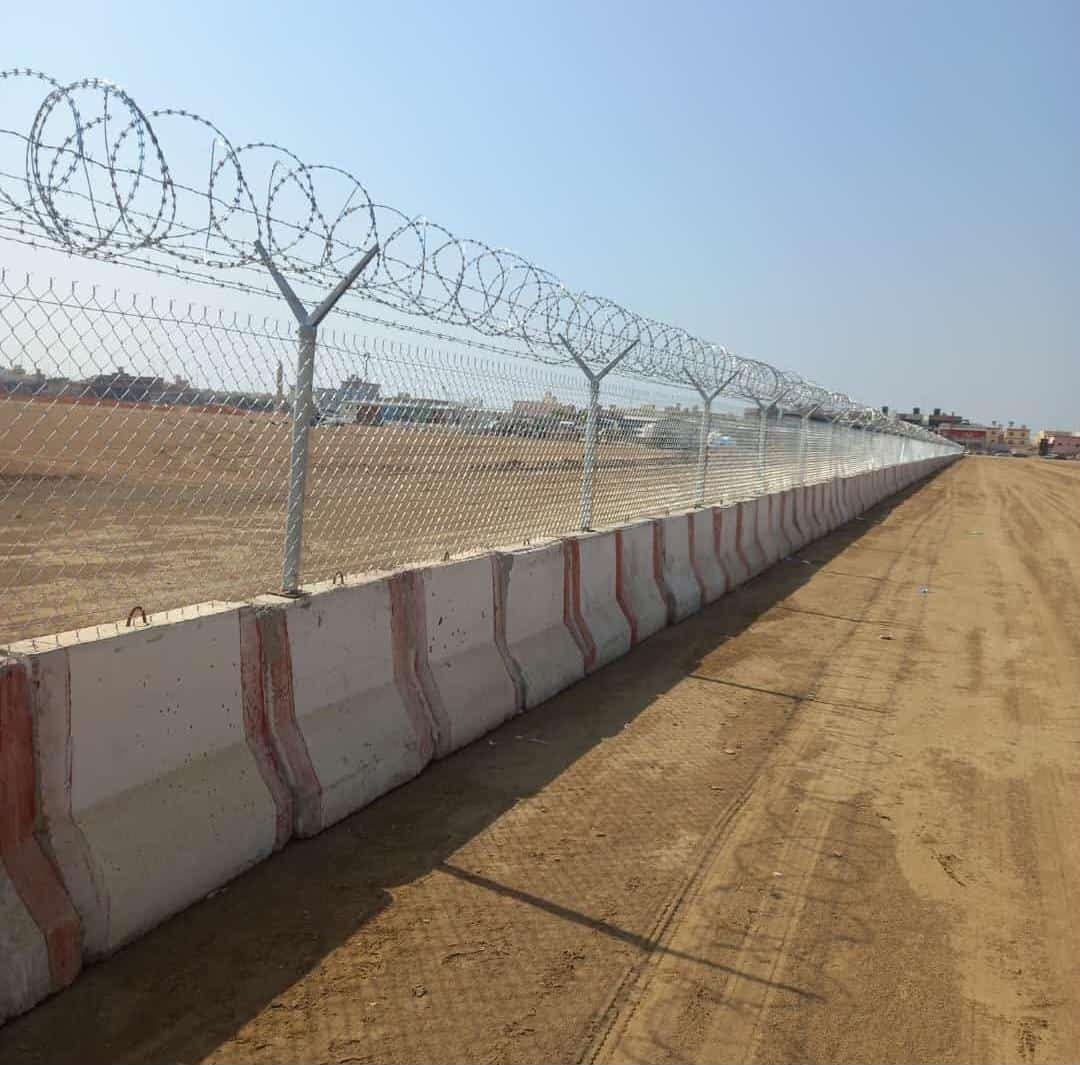
Planning a farm fence or a new chain-link entrance gate?
Speak with Shobok Rayat Najd about fencing requirements, gate configurations, and installation considerations for your property.
What Is the Final Recommendation for Preventing Fence Gate Sagging?
Preventing chain-link gate sagging requires a complete support system rather than a single adjustment or stronger latch. The frame, hinges, posts, foundations, bracing, and operating hardware must function together.
Proper installation reduces the likelihood of premature movement, while timely inspections help identify developing problems before they become serious.
For existing gates, diagnose the root cause before attempting repairs. For new gates, choose materials and installation methods based on actual site conditions and operational demands.
To learn more about chain-link fence installation and perimeter fencing services, visit the official Shobok Rayat Najd website.