



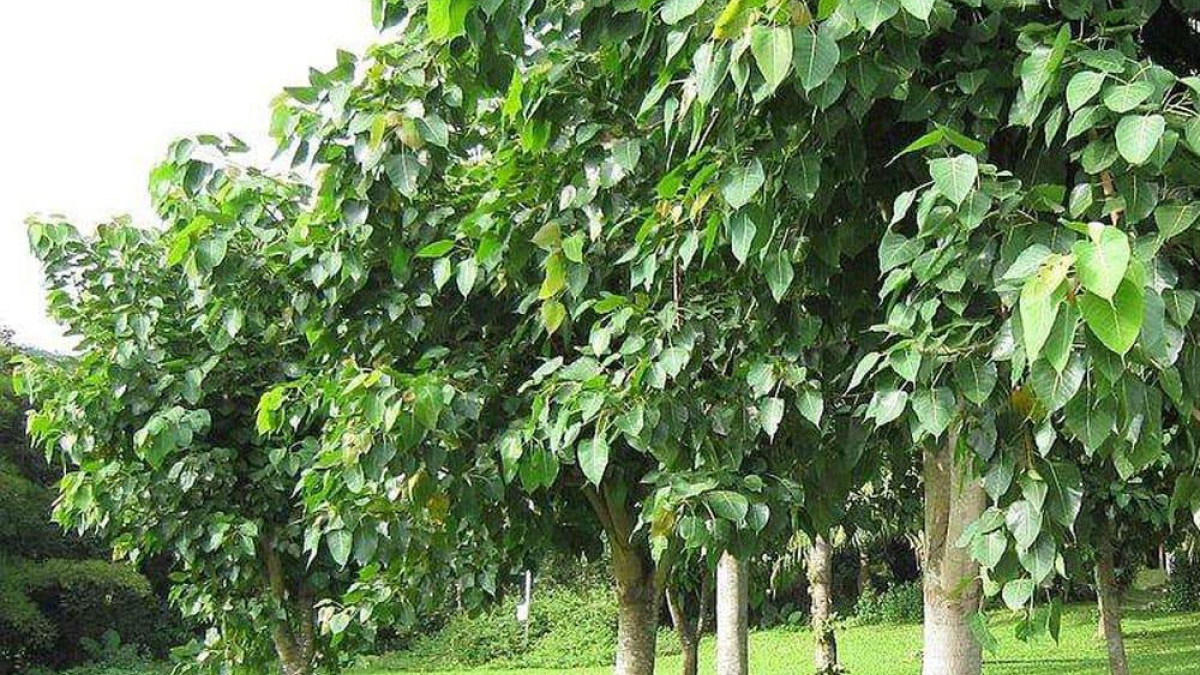
To choose trees for parking areas in Riyadh, prioritize species that tolerate local heat, provide useful canopy shade, and suit the available soil and rooting space. Consider mature tree size, pavement protection, irrigation needs, visibility, and maintenance access. Broad-canopy trees generally provide more parking shade than tall palms. A successful design combines suitable species with adequate planting areas and long-term maintenance.
Parking areas around commercial buildings, office complexes, shopping facilities, hospitals, hotels, residential compounds, and government properties often contain extensive paved surfaces exposed to direct sunlight.
In Riyadh, these surfaces can become uncomfortable during hot weather. Trees can provide shade, improve the appearance of parking environments, and contribute to better outdoor comfort when selected and positioned correctly.
However, planting the wrong species or placing trees in undersized planting pits can lead to pavement movement, limited growth, irrigation difficulties, maintenance problems, and disappointing shade coverage.
This guide from Rayat Najd Landscaping explains how to choose suitable parking area trees, understand the benefits of palms and Washingtonia, plan planting distances, assess root development, and manage installation costs in Saudi Arabia.
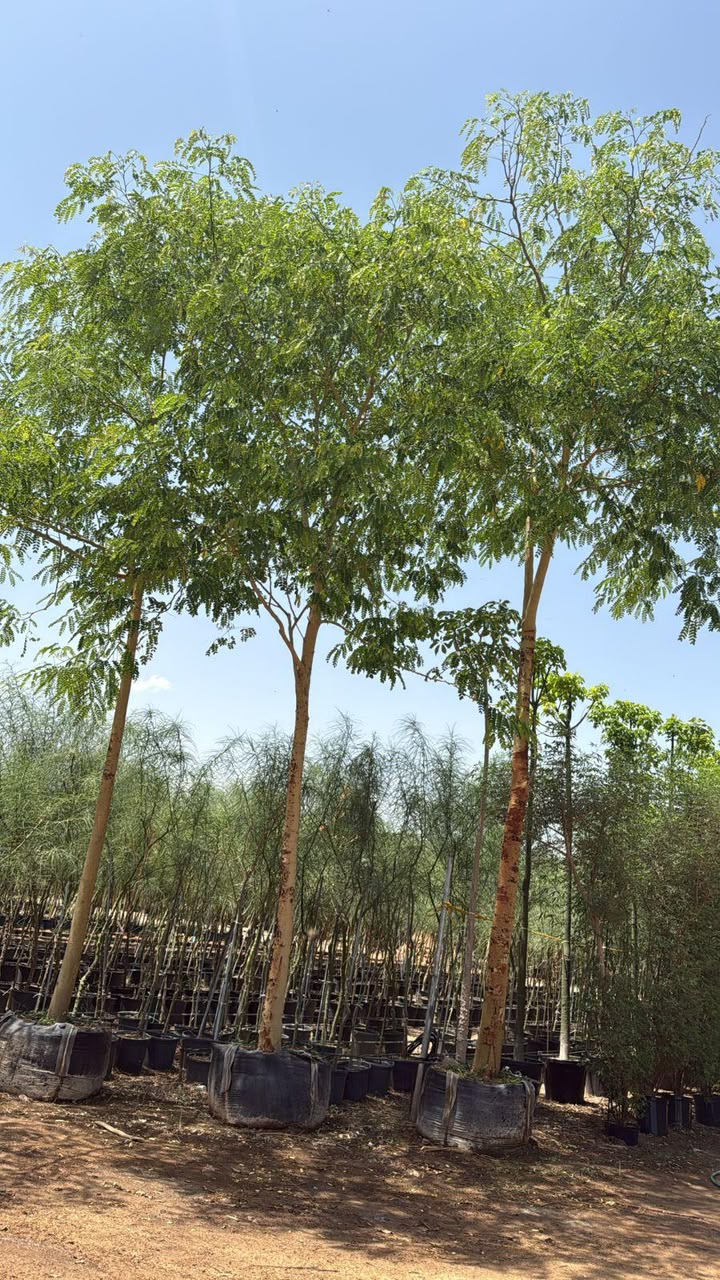
 Call Now
 WhatsApp
What Are Trees?
Trees are perennial woody plants that usually develop a persistent trunk or multiple woody stems, branches, roots, and a canopy. Their form and growth characteristics vary between species.
How are trees different from shrubs and palms?
Trees usually develop a substantial woody structure, while shrubs often branch closer to the ground, and palms have a different botanical growth structure.
Most familiar broadleaf shade trees are woody flowering plants with branching trunks and broad crowns.
Palms belong to the botanical family Arecaceae and usually develop a crown of large leaves above a distinctive trunk or stem.
These differences affect shade production, root behavior, maintenance, and landscape appearance.
Why are trees important in commercial parking areas?
Trees can shade paved surfaces, improve visual quality, and create more comfortable outdoor spaces.
The effectiveness depends on tree species, crown density, placement, maturity, climate, and the surrounding built environment.
When used correctly, trees become functional infrastructure rather than decorative elements alone.
Do all trees provide the same amount of shade?
No. Shade varies considerably with crown width, leaf density, canopy height, seasonal behavior, and sunlight direction.
A tall narrow palm may provide an attractive silhouette while shading a smaller portion of a parking bay than a broad-canopy tree.
Species selection should therefore reflect the practical purpose of the planting.
Which Trees Are Best for Parking Areas in Riyadh?
Good candidates are trees with appropriate heat tolerance, manageable mature dimensions, suitable root development, and the ability to grow in the available planting environment.
What native or adapted trees should I consider?
Sidr, certain acacia species, and selected adapted shade trees may be worth evaluating for suitable Riyadh landscapes.
Sidr, commonly associated with Ziziphus spina-christi, can develop a broad crown under favorable growing conditions.
Some acacia species may be suitable for arid-region landscaping, but their mature form, thorns, potential litter, and site requirements need assessment.
Species identity is important. Different trees sold under broad common names may have very different root systems, canopy shapes, and maintenance needs.
Are drought-tolerant trees always the best choice?
Not automatically. Drought tolerance is important, but it must be considered alongside shade, roots, soil conditions, and maintenance.
A tree can survive limited water yet fail to produce the useful canopy required for a commercial parking area.
The selection should balance survival, growth, safety, and the desired landscape function.
Should I plant fast-growing trees?
Fast growth may provide earlier shade, but it should not be the only selection criterion.
Some fast-growing species may require more pruning, irrigation, or structural management, depending on their characteristics.
Evaluate mature tree form and long-term maintenance before prioritizing rapid growth.
How do common tree options compare?
Compare each option by its functional shade potential and suitability for the actual parking environment.
| Tree Category | Potential Advantage | Important Consideration | Landscape Role |
|---|---|---|---|
| Sidr (Ziziphus spina-christi) | Potential for a broad canopy in suitable conditions | Thorns, fruits, mature dimensions, and site suitability | Selected shade areas with sufficient space |
| Selected acacia species | Some are adapted to arid environments | Species-specific crown, thorns, roots, and pruning | Appropriate landscaped buffers or shade locations |
| Other adapted broad-canopy trees | Potential to shade larger paved areas | Heat tolerance, water demand, roots, and mature crown | Primary parking-area shade |
| Date palms | Strong local landscape identity | Limited broad-canopy shade and fruit maintenance | Entrance accents and selected planting zones |
| Washingtonia palms | Tall architectural appearance | Narrower functional shade, leaf maintenance, mature height | Visual accents and appropriate perimeter locations |
Selection note: This table presents landscape considerations, not blanket planting approvals. Local suitability, species identification, mature size, and project requirements must be assessed before procurement.
Which Trees Provide the Best Shade for Parked Cars?
Broad-canopy trees generally offer more useful overhead shade than narrow or columnar plants, provided they have sufficient soil volume and room to develop.
Does canopy width matter more than tree height?
Canopy width is especially important for covering parking spaces, but height and crown density also affect shade.
A very tall tree with a narrow crown may cast a moving shadow that covers only part of a parking bay.
A well-positioned tree with a broad, healthy crown may provide a more useful shaded area.
Should I choose evergreen trees for parking areas?
Evergreen trees may provide more consistent foliage throughout the year, but their suitability depends on the species and site conditions.
Other trees may offer useful seasonal shade while having different maintenance and water requirements.
Choose based on the desired performance and local growing conditions.
How do I estimate future shade coverage?
Use the expected mature crown dimensions, planting location, sunlight orientation, and growth assumptions.
Landscape designers can assess the likely position of shade during relevant periods, including the hotter parts of the day.
Do not assume the size of a nursery tree represents its future canopy.
What Are the Benefits of Palm Trees?
Palm trees provide architectural identity, distinctive landscape character, and shade from their crowns. Their benefits vary by species, and they should not automatically replace broad-canopy trees where substantial parking shade is required.
Are date palms suitable for commercial parking areas?
Date palms may be suitable as landscape features when adequate planting space and maintenance access are available.
They can complement Saudi architectural styles and contribute to a recognizable local environment.
However, the crown shape may not cover multiple parking spaces as effectively as a broad shade tree.
Do date palms create maintenance problems near parked cars?
They can require management of fruit, old fronds, and other material that may fall or accumulate.
In a parking area, maintenance should account for vehicles, pedestrians, and safe access for palm-care equipment.
Consider these responsibilities before placing productive date palms directly above frequently used parking bays.
Can palm trees improve the appearance of a business entrance?
Yes. Palms can create strong visual rhythm and reinforce the identity of commercial entrances and landscaped avenues.
They can be combined with broader shade trees to balance architectural appearance with functional shade.
What Are the Benefits of Washingtonia Palms?
Washingtonia palms provide a tall, distinctive landscape silhouette and can be used as architectural accents. Their value in parking areas is primarily visual and spatial rather than providing the broad shade of a large spreading tree.
Are Washingtonia palms suitable for Riyadh's climate?
Washingtonia species are used in warm-climate landscapes, but suitability depends on species, soil, irrigation, exposure, and maintenance.
Correct identification is important because different Washingtonia species may vary in mature form and environmental tolerance.
Do Washingtonia palms provide enough shade for parking spaces?
They can cast shade, but their crown shape generally makes them less effective for covering large parking areas than broad-canopy trees.
They may still be appropriate at entrances, boundaries, and selected architectural locations.
What maintenance do Washingtonia palms require?
Maintenance may include inspection, management of old fronds, and safe specialist access as the palms grow taller.
Dead leaves and other material should be managed according to the species, site conditions, and appropriate arboricultural practices.
Do not assume all palms require the same pruning schedule.
Should I combine Washingtonia palms with shade trees?
Yes, when the site provides sufficient space and the planting composition serves both visual and functional goals.
Washingtonia can contribute vertical accents, while appropriately selected shade trees can provide canopy coverage over paved areas.
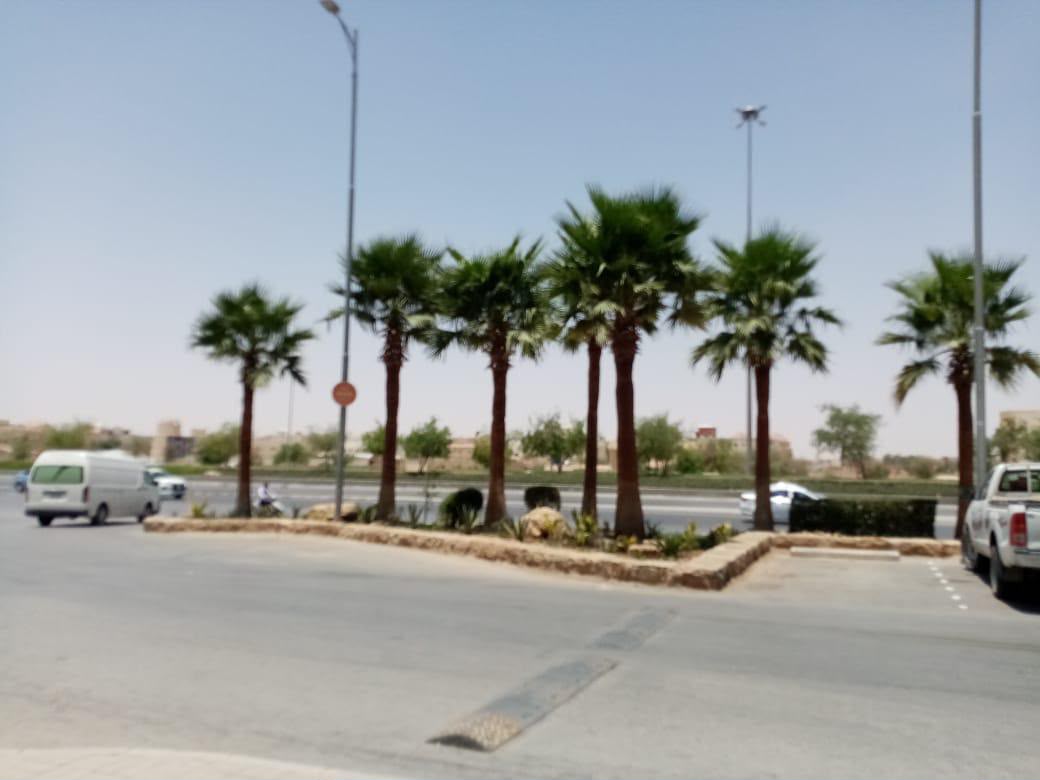
Where Are Trees Planted?
In parking landscapes, trees are commonly placed in engineered planting islands, perimeter landscape strips, and other approved zones that provide adequate rooting space without obstructing traffic or utilities.
Can trees be planted between parking spaces?
Yes, if the planting islands have sufficient soil volume and meet the site's engineering and circulation requirements.
The island should provide appropriate rooting conditions, protection from vehicle impact, and access for maintenance.
A very small decorative opening in pavement may not provide the long-term growing environment required for a large tree.
Should trees be planted at the end of parking rows?
Row-end planting islands may offer useful space for trees when vehicle movement and pedestrian circulation are protected.
The arrangement should preserve visibility, maneuvering space, and relevant accessibility requirements.
Can trees be planted near driveways and entrances?
Yes, but their position and mature growth must not obstruct sightlines, traffic signs, pedestrian routes, or building access.
Potential future canopy growth should be evaluated alongside the initial planting position.
Where should trees not be planted?
Avoid locations that conflict with essential utilities, approved access routes, insufficient soil space, or other site-specific restrictions.
Before planting, verify underground services, drainage systems, lighting infrastructure, and the approved landscape design.
How Far Should Trees Be Planted From Parking Spaces?
Tree spacing and setbacks should be determined by the selected species' mature dimensions, root zone needs, vehicle clearance, pavement design, and project requirements.
Is there one standard distance from the parking curb?
No universal setback is suitable for every tree species and parking layout.
The required distance depends on trunk size, planting island dimensions, crown development, vehicle geometry, and the type of curb protection.
How much space do tree roots need?
Roots need an adequate volume of suitable, aerated soil to support healthy growth.
Large trees may require substantially more rooting space than a small planting pit can provide.
The landscape design should evaluate effective soil volume, compaction, drainage, and irrigation rather than relying only on the visible surface opening.
How far apart should shade trees be planted?
Spacing should reflect expected mature canopy spread, species growth, and the desired relationship between adjacent trees.
Planting too closely may increase competition and long-term maintenance. Excessively wide spacing may delay the development of useful shade coverage.
Who determines the final planting distances?
The landscape designer should coordinate planting distances with the relevant civil, structural, utility, and accessibility requirements.
| Planting Location | Main Design Requirement | What Must Be Checked? |
|---|---|---|
| Between parking bays | Adequate soil and canopy space | Vehicle clearance, curbs, soil volume, and roots |
| End of parking rows | Shade and protection without obstructing circulation | Turning space and pedestrian safety |
| Parking perimeter | Canopy development and landscape continuity | Utilities, boundaries, and mature growth |
| Near building entrances | Comfortable approach and clear visibility | Accessible routes, lighting, and signage |
| Near underground services | Protection of infrastructure | Verified utility locations and approved setbacks |
How Do I Protect Parking Pavements From Tree Roots?
Protect pavements through suitable species selection, adequate rooting soil, correct planting positions, and engineered pavement or root-management systems where justified.
Can tree roots damage asphalt or concrete?
Roots can contribute to pavement displacement under certain conditions, particularly where available rooting space is restricted.
Surface movement may also involve soil conditions, construction quality, moisture, and pavement design.
It is important to determine the actual cause rather than assuming every crack is caused by nearby trees.
Are root barriers useful around parking trees?
Root barriers can help influence root growth in some designs, but they do not replace adequate soil volume and proper engineering.
Incorrect barriers may restrict healthy root development or create unintended growth patterns.
The barrier system should be selected and installed according to the site-specific design.
Should I choose trees with small root systems?
Choose species with root characteristics appropriate for the available environment, rather than assuming a healthy shade tree can thrive with very limited roots.
Large crowns require functioning root systems for water uptake, anchorage, and long-term health.
Can permeable surfaces help tree growth?
Appropriately designed permeable surfaces and engineered soil systems may support better water and air movement around roots.
Their suitability depends on the pavement structure, drainage design, expected loads, and maintenance requirements.
How Are They Planted?
Parking-area trees are planted by preparing an approved growing area, verifying soil and drainage conditions, positioning the root system correctly, and establishing appropriate irrigation and maintenance.
How do I prepare a planting island?
Prepare sufficient rooting space with suitable soil conditions and an approved design that protects nearby pavement and utilities.
Assess existing soil compaction, drainage, salinity where relevant, and the available planting volume.
Do not assume that filling a small opening with decorative soil will support the long-term development of a large shade tree.
How deep should the planting hole be?
The planting depth should accommodate the root ball while keeping the root flare at the appropriate finished soil level.
Planting too deeply may bury the root flare and create unfavorable conditions around the base of the trunk.
Hole width, soil treatment, and support requirements should follow the species, root-ball condition, and accepted planting specifications.
Should I remove the nursery container before planting?
Container-grown trees must be handled according to the root-ball and container requirements before installation.
Inspect the roots for severe circling or deformation and correct problems using appropriate arboricultural practices.
Never leave an unsuitable nursery container surrounding the roots.
Should I stake every newly planted tree?
Staking is not automatically required for every tree.
Use approved temporary support when needed, avoiding tight ties that injure the trunk or restrict normal movement.
Inspect and remove temporary supports when they are no longer required.
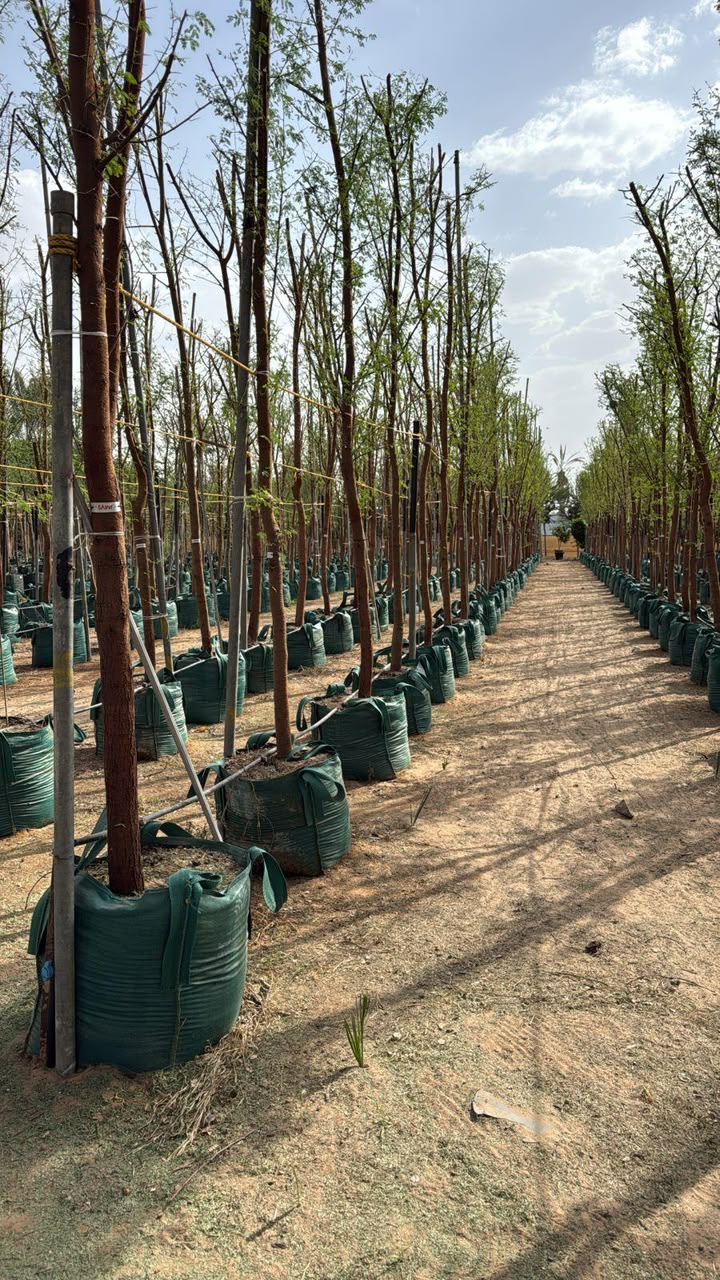
What Soil Is Best for Parking-Area Trees in Riyadh?
The best soil provides adequate root aeration, water availability, drainage, and physical space while meeting the requirements of the selected species.
Can trees grow in compacted parking-area soil?
Severe compaction can restrict root growth, drainage, and oxygen availability.
Parking construction may compact underlying soil to support pavement loads, but trees need an appropriate growing environment.
Where trees are integrated into paved areas, engineered planting systems may be needed to satisfy both structural and horticultural requirements.
Should I use sand or compost in planting pits?
Soil amendments should be selected according to the actual soil properties and planting specification.
Adding large quantities of one material without assessment can create uneven water movement or other problems.
A soil test can help determine appropriate preparation methods.
How do I know whether the soil is too saline?
Use suitable laboratory testing and assess irrigation water quality when salinity is a concern.
Visual symptoms alone may overlap with heat, nutrient, drainage, or irrigation problems.
Soil and water test results provide a more reliable basis for treatment decisions.
How Do I Water Parking-Area Trees During Riyadh Summer?
Use an irrigation design that delivers adequate water to the active root zone while accounting for tree species, weather, soil conditions, and growth stage.
Is drip irrigation suitable for parking-area trees?
Drip irrigation can be suitable when emitters are correctly selected, positioned, and maintained.
The system should wet a useful portion of the root zone rather than concentrating water permanently in a very small area.
Should newly planted trees receive more frequent irrigation?
Newly planted trees often need closer moisture monitoring while their roots establish in the surrounding soil.
The appropriate frequency depends on root-ball conditions, species, weather, and soil drainage.
A fixed schedule for every tree and season is not reliable.
Can overwatering damage parking-area trees?
Yes. Excess water and poor drainage can reduce oxygen availability in the root zone and damage tree health.
Monitor moisture conditions and irrigation performance rather than assuming that hotter weather always justifies unrestricted watering.
Should irrigation systems be checked regularly?
Yes. Inspect emitters, valves, water pressure, leakage, and distribution uniformity.
Parking landscapes may contain separate planting islands, making consistent water delivery especially important.
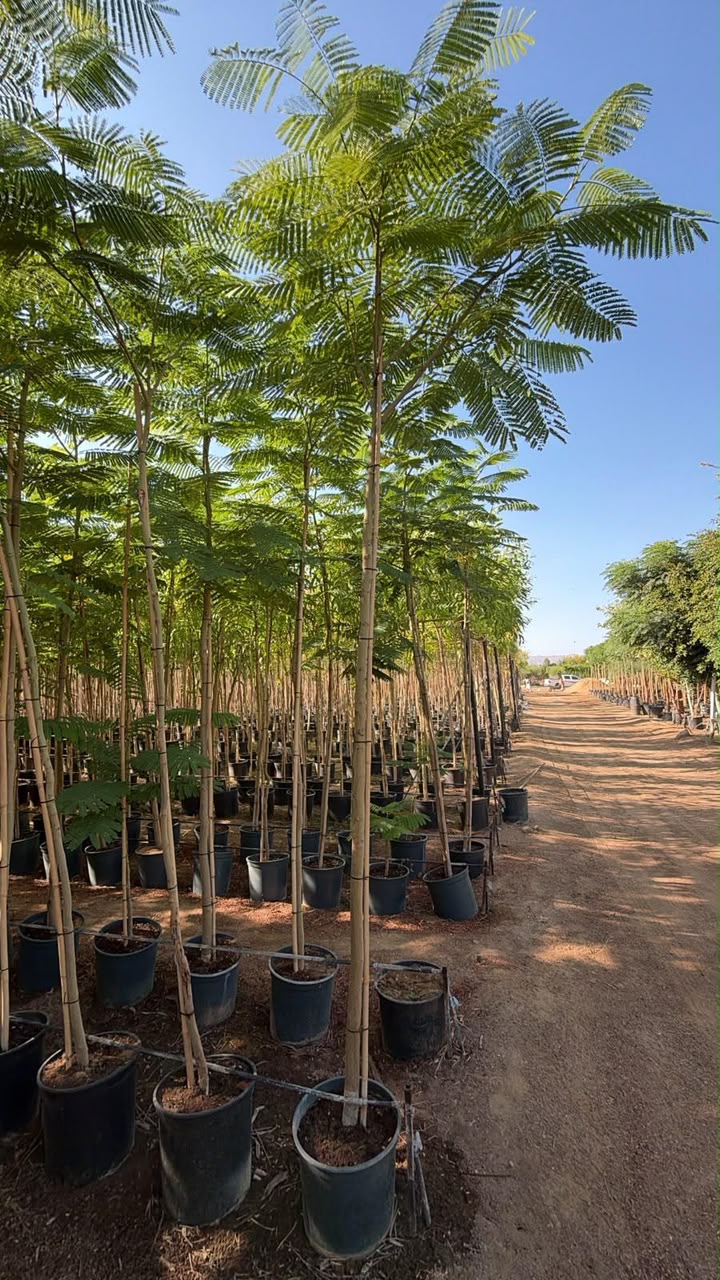
When Is the Best Time to Plant Parking-Area Trees in Riyadh?
Planting is often easier to manage during milder weather, but the suitable timing depends on species, nursery stock, project conditions, and the ability to provide reliable aftercare.
Is autumn suitable for planting trees in Riyadh?
Autumn can provide favorable conditions for many planting projects as temperatures become milder.
However, species-specific requirements and actual weather conditions should guide the final schedule.
Can trees be planted during summer?
Summer planting may be possible under controlled conditions, but high temperatures increase the importance of careful handling and irrigation management.
The project should assess plant condition, site access, delivery timing, and establishment support.
Should I delay planting until irrigation is ready?
Yes. Trees should not be installed before a reliable establishment watering arrangement is available.
Failure to provide water promptly after planting can jeopardize the project regardless of the season.
How Do I Keep Parking Trees Healthy During Extreme Heat?
Maintain suitable root-zone moisture, protect planting areas from unnecessary compaction, monitor tree condition, and use maintenance practices appropriate to the selected species.
Does mulch help parking-area trees?
Appropriate organic mulch may help moderate soil conditions and reduce surface evaporation.
Keep mulch away from direct contact with the trunk and follow the landscape specification for suitable materials and depth.
Should I fertilize trees during extreme heat?
Fertilizer should be applied according to plant needs and soil or tissue assessment rather than automatically during high temperatures.
Unnecessary or excessive fertilization can create additional stress or nutrient imbalance.
How do I recognize heat stress?
Possible symptoms include leaf wilting, discoloration, scorching, or reduced growth, but these signs are not exclusive to heat.
Check soil moisture, drainage, irrigation performance, and root-zone conditions before deciding on treatment.
Can parked vehicles damage young trees?
Yes. Vehicles may damage trunks, planting islands, irrigation components, and soil surfaces if adequate protection is missing.
The landscape design should prevent vehicle encroachment without obstructing necessary circulation.
How Do I Prune Trees Above Parking Spaces?
Use professional pruning to develop safe, structurally appropriate crowns while preserving tree health and the shade required by the landscape.
Should I remove low branches above parked cars?
Branches may require clearance management when they interfere with vehicles, people, or approved access routes.
Pruning should consider tree species, age, structural condition, and the long-term crown shape.
Is topping a shade tree a good way to control height?
No. Severe topping can damage tree structure and encourage undesirable regrowth.
Use appropriate pruning techniques rather than indiscriminately cutting the upper crown.
Can pruning reduce the amount of parking shade?
Yes. Excessive pruning can remove useful canopy and reduce the intended shade coverage.
Maintenance should balance clearance and structural management with the original landscape objectives.
How Do I Avoid Problems With Falling Fruit and Leaves?
Select species with maintenance characteristics suitable for the parking environment, and establish a practical inspection and cleaning program.
Should fruit-producing trees be planted above cars?
Fruit-bearing trees require additional consideration because fallen fruit can create cleaning and maintenance demands.
The suitability depends on the species, fruit characteristics, placement, and available maintenance resources.
Do deciduous trees create excessive maintenance?
Some deciduous trees produce seasonal leaf litter, but the maintenance burden varies considerably by species and site.
Compare the cleaning needs with the tree's shade value and other benefits.
Can trees attract birds to parking areas?
Some trees may attract birds through fruits, flowers, or shelter.
Species selection and planting position can help manage potential conflicts with heavily used parking spaces.
What Are the Types of Trees, How, When and Why?
Parking landscape trees can be grouped by canopy shape, foliage characteristics, growth habits, and functional purpose. Species should be selected for the site's conditions and planted according to their seasonal and maintenance requirements.
How should I classify trees for a parking project?
Classify them according to the role they are expected to perform, not only their appearance.
Primary shade trees, entrance accents, boundary trees, and ornamental planting can have different selection requirements.
When should broad-canopy trees be used?
Use broad-canopy trees where useful surface shade is a primary objective and sufficient growing space exists.
The design should account for mature crown dimensions and root development.
Why should palms be separated from primary shade requirements?
Palms can offer valuable architectural character, but they generally do not form the same broad crown as many conventional shade trees.
Combining functional shade planting with carefully positioned palms may produce a more balanced landscape.
How do I match tree type with planting purpose?
Choose the species and planting arrangement according to the required shade, available space, maintenance capacity, and visual objective.
| Landscape Objective | Tree Type to Evaluate | Planting Priority | Reason |
|---|---|---|---|
| Shade over parking bays | Suitable broad-canopy trees | Early landscape planning | Large root zones and future canopy space may be required |
| Commercial entrance identity | Selected palms or ornamental trees | After circulation and access design | Visual appearance must not obstruct movement |
| Perimeter landscaping | Appropriate adapted tree species | Following boundary and utility assessment | Mature growth must fit available space |
| Pedestrian comfort | Shade trees with suitable crown clearance | During pedestrian route design | Shade and unobstructed access are both important |
| Long-term low-maintenance landscape | Site-adapted species with manageable growth characteristics | Before procurement and installation | Species selection influences future water and care demands |
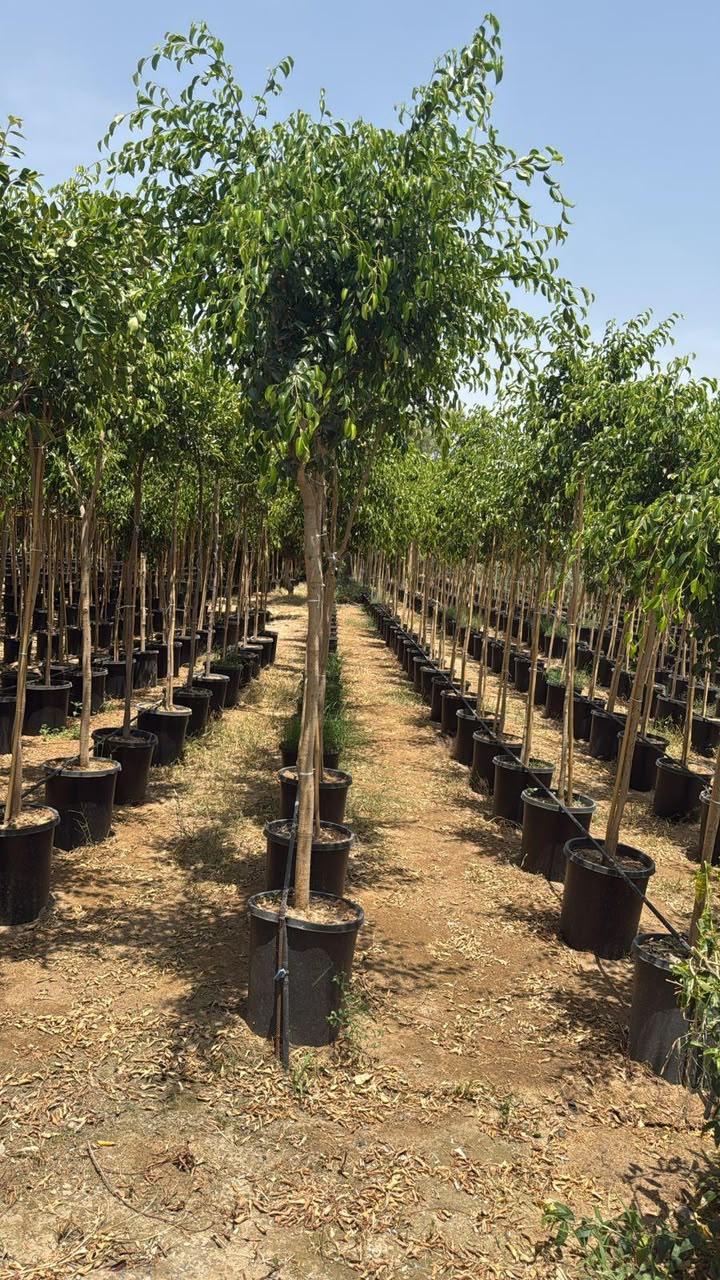
How Much Does Planting Cost?
Tree planting costs depend on species, nursery size, quantity, site preparation, soil conditions, irrigation, transportation, access, and maintenance requirements.
How much does one shade tree cost in Riyadh?
There is no single reliable price for all shade trees because costs vary by species, size, quality, and supplier.
A young container-grown tree and a large established nursery specimen involve very different procurement and installation requirements.
Request current quotations based on botanical species names, plant sizes, and acceptance specifications.
Does buying a larger tree increase installation costs?
It often does because larger trees may require additional handling, transportation, lifting, and planting resources.
Larger stock may also require more intensive establishment care.
The decision should consider total installed cost and long-term performance rather than immediate appearance alone.
Does irrigation installation affect the price?
Yes. Irrigation infrastructure can contribute to project cost through piping, valves, emitters, controls, connection works, and commissioning.
The system should be designed for the selected trees and site conditions.
How do I compare tree planting quotations?
Compare equivalent plant specifications and complete installation scopes rather than tree purchase prices alone.
| Cost Item | What Affects the Cost? | What to Request in the Quotation |
|---|---|---|
| Tree supply | Species, quantity, size, and nursery quality | Botanical name, size specifications, and quantity |
| Site preparation | Excavation, compaction, soil conditions, and accessibility | Defined civil and soil preparation works |
| Planting systems | Rooting volume, engineered soil, and pavement interfaces | Approved planting details and materials |
| Irrigation | Water source, components, control system, and installation | Irrigation scope, testing, and commissioning |
| Transportation and planting | Tree size, equipment, lifting, and site access | Delivery and installation responsibilities |
| Establishment maintenance | Duration, inspections, watering, and plant care | Defined maintenance and replacement conditions |
Pricing note: The table identifies cost components rather than invented market prices. A reliable project price requires current nursery quotations, site details, quantities, and an agreed scope of work.
What Is the Lifespan of Trees in Years?
Tree lifespan varies substantially by species, growing conditions, disease exposure, structural condition, and maintenance. There is no single lifespan that applies to all parking-area trees.
Can shade trees live for several decades?
Yes. Many tree species can live for decades under suitable conditions, while others have shorter or longer potential lifespans.
Actual performance in paved environments may differ from a species' biological potential because of restricted soil, compaction, damage, and maintenance conditions.
How long do date palms live?
Date palms are long-lived plants that can survive for many decades in suitable conditions.
Productive lifespan, landscape lifespan, and biological lifespan are not identical measurements.
The actual condition of an individual palm is more important than assigning it a universal expiration age.
How long do Washingtonia palms live?
Washingtonia palms can be long-lived, but actual lifespan depends on species, location, environmental stress, and maintenance.
A precise lifespan should not be promised for an individual specimen without reliable species and site information.
How do I extend the useful life of parking trees?
Provide suitable rooting conditions, irrigation, structural care, and protection from construction and vehicle damage.
Regular inspections can identify problems before they seriously affect the tree's safety or health.
How Can I Reduce Parking-Lot Landscaping Maintenance Costs?
Reduce long-term maintenance demands through appropriate species selection, reliable irrigation, adequate growing space, and a practical care plan.
Are native trees always cheaper to maintain?
Not automatically. Native or well-adapted trees may offer environmental advantages, but maintenance costs depend on the species and installation.
Some trees require specific pruning, litter management, irrigation, or pest monitoring regardless of origin.
Does better soil preparation reduce future problems?
Appropriate soil preparation can reduce avoidable establishment problems and support healthier root growth.
However, the benefits depend on selecting the correct soil system and maintaining the planting environment.
Should I use automatic irrigation controls?
Automatic controls can help manage watering consistently when the system is properly designed, programmed, and maintained.
Automation does not eliminate the need to inspect plant condition and irrigation performance.
What Are the Most Common Parking Tree Planting Mistakes?
Common mistakes include choosing trees for appearance alone, providing insufficient rooting space, ignoring utilities, and failing to plan for mature canopy growth.
Why do some parking trees remain small for years?
Restricted soil volume, compaction, irrigation problems, species characteristics, or poor planting conditions can limit growth.
Diagnosis should be based on the actual growing environment rather than a single assumption.
Can planting too close to pavement cause problems?
Yes. An unsuitable position may create conflicts involving roots, trunks, vehicle movement, or pavement maintenance.
Use an approved planting layout that accounts for mature tree dimensions.
Why is planting palms for all parking shade a weak strategy?
Palms often provide less broad overhead coverage than spreading shade trees.
They can add important visual value but may not meet the primary objective of shading parked vehicles.
How do I prevent the main mistakes?
Check the tree species, growing space, location, irrigation, and long-term maintenance before procurement.
- Avoid choosing species from appearance alone.
- Do not assume every drought-tolerant tree provides adequate shade.
- Do not plant large trees in undersized soil openings.
- Do not excavate before identifying buried utilities.
- Do not ignore future trunk and crown dimensions.
- Do not install irrigation without testing distribution.
- Do not place trees where they block visibility or accessible routes.
- Do not assume palms provide the same shade as broad-canopy trees.
- Do not apply fixed watering schedules without evaluating soil moisture.
- Do not skip establishment monitoring after planting.
How Do I Design Parking Landscaping for Commercial Properties?
Develop the landscape design alongside parking circulation, utilities, accessibility, drainage, lighting, and maintenance requirements rather than treating planting as a final decorative addition.
Should landscape design begin before paving construction?
Yes. Early coordination makes it easier to reserve adequate planting areas and protect future tree root zones.
Retrofitting trees into a completely paved site may require additional civil works and utility coordination.
Can trees interfere with parking area lighting?
Yes. Mature branches may obstruct lighting distribution if tree and lighting positions are not coordinated.
The design should consider expected canopy growth while preserving suitable visibility and illumination.
How do I plan landscaping around pedestrian routes?
Position trees to provide shade without obstructing accessible circulation or required pedestrian clearance.
Tree trunks, roots, branches, irrigation systems, and planting beds should be considered together.
Should commercial properties mix trees and palms?
A balanced combination may be appropriate when it meets the site's shade, appearance, and maintenance requirements.
Use broad-canopy trees where functional shade is needed and palms where their architectural character supports the design.
What Saudi Regulations Should I Check Before Planting Parking Trees?
Review the requirements applying to the specific development, including building, landscaping, accessibility, utility, and site-approval conditions.
Does the Saudi Building Code affect parking landscaping?
Relevant building and site requirements may affect planting positions, circulation, accessibility, and construction details.
Consult the Saudi Building Code official website and the current project requirements.
Do I need permission to plant trees near public roads?
Work affecting public land, road corridors, sidewalks, or municipal infrastructure may require approval from the relevant authority.
Do not assume private property landscape permissions automatically extend into public areas.
Where can I find information about Saudi planting initiatives?
Official Saudi environmental and urban greening initiatives provide useful context for sustainable planting and vegetation development.
For information about environmental programs and vegetation initiatives, consult the National Center for Vegetation Cover Development and Combating Desertification.
For Riyadh's urban greening program, see the official Royal Commission for Riyadh City website.
These resources do not replace the approvals and technical requirements applicable to an individual parking project.
How Do I Choose a Tree Planting Contractor in Riyadh?
Choose a contractor that can work from an approved landscape design, provide properly identified plant material, coordinate irrigation and planting details, and define establishment responsibilities.
Should I request botanical names in the quotation?
Yes. Botanical names help avoid confusion between different species sold under similar common names.
The quotation should also define plant sizes, nursery condition, quantities, and relevant quality requirements.
Should planting and irrigation be included together?
They should be coordinated even when different contractors perform the work.
Tree installation without a functioning irrigation arrangement can compromise establishment.
Should a contractor provide a maintenance plan?
A defined establishment and maintenance scope is valuable for commercial tree planting projects.
Clarify watering responsibilities, inspections, defect correction, and any agreed plant replacement provisions.
How can Rayat Najd Landscaping help?
Rayat Najd Landscaping can be contacted to discuss tree supply, planting, irrigation, and commercial landscaping requirements.
Through the official Rayat Najd Landscaping website, property owners and project managers can request information about landscape services and discuss an appropriate project scope.
What Are the Most Common Questions About Parking Trees in Riyadh?
These frequently asked questions address tree selection, palms, planting locations, installation costs, lifespan, and long-term parking landscape performance.
1. What are trees?
Trees are perennial woody plants that develop persistent stems and crowns. Their growth characteristics determine suitability for different landscape applications.
2. What are the benefits of palm trees?
Palm trees provide architectural character, local landscape identity, and some crown shade. They can complement broad-canopy trees in commercial landscapes.
3. What are the benefits of Washingtonia palms?
Washingtonia palms offer a distinctive tall appearance and can be used as landscape accents. They generally provide less broad shade than spreading canopy trees.
4. Where are trees planted?
Parking-area trees are commonly planted in approved islands, landscape strips, and perimeter zones. Locations must provide suitable rooting space and preserve access.
5. How are they planted?
Prepare the soil and planting area, inspect the root ball, position the tree at the correct depth, and provide suitable irrigation and establishment care.
6. How much does planting cost?
Costs depend on species, size, quantity, soil preparation, irrigation, transport, and installation conditions. Request a quotation based on actual project specifications.
7. What is the lifespan of trees in years?
Lifespan varies by species and growing conditions. Many trees can live for decades, but restricted rooting conditions and poor maintenance may shorten their useful life.
8. What are the types of trees, how, when and why?
Choose trees by their function, mature form, climate suitability, and maintenance requirements. Planting timing should reflect weather and the species' establishment needs.
9. Which trees provide the best parking shade?
Suitable broad-canopy trees generally provide more functional parking shade than tall narrow palms. The best species depends on available soil space, water, and site conditions.
10. How far should trees be planted from parking spaces?
Distances should follow the approved landscape and civil design, taking into account mature tree size, roots, parking clearance, and underground services. No universal distance suits every tree and site.
What Should I Check Before Planting Trees in a Parking Area?
Use a project checklist to confirm tree suitability, planting positions, irrigation, root space, safety, and long-term maintenance before work begins.
What is the essential parking tree planting checklist?
Complete these checks before procuring trees or starting excavation.
- ☐ Identify the parking area's main landscape objective.
- ☐ Confirm whether shade or architectural appearance is the priority.
- ☐ Review the approved parking and landscape drawings.
- ☐ Select tree species using accurate botanical names.
- ☐ Evaluate heat tolerance and local environmental suitability.
- ☐ Confirm mature tree height and canopy spread.
- ☐ Assess root characteristics and growing-space requirements.
- ☐ Reserve adequate planting island dimensions and soil volume.
- ☐ Identify underground utilities before excavation.
- ☐ Check parking circulation and maneuvering clearances.
- ☐ Protect pedestrian routes and accessibility requirements.
- ☐ Coordinate tree positions with lighting and signage.
- ☐ Evaluate fruit, leaf litter, and pruning requirements.
- ☐ Test soil and irrigation water where appropriate.
- ☐ Prepare a reliable irrigation design.
- ☐ Verify nursery plant quality before delivery.
- ☐ Agree on planting methods and root-ball handling.
- ☐ Establish an initial tree care and inspection plan.
- ☐ Define contractor responsibilities and quality checks.
- ☐ Confirm any required project or municipal approvals.
What should I check during tree installation?
Verify that the installed species, planting positions, soil conditions, root-ball depth, and irrigation match the approved requirements.
Protect trees and surrounding infrastructure during handling and planting.
What should I inspect after installation?
Inspect tree stability, irrigation delivery, soil moisture, planting depth, and signs of damage or stress.
Establishment inspections should continue according to the approved maintenance plan rather than ending immediately after planting.
How Do I Plan a Parking Tree Project From Start to Finish?
Develop the project in stages, beginning with site assessment and tree selection, followed by planting design, installation, and establishment monitoring.
What should happen during the planning stage?
Confirm shade objectives, parking geometry, soil conditions, utilities, species selection, and the approved landscape arrangement.
This prevents costly changes after paving and other infrastructure are already complete.
What should happen during installation?
Prepare approved planting areas, verify nursery stock, install irrigation, and plant the trees according to the specified methods.
Quality checks should be completed before accepting each stage.
What should happen after planting?
Monitor tree establishment, soil moisture, irrigation performance, and structural condition.
Make maintenance decisions according to actual tree needs and documented observations.
How can I organize the complete project?
Use a phased plan that clearly identifies the work and acceptance requirements.
| Project Phase | Main Activity | Required Output | Quality Check |
|---|---|---|---|
| Site assessment | Review parking, soil, utilities, and environmental conditions | Site requirements | Verified constraints and project objectives |
| Landscape design | Select species and prepare planting layout | Approved planting drawings | Shade, rooting space, access, and utility coordination |
| Procurement | Source trees and installation materials | Approved plant and material schedule | Species identity and nursery quality |
| Site preparation | Prepare soil, irrigation, and planting islands | Planting-ready areas | Rooting conditions and irrigation checks |
| Tree installation | Transport and plant approved specimens | Installed landscape | Planting depth, placement, condition, and stability |
| Establishment | Monitor watering, growth, and maintenance needs | Maintenance and inspection records | Tree health and completed corrective actions |
How Do I Get a Professional Parking Tree Planting Plan in Riyadh?
Start by providing the parking layout, project location, planting objectives, available water source, and any existing landscaping or infrastructure constraints.
Should I request a site assessment before buying trees?
Yes. A site assessment can identify constraints that influence species selection, planting costs, and long-term performance.
This is especially important where paving, underground utilities, and limited rooting space are involved.
Should I plant mature trees or smaller nursery trees?
Choose according to the balance between immediate appearance, cost, handling requirements, and establishment potential.
Larger specimens may provide more immediate visual impact but can require more complex installation and establishment management.
How can Rayat Najd Landscaping support my project?
Rayat Najd Landscaping can be contacted to discuss tree selection, supply, planting, irrigation, and landscape development requirements.
Provide the site dimensions, property type, desired shade coverage, and available project documentation so an appropriate scope can be discussed.
How Do I Choose Trees for Parking Areas in Riyadh Successfully?
Choose trees that match the parking area's practical needs, not simply those that look attractive at the nursery. Prioritize broad-canopy shade where appropriate, adequate soil volume, safe placement, compatible irrigation, and long-term maintenance.
What is the most important decision before planting?
Determine whether the primary goal is functional shade, architectural appearance, or a combination of both.
This decision influences species choice, planting positions, rooting space, and future maintenance requirements.
Should I use palms as the main parking shade trees?
Palms can complement the landscape, but broad-canopy species are generally more appropriate when substantial shade over parking spaces is the main objective.
Use each plant category according to its strengths and the available growing environment.
How do I request tree planting services from Rayat Najd Landscaping?
Contact Rayat Najd Landscaping and provide the parking area's dimensions, location, existing conditions, and landscape objectives.
If your question is How Do I Choose Trees for Parking Areas in Riyadh?, the most reliable approach is to combine suitable species, engineered planting space, practical shade planning, and professional establishment care.
For information about planting, irrigation, tree supply, and commercial landscaping services, visit Rayat Najd Landscaping.
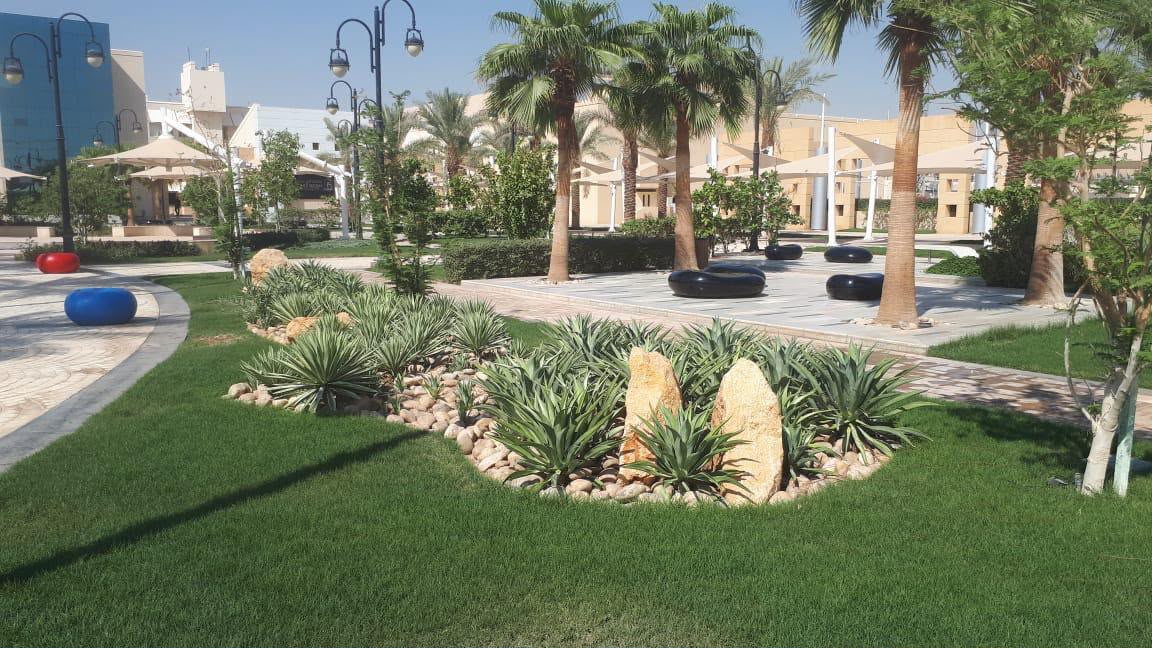
Rayat Najd Landscaping | Tree Planting, Irrigation and Landscape Development – Riyadh, Saudi Arabia.