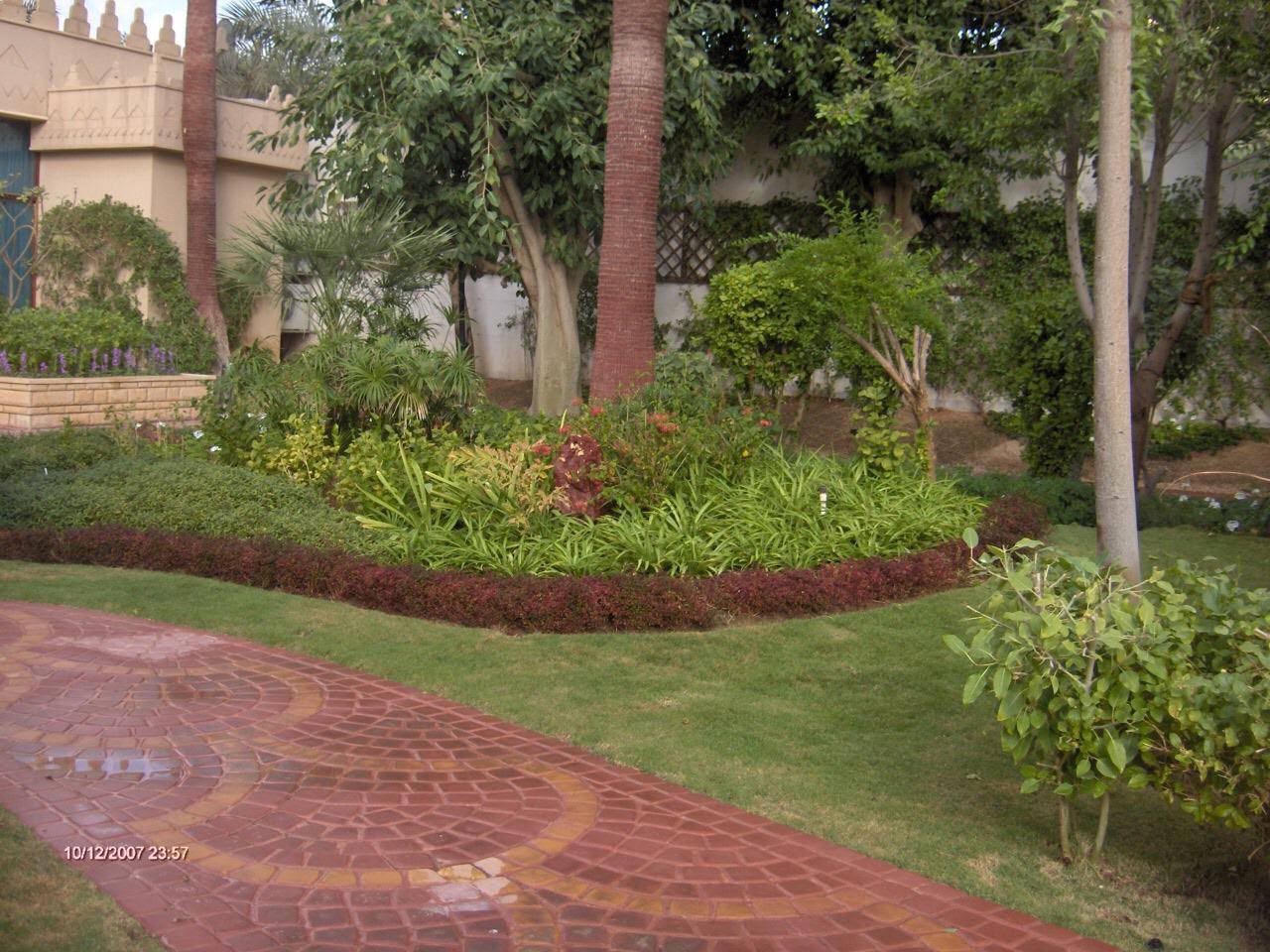



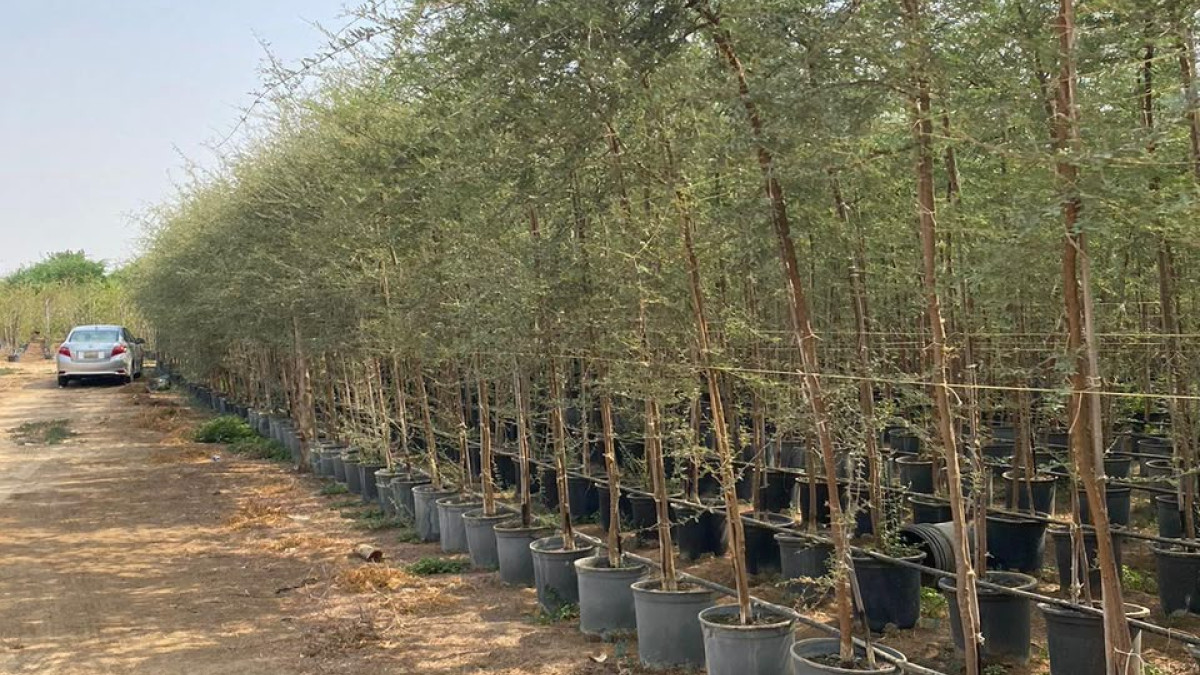
To plant shade trees along Riyadh walkways, select climate-appropriate species with suitable mature canopies, provide sufficient rooting space, and maintain safe pedestrian clearance. Check underground utilities before planting, design efficient irrigation, and position trees to create useful shade without damaging pavement. After installation, monitor soil moisture, root establishment, pruning, and walkway accessibility.
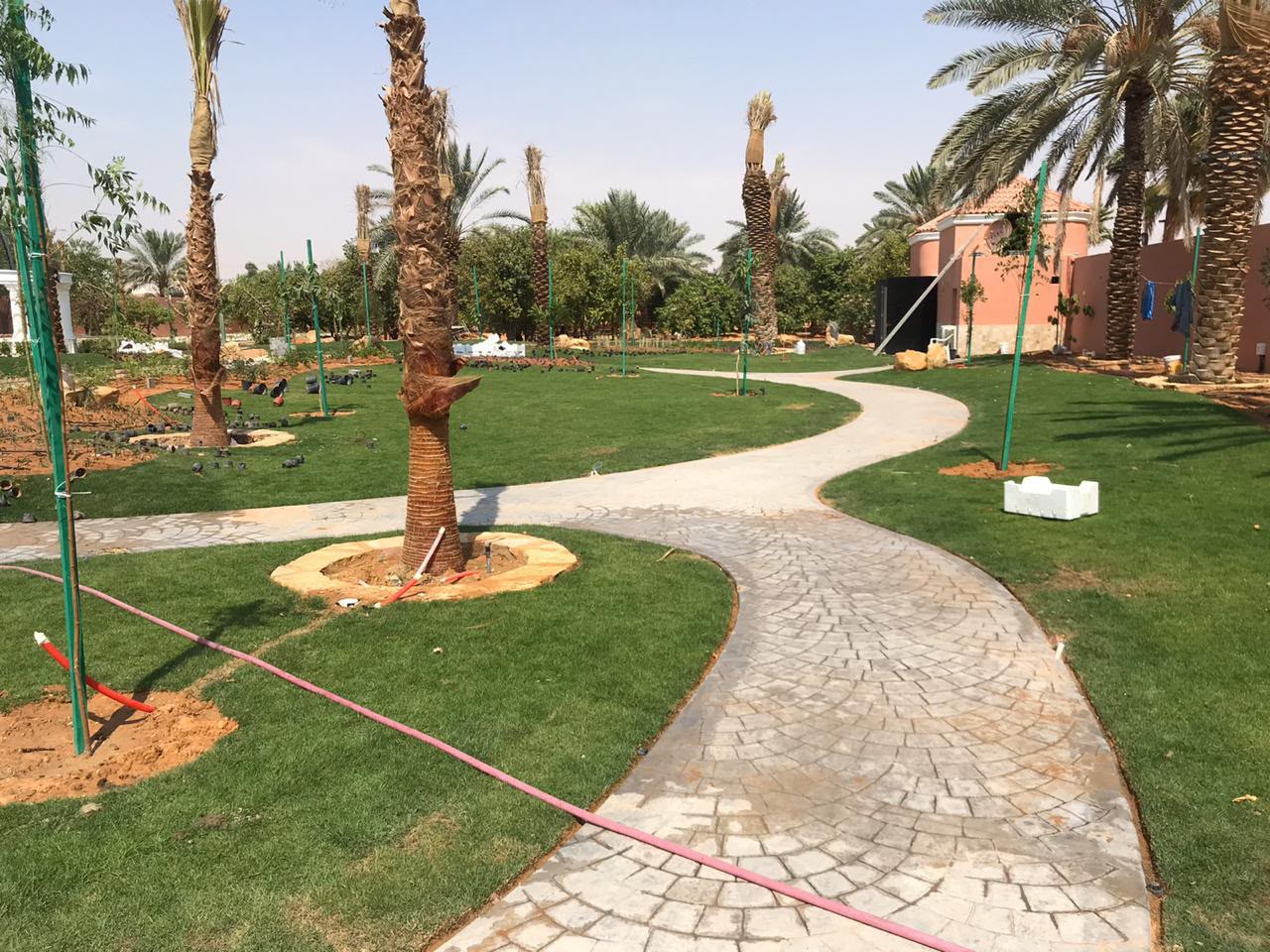
Creating comfortable pedestrian routes is an important part of landscape design for commercial buildings, residential communities, hotels, schools, hospitals, and public spaces in Riyadh.
However, planting trees beside walkways requires more planning than placing decorative plants along a garden border. The design must account for mature tree size, pavement stability, soil conditions, visibility, pedestrian movement, and long-term maintenance.
Riyadh's hot and arid climate makes the relationship between shade, water management, and tree survival especially important. A visually attractive planting arrangement may perform poorly if the selected species does not suit the available rooting space or irrigation system.
A successful project should provide shade over time while keeping walking routes clear, accessible, and safe.
Rayat Najd Landscaping provides landscaping and tree-planting services in Saudi Arabia. This guide explains how to plan and maintain walkway trees with practical considerations for Riyadh's climate.
 Call Now
 WhatsApp
Why Should I Plant Shade Trees Along Riyadh Walkways?
How do trees make pedestrian walkways more comfortable?
Tree canopies can block direct sunlight and reduce solar exposure along pedestrian routes.
The actual benefit depends on canopy density, tree position, the time of day, and surrounding surfaces. Trees should be selected and arranged according to the shade they can provide at maturity.
Can trees improve the appearance of commercial walkways?
Yes. Well-organized planting can improve the visual character of entrances, courtyards, pedestrian promenades, and commercial developments.
However, attractive landscaping must still preserve pedestrian movement, visibility, maintenance access, and necessary service routes.
What Are Trees?
What is the difference between a tree and a shrub?
A tree is generally a perennial woody plant that develops a substantial above-ground framework, often with a dominant trunk or multiple structural stems.
Shrubs generally have smaller, bushier growth forms, although botanical and horticultural classifications can overlap.
What makes a tree suitable for walkway planting?
A suitable walkway tree provides the desired landscape function while remaining compatible with available space, soil, climate, and maintenance conditions.
Its mature canopy, root development, branch clearance, and water requirements are more important than its appearance when young.
What Are the Best Types of Shade Trees for Riyadh Walkways?
Which tree species should I consider for Riyadh?
Consider climate-adapted species whose mature growth, canopy form, and irrigation requirements match the specific planting location.
Potential candidates for site-specific assessment may include suitable local acacias, ghaf, and selected landscape shade trees. Species identity, water needs, root behavior, and municipal acceptance should be confirmed before purchase.
Are native trees always the best choice?
Native species are often valuable because of their ecological compatibility, but suitability still depends on the individual planting site.
A native tree with unsuitable thorns, branch structure, or mature dimensions may be inappropriate beside a narrow, busy walkway.
| Tree category | Potential walkway benefit | Main limitation | What to verify |
|---|---|---|---|
| Climate-adapted broad-canopy trees | Potential pedestrian shade | Large mature footprint | Canopy spread and root space |
| Native acacia species | Local landscape character | Species-specific thorns and structure | Pedestrian suitability |
| Ghaf trees | Broad canopy potential in suitable sites | Substantial mature size | Soil volume and clearance |
| Date palms | Architectural landscape character | Limited continuous overhead shade | Frond and fruit maintenance |
| Washingtonia palms | Formal vertical landscape rhythm | Canopy height and limited shade footprint | Species and frond management |
| Smaller ornamental trees | Useful in constrained areas | Potentially limited shade | Mature height and canopy width |
How Do I Choose the Right Trees for a Narrow Walkway?
Can large shade trees grow beside narrow paths?
They may be unsuitable when there is insufficient space for mature roots, trunks, and branches.
Select a species based on its expected adult dimensions rather than attempting to keep an oversized tree permanently restricted through aggressive pruning.
Should trees with thorns be planted beside pedestrians?
Thorn-bearing species need careful assessment around areas where people walk, gather, or pass close to branches.
Where contact is likely, a thornless or otherwise safer alternative may be preferable.
Where Are Trees Planted?
Where should trees be positioned beside walkways?
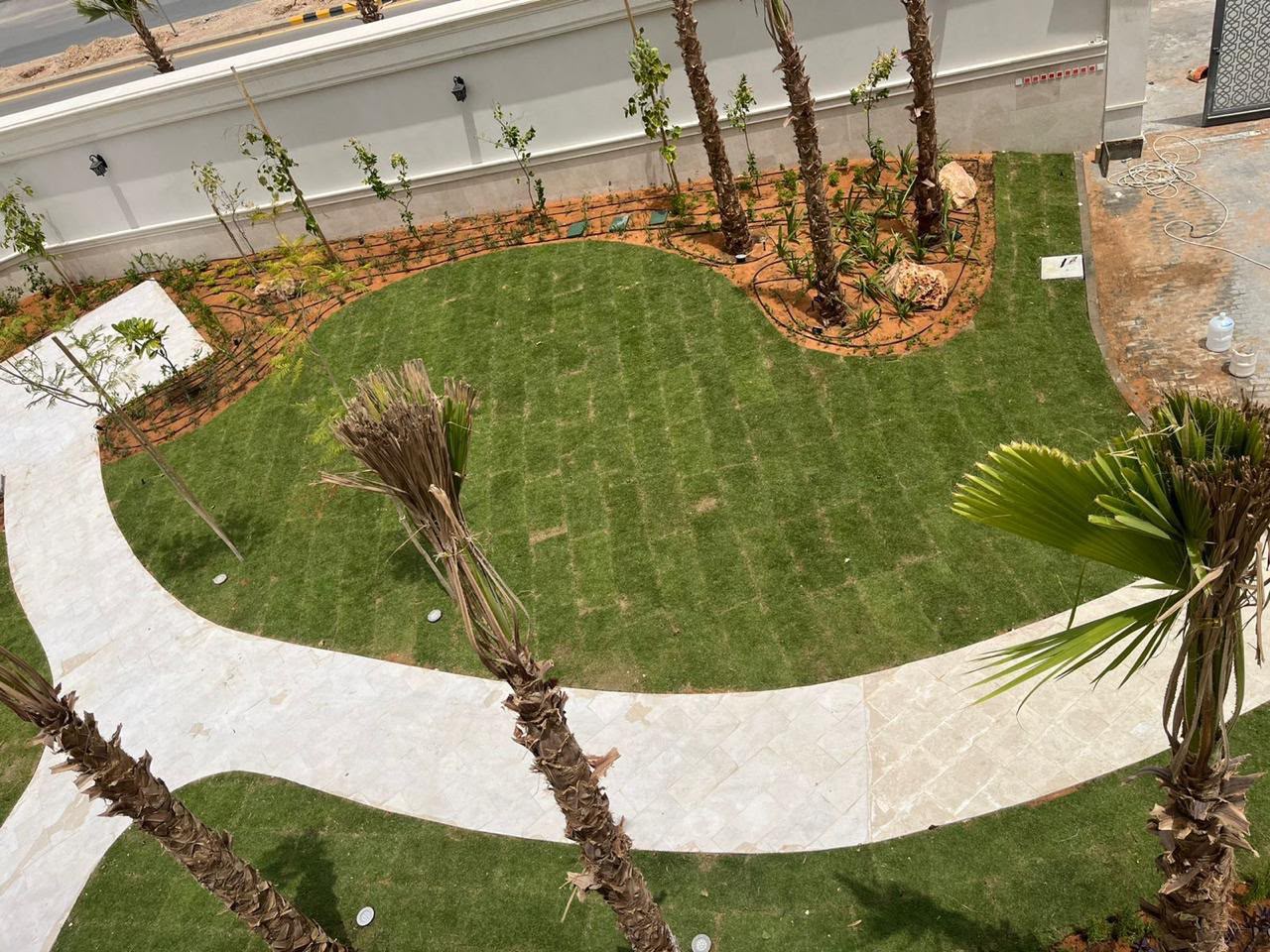
Trees should be planted in dedicated soil areas with sufficient root volume, suitable distances from infrastructure, and room for mature canopy growth.
Locations should be checked for underground utilities, drainage structures, building foundations, signs, and pedestrian movement.
Can trees be planted in paved courtyards?
Yes, if the design provides adequate soil, drainage, irrigation, and protection against compaction.
Small planting openings surrounded by extensive hard paving may restrict root development unless appropriate rooting infrastructure is included.
How Far Should Trees Be From Pedestrian Pavement?
Is there one correct planting distance from the sidewalk?
No. The appropriate distance depends on the tree species, mature trunk and root characteristics, planting-bed design, and applicable local standards.
A distance suitable for a small ornamental tree may be inadequate for a broad-canopy species.
Can roots damage concrete paving?
Yes. Roots growing near the surface can contribute to displacement or lifting of paving, particularly where soil space is limited or pavement design is unsuitable.
Providing sufficient rooting space and proper pavement construction reduces the likelihood of conflicts.
How Wide Should Tree Planting Beds Be?
Are small square tree openings enough?
Not always. A small visible tree opening does not guarantee adequate soil volume for long-term growth.
Tree roots need access to suitable soil beyond the immediate trunk opening, especially for larger shade species.
Can connected planting beds improve tree growth?
Connected soil areas can provide more continuous rooting opportunities than isolated, highly constrained pits.
The design must still consider utilities, drainage, pavement support, and the chosen planting system.
How Do I Design Walkways Around Tree Roots?
Can root barriers prevent pavement damage?
Root barriers may help direct root development in certain situations, but they are not a universal solution.
Incorrect barriers can restrict healthy growth or create new problems. Adequate rooting space should remain a priority.
Should I use permeable paving around trees?
Permeable surfaces may support water movement into suitable underlying materials when the full pavement system is properly designed.
Their suitability depends on drainage, pedestrian accessibility, structural requirements, and maintenance.
How Do I Make Walkway Landscaping Accessible?
Can tree branches obstruct pedestrian paths?
Yes. Low branches, palm fronds, and poorly maintained planting can obstruct movement and create hazards for pedestrians.
The Royal Commission for Riyadh City's Accessibility Code addresses planting near accessible routes and specifies relevant vertical clearance requirements. Project designers should review the applicable edition and route classification.
Should planting pits be flush with the path?
Tree pits beside accessible routes should be designed to avoid dangerous changes in level or obstacles near the walking surface.
Use suitable tree-pit covers or surfaces when required, without restricting trunk growth or creating maintenance problems.
For local technical guidance, consult the Accessibility Code for Riyadh City and the project's approved accessibility requirements.
How Far Apart Should I Plant Shade Trees?
Can I plant every tree at the same spacing?
Not necessarily. Spacing should reflect expected canopy spread, mature dimensions, sunlight objectives, soil volume, and maintenance access.
Using one distance for all species can produce overcrowding or large unshaded gaps.
Should the canopies overlap at maturity?
Some overlap may help create continuous shade, but excessive crowding can reduce airflow, increase competition, and complicate maintenance.
Plan canopy development according to the intended long-term landscape structure.
| Design consideration | Why it matters | Recommended planning approach |
|---|---|---|
| Mature canopy spread | Determines future shade coverage | Use species-specific mature dimensions |
| Rooting volume | Supports establishment and long-term growth | Provide sufficient suitable soil |
| Pedestrian clearance | Protects accessibility | Follow applicable route standards |
| Utilities | Prevents infrastructure conflicts | Check service layouts before planting |
| Street furniture | Affects movement and maintenance | Coordinate trees with benches and lighting |
| Solar orientation | Influences useful shade | Study sun angles and seasonal canopy effects |
How Are They Planted?
How do I prepare a planting hole for a tree?
Prepare a planting hole wide enough for healthy root establishment, with a depth appropriate to the root ball and the location of the root flare.
Avoid planting too deeply. The trunk flare should remain appropriately visible rather than buried beneath excess soil or mulch.
How do I place the tree without damaging its roots?
Handle the tree by its root ball using suitable equipment and avoid lifting it by the trunk alone.
Inspect root structure, correct manageable container-related root defects according to horticultural guidance, and stabilize the tree while backfilling.
Further technical planting guidance is available from University of Florida IFAS Extension.
When Is the Best Time to Plant Walkway Trees in Riyadh?
Is planting during cooler months preferable?
Cooler periods may reduce transplant heat stress compared with Riyadh's hottest weather, provided soil conditions and irrigation are suitable.
The optimal planting window depends on the species, plant stock, site exposure, and maintenance capacity.
Can trees be planted during summer?
Summer planting may be possible with appropriate species, irrigation, handling, and aftercare, but extreme heat increases establishment risks.
Nonurgent planting is often better scheduled for more favorable conditions.
How Do I Protect Newly Planted Trees From Riyadh Heat?
Do young trees need temporary support?
Some newly planted trees need temporary stabilization when their root balls cannot hold them securely.
Staking should allow appropriate movement, avoid trunk injury, and be reviewed for removal when no longer needed.
Does mulch help newly planted trees?
Suitable organic mulch can help moderate soil temperature, conserve moisture, and reduce competing vegetation.
Keep mulch away from direct contact with the trunk and avoid burying the root flare.
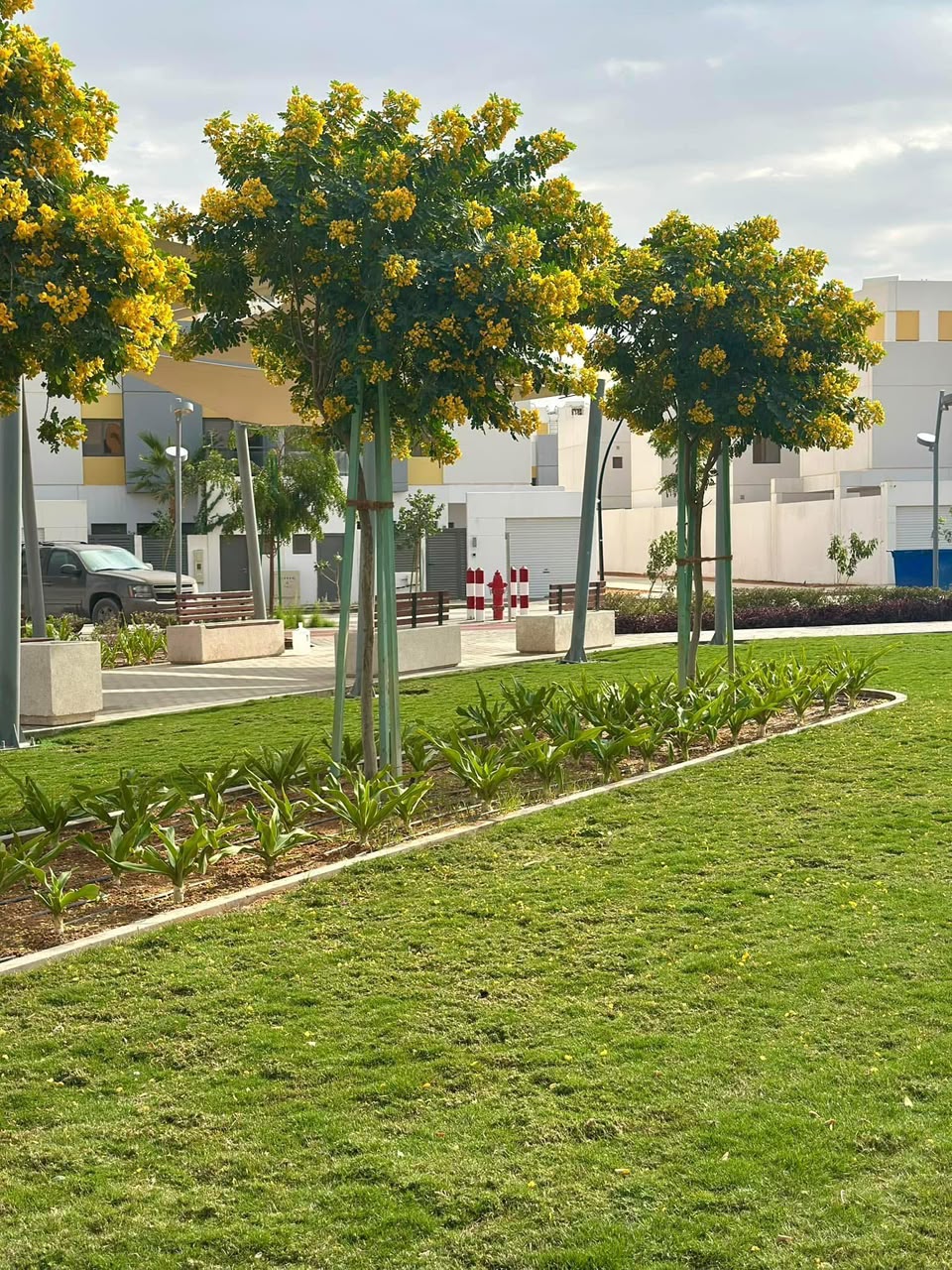
What Are the Benefits of Palm Trees?
Why are palms used in Saudi walkway landscapes?
Palms provide a recognizable architectural form and can reinforce the visual identity of formal promenades, entrances, and public landscapes.
They can contribute visual rhythm and some shade, although their shading pattern differs from broad-canopy trees.
Are date palms good for pedestrian shade?
Date palms can provide localized shade, but they generally do not create the same continuous overhead canopy as suitable broad-crowned shade trees.
They may be best combined with other planting when pedestrian shade is the primary objective.
What Are the Benefits of Washingtonia Palms?
Why use Washingtonia palms along a promenade?
Washingtonia palms can create strong vertical emphasis and a formal, repeated planting pattern in suitable landscape designs.
Their tall trunks and crown shape can complement broad-canopy shade trees where visual character and overhead shade are both important.
Do Washingtonia palms need special maintenance?
Yes. Maintenance may include monitoring frond condition, safe removal of hazardous dead material where necessary, irrigation management, and inspection of palm health.
Species-specific characteristics and mature height should be considered before planting near pedestrian routes.
Should I Use Palms or Broad-Canopy Trees Along Walkways?
Which provides more continuous pedestrian shade?
Broad-canopy shade trees generally offer greater potential for continuous coverage when spaced and maintained appropriately.
Palms may contribute visual identity but should not automatically be treated as equivalent replacements for shade trees.
Can palms and shade trees be planted together?
Yes. A mixed landscape can combine architectural palm forms with broader shade coverage.
Designers must account for mature plant sizes, root space, irrigation needs, and maintenance access.
| Planting characteristic | Broad-canopy trees | Date palms | Washingtonia palms |
|---|---|---|---|
| Main landscape contribution | Shade and canopy structure | Saudi landscape character | Vertical formal character |
| Continuous path shading | Potentially high | Usually more localized | Depends on crown and sun position |
| Mature space planning | Large canopy and rooting area | Trunk, crown, and root space | Height, crown, and root space |
| Maintenance focus | Structural pruning and canopy clearance | Fronds, fruit, and palm health | Fronds and height-related work |
| Walkway suitability | Strong when correctly selected | Site and function dependent | Site and function dependent |
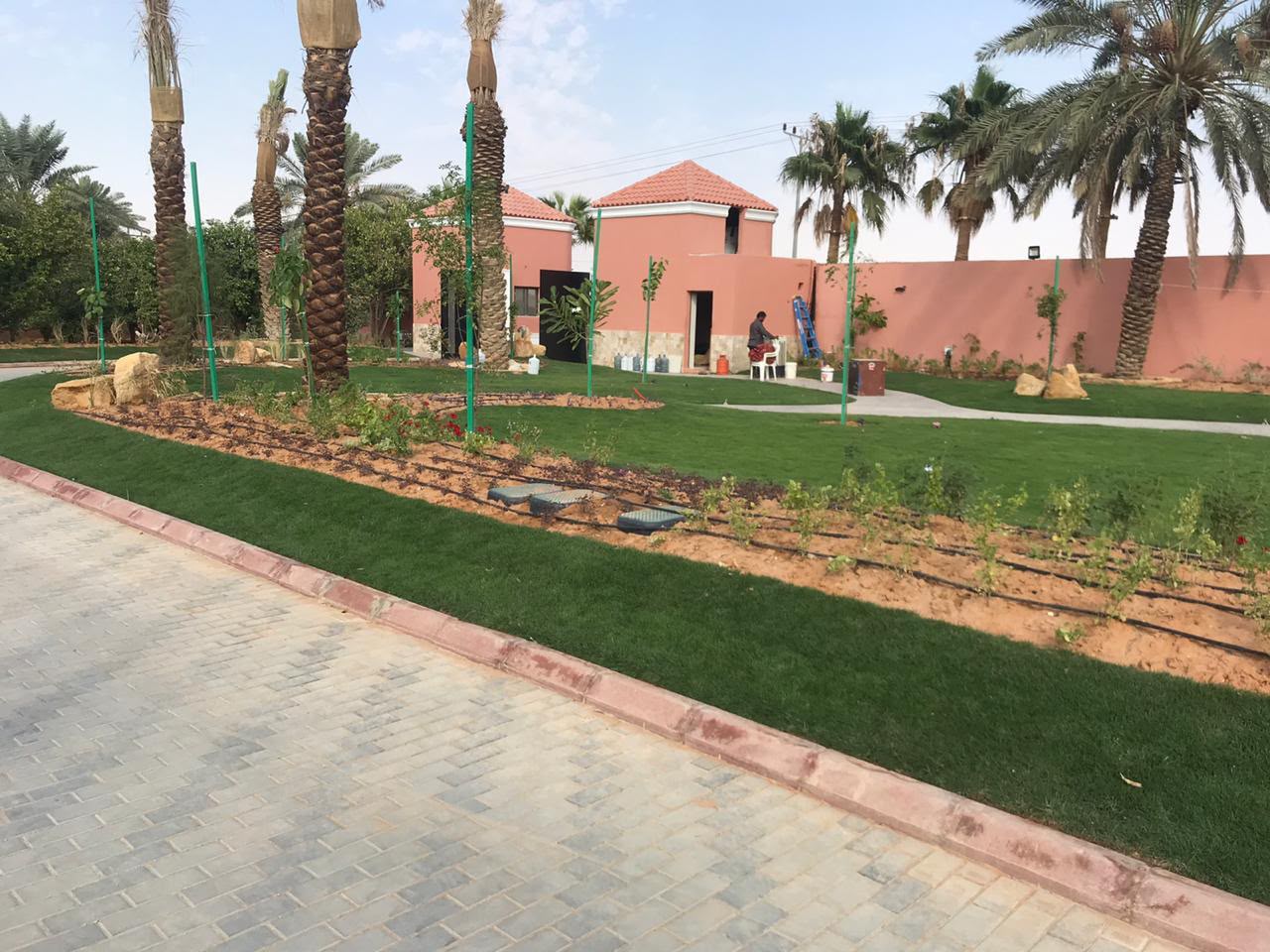
How Do I Install Irrigation for Walkway Trees?
Is drip irrigation suitable for pedestrian tree planting?
Drip irrigation can be suitable when designed to wet the required root zone and accommodate tree growth over time.
Emitter quantity, placement, flow, and operating time must reflect soil characteristics, plant size, climate, and water quality.
Should every tree receive the same irrigation schedule?
No. Water requirements vary with species, tree size, soil, weather, root establishment, and site exposure.
Group plants with compatible needs where practical and adjust irrigation through monitoring rather than fixed assumptions.
How Often Should I Water Newly Planted Walkway Trees?
Do newly planted trees require frequent monitoring?
Yes. Newly planted trees have limited established root systems and require careful soil-moisture monitoring during establishment.
Check moisture within the root ball and surrounding soil, then irrigate sufficiently without causing prolonged saturation.
Can too much irrigation damage young trees?
Yes. Excessive water and inadequate drainage can reduce root-zone oxygen and contribute to poor root health.
Adjust watering based on actual soil conditions and drainage performance.
For general establishment principles, see the University of Minnesota Extension guidance on newly planted trees. Irrigation schedules must be adapted to Riyadh's considerably different climate.
How Do I Design Irrigation Without Wetting the Walkway?
Why should irrigation water stay away from pavement?
Water running across pedestrian paths can create slip hazards, waste irrigation water, and contribute to surface deterioration.
Tree irrigation should target planting soil rather than hard paving.
Can irrigation pipes run beneath pedestrian paving?
Yes, when designed with suitable protection, approved routing, and accessible maintenance points.
Coordinate pipe routes with other underground infrastructure before construction.
How Do I Protect Walkway Trees During Building Maintenance?
Can maintenance vehicles compact tree roots?
Yes. Repeated vehicle loads and soil compaction can reduce soil pore space and negatively affect root development.
Restrict heavy equipment access to planting beds and use suitable physical protection where needed.
Should trees have protective guards?
Guards may be useful in areas exposed to accidental contact from service equipment or pedestrian activities.
Choose systems that protect the tree without restricting future trunk growth.
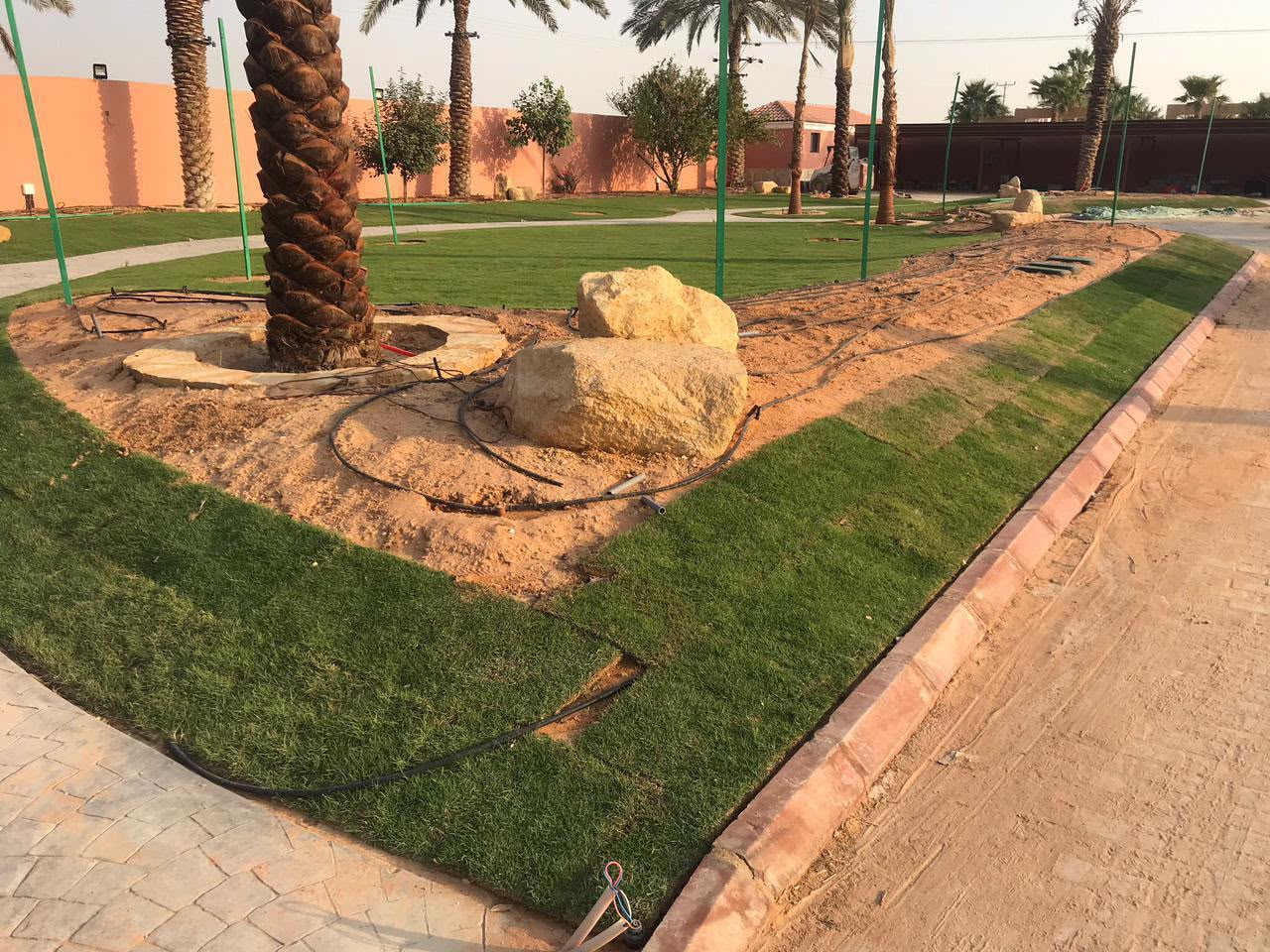
What Is the Lifespan of Trees in Years?
How many years can a walkway shade tree live?
Tree lifespan varies widely by species, growing conditions, environmental stress, and maintenance.
Some suitable landscape trees can live for decades, while others may survive much longer under favorable conditions. A fixed lifespan should not be promised without a confirmed species and site assessment.
How long can date palms and Washingtonia palms live?
Both groups can live for many decades under suitable conditions, but actual lifespan varies by species, climate, health, irrigation, and maintenance.
Do not use a single estimated lifespan for every palm planted in Riyadh.
How Do I Maintain Safe Tree Canopies Over Walkways?
When should low branches be pruned?
Branches that obstruct required pedestrian clearance should be assessed and managed through appropriate pruning.
Young-tree structural training is preferable to large corrective cuts after a tree becomes mature.
Should I remove major branches to increase clearance?
Major pruning should be evaluated carefully because excessive removal can weaken tree structure and increase stress.
Use qualified arboricultural practices and comply with the applicable accessibility standards.
How Do I Prevent Tree Roots From Lifting Pavers?
Should I cut roots when pavement rises?
Do not cut structural roots without professional assessment; inappropriate root removal can destabilize or seriously damage the tree.
Inspect the cause of displacement and evaluate alternatives such as pavement adjustment or redesign.
Can changing the pavement layout solve root conflicts?
Sometimes. Adjusting the pedestrian surface or expanding rooting areas may reduce ongoing conflict.
The solution must maintain accessibility, safe walking conditions, and tree stability.
How Much Does Planting Cost?
What determines the cost of planting walkway trees?
The cost depends on species, nursery stock size, quantity, delivery, planting-bed preparation, soil improvements, irrigation, access, and maintenance requirements.
Large palms and mature shade trees can also require specialized lifting and handling equipment.
Can I get a fixed planting price per tree?
A unit rate is possible once the tree specification and installation scope are clear, but prices cannot be compared reliably without matching requirements.
A quotation should distinguish nursery supply, transportation, planting, irrigation, and establishment maintenance.
| Cost component | What affects the cost? | What to request in a quotation |
|---|---|---|
| Tree supply | Species, size, condition, quantity | Verified botanical name and nursery size |
| Delivery | Transport distance and equipment | Handling and unloading scope |
| Planting beds | Excavation, soil, drainage | Dimensions and construction details |
| Irrigation | Network layout and controls | Components and commissioning |
| Tree protection | Guards, staking, root-space systems | Materials and installation |
| Landscape finishing | Mulch and surrounding surfaces | Approved finish specifications |
| Aftercare | Monitoring, irrigation, replacement terms | Maintenance scope and duration |
How Do I Estimate the Number of Trees for a Walkway?
Can I divide walkway length by tree spacing?
That can provide an initial estimate for regularly spaced planting, but it does not replace a planting layout.
Adjust the count for entrances, utilities, intersections, visibility zones, existing plants, and required clearances.
Should every walkway section have the same tree density?
No. Tree density should respond to solar exposure, available space, route importance, and species characteristics.
Some locations may need more shade, while others require unobstructed views and access.
What Are the Types of Trees, How, When and Why?
How do I compare tree types before planting?
Compare each species by climate suitability, mature size, canopy shape, root-space needs, water demand, pedestrian safety, and maintenance.
Choose the species that fulfills the site's purpose rather than selecting solely by its nursery appearance.
When and why should different trees be planted?
Plant during a suitable establishment period and choose the tree type according to the required function: shade, landscape identity, biodiversity, or visual screening.
A broad-canopy shade tree and a formal ornamental palm may both be valuable but serve different design objectives.
What Mistakes Should I Avoid When Planting Walkway Trees?
Is planting trees too close to the pavement a mistake?
It can be when the tree lacks adequate mature rooting space or creates future conflicts with the walkway.
Plan based on the adult tree dimensions and surrounding infrastructure.
Is choosing palms as the only shade solution a mistake?
It may be if continuous overhead shade is the primary objective and the selected palms cannot provide sufficient coverage.
Evaluate canopy performance rather than relying on tree height alone.
Is burying the trunk flare a planting mistake?
Yes. Planting too deeply can contribute to poor tree establishment and root-related problems.
Confirm appropriate root-flare positioning during installation.
Is using one irrigation schedule for every species a mistake?
Yes, when the species and site conditions have materially different watering needs.
Use appropriate irrigation zones and adjust scheduling through monitoring.
What Is My Walkway Tree Planting Checklist?
What should I verify before ordering trees?
Confirm the design, species, planting space, and infrastructure constraints.
- Measure walkway dimensions and identify the accessible route.
- Check underground utilities and drainage.
- Assess sunlight and shade needs.
- Select climate-appropriate tree species.
- Review mature canopy and root characteristics.
- Confirm nursery stock quality.
- Prepare irrigation and maintenance requirements.
What should I check during planting?
Inspect planting depth, root handling, soil conditions, and irrigation installation.
- Verify tree identity and root-ball condition.
- Prepare suitable planting holes and soil.
- Keep the root flare correctly positioned.
- Backfill and stabilize trees appropriately.
- Install and test the irrigation system.
- Apply suitable mulch without trunk contact.
- Protect surrounding pedestrian surfaces.
What should I monitor after installation?
Track establishment, accessibility, water management, and tree condition.
- Monitor root-zone moisture and drainage.
- Inspect tree stability and new growth.
- Check irrigation leaks and emitter operation.
- Keep walking surfaces free of hazards.
- Review low branches and palm fronds.
- Inspect tree guards and temporary supports.
- Document maintenance and corrective action.
What Are the Most Frequently Asked Questions About Walkway Trees?
1. How do I plant shade trees along Riyadh walkways?
Choose climate-suitable trees, provide adequate rooting space, protect underground utilities, install efficient irrigation, maintain pedestrian clearance, and monitor establishment.
2. What are trees?
Trees are perennial woody plants that develop structural trunks or stems and above-ground canopies, with growth forms and sizes varying by species.
3. What are the benefits of palm trees?
Palms can contribute architectural character, visual rhythm, and localized shade, depending on species and planting design.
4. What are the benefits of Washingtonia palms?
Washingtonia palms can create strong vertical form and formal landscape patterns, but they require suitable space, irrigation, and frond maintenance.
5. Where are trees planted?
Plant trees in suitable soil areas with adequate rooting volume, safe infrastructure clearance, drainage, and access to irrigation.
6. How are they planted?
Prepare an appropriate planting hole, protect the root ball, position the root flare correctly, backfill, stabilize if necessary, and water according to site conditions.
7. How much does planting cost?
Cost depends on tree species, size, quantity, delivery, soil preparation, irrigation, equipment, and maintenance. A site-specific quotation is required.
8. What is the lifespan of trees in years?
Lifespan varies substantially by species and conditions. Many landscape trees and palms can live for decades, but exact longevity cannot be guaranteed.
9. What are the types of trees, how, when and why?
Tree types include broad-canopy shade trees, native species, ornamental trees, and palms. Select by function and climate, and plant during suitable conditions with proper aftercare.
10. Can tree roots damage pedestrian walkways?
Yes, especially with inadequate rooting space or unsuitable pavement design. Proper planting-bed planning and ongoing inspection can reduce conflicts.
How Do I Choose a Walkway Landscaping Contractor in Riyadh?
What should a professional planting proposal include?
It should specify the botanical names, tree sizes, quantities, planting details, irrigation design, soil preparation, maintenance requirements, and scope of work.
A visually attractive rendering alone is not sufficient to confirm technical suitability.
Should I request a site survey before planting?
Yes, especially for projects involving pavement, buried utilities, narrow planting strips, or large trees.
A site survey helps identify conditions that influence species selection, quantities, cost, and long-term survival.
How Can Rayat Najd Landscaping Help With Walkway Trees?
What information should I provide for a landscaping quotation?
Provide the project location, approximate walkway length and width, intended use, existing paving, irrigation availability, and desired landscaping style.
Site photographs and a layout drawing can help explain the requirements.
Can tree planting and irrigation be planned together?
Yes. Coordinating tree selection with irrigation and planting-bed preparation helps avoid incompatible installations and unnecessary rework.
Confirm the available services, project scope, and approved technical specifications before proceeding.
How do I contact Rayat Najd Landscaping?
Visit the official Rayat Najd Landscaping website, call 0557555716, or contact the team through WhatsApp to discuss your tree-planting requirements.
What Is the Best Way to Plant Shade Trees Along Riyadh Walkways?
What should I prioritize before starting the project?
Prioritize pedestrian safety, mature canopy performance, adequate rooting volume, irrigation efficiency, and suitability for Riyadh's climate.
Assess the site before selecting tree quantities or ordering large nursery stock.
How do I maintain healthy shade trees for the long term?
Monitor irrigation, drainage, soil health, tree stability, canopy clearance, and maintenance needs as trees mature.
Long-term success requires adjustments as root systems develop and planting conditions change.
What is the final answer to planting walkway trees in Riyadh?
To plant shade trees along Riyadh walkways successfully, select species for their mature size and shade value, provide adequate root space, preserve accessibility, and install irrigation suited to local conditions.
Combining suitable broad-canopy trees with carefully selected palms can create attractive pedestrian landscapes, but lasting quality depends on correct engineering coordination, planting practices, and ongoing tree care.