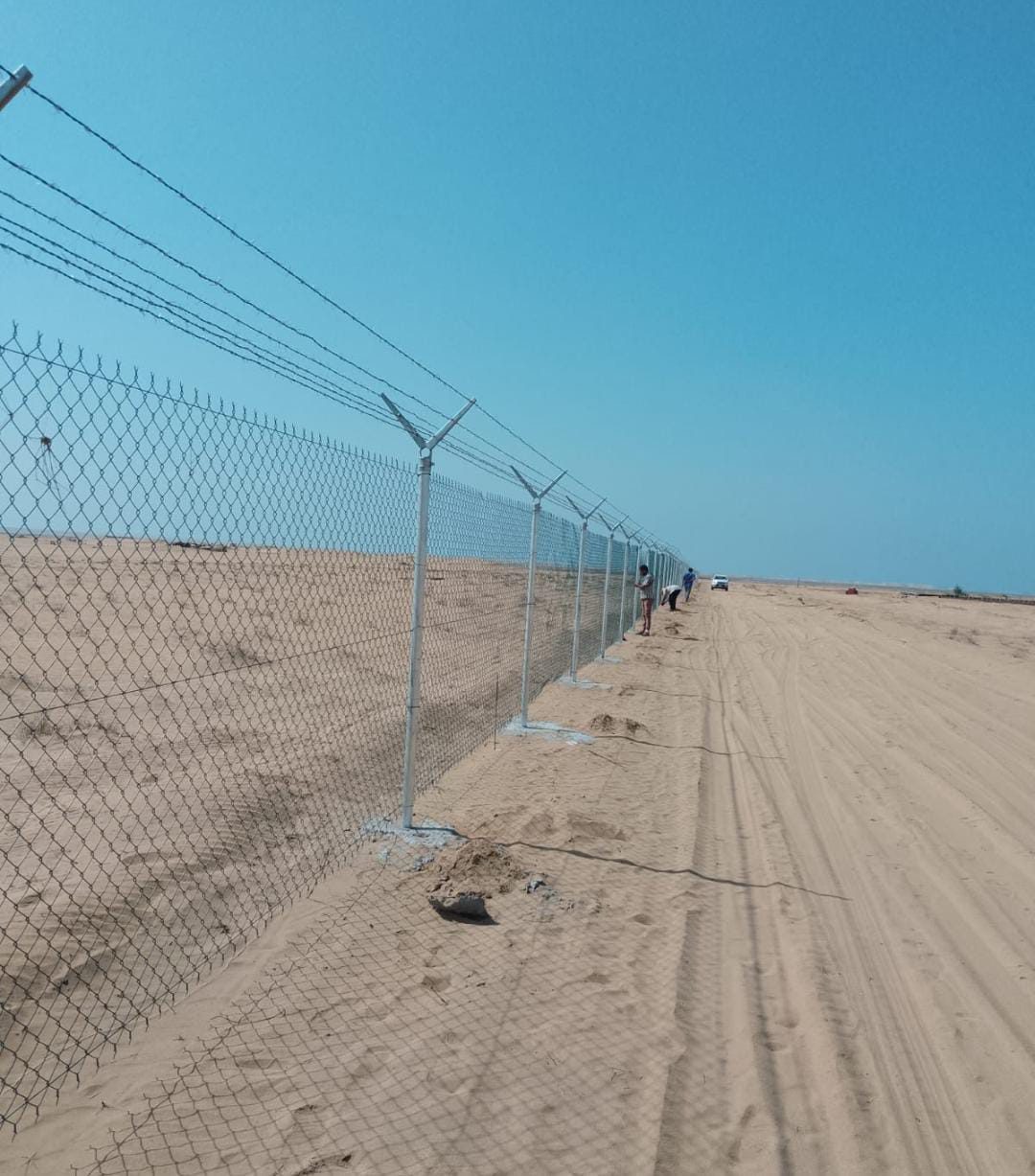



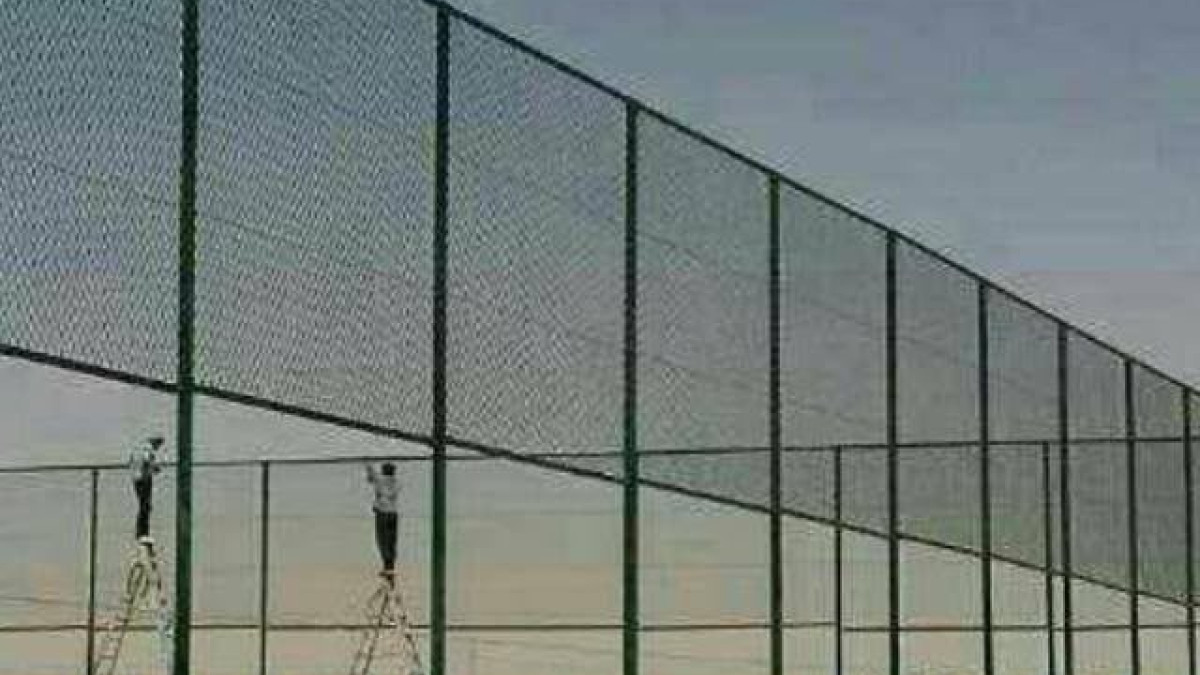
To fence a truck parking yard, survey the property boundaries, identify truck entrances and turning areas, and select durable fencing suited to the site's security requirements. Install correctly designed posts, foundations, and gates, keeping heavy vehicle movements away from the fence. Finally, inspect the mesh tension, ground clearance, gate operation, and perimeter security.
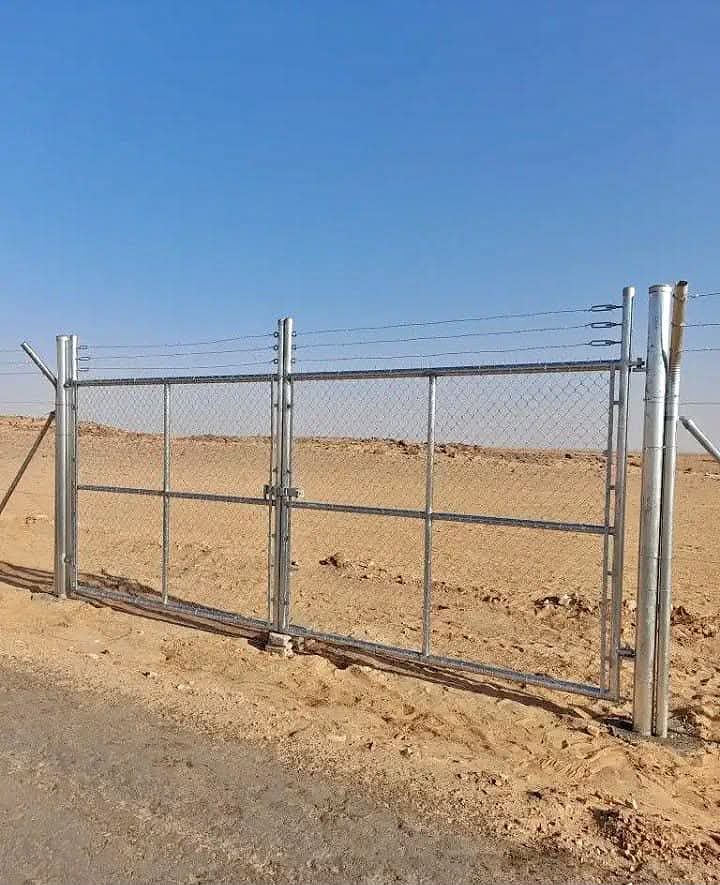
Truck parking yards are important facilities for logistics companies, transport operators, contractors, and commercial fleet owners throughout Saudi Arabia. These sites may accommodate cargo trucks, trailers, service vehicles, and other heavy equipment between journeys.
Unlike a typical residential fence, a truck yard perimeter must account for large vehicle dimensions, turning movements, frequent gate operation, and the possibility of accidental contact with heavy equipment.
Security is equally important. Uncontrolled access can expose parked vehicles and equipment to theft, vandalism, and operational disruption. However, perimeter fencing alone should never be treated as a complete security system.
This guide explains how to plan truck parking yard fencing, select suitable chain link materials, design gates, determine post spacing, evaluate foundations, and prepare for installation.
Shobok Rayat Najd provides fencing services in Saudi Arabia. Businesses can contact the company to discuss fencing requirements for commercial vehicle parking yards and industrial properties.
 Call Now
 WhatsApp
Why Does a Truck Parking Yard Need Security Fencing?
How does fencing protect a commercial truck yard?
Perimeter fencing creates a physical boundary that helps discourage unauthorized entry and directs access through designated gates.
It also defines operational limits and supports a broader security plan involving lighting, monitoring, and access procedures.
Can a fence prevent every security incident?
No. A fence can delay or discourage unauthorized access, but its effectiveness depends on the complete security system.
Weak gates, damaged mesh, and unmonitored entrances can undermine otherwise durable fencing.
What Are the Strongest Types of Fences?
Is welded mesh stronger than chain link fencing?
Strength depends on wire diameter, material quality, mesh construction, support posts, fastening systems, and foundation design.
Heavy-duty welded mesh panels may offer greater rigidity in some configurations, while properly specified chain link fencing remains useful for extensive truck yard perimeters.
Is galvanized chain link fencing suitable for truck depots?
Yes. Galvanized chain link fencing can be an appropriate solution for truck parking yards when its wire specification, coating, height, and supports match the site's requirements.
Galvanization improves corrosion resistance but does not eliminate the need for inspection or maintenance.
Should I choose the thickest available wire?
Not automatically. Wire thickness should correspond to the security requirements and overall fence design.
Choosing unnecessarily heavy mesh can increase costs without addressing weak gates, foundations, or vehicle-impact risks.
| Fence type | Typical application | Main advantage | Key consideration |
|---|---|---|---|
| Galvanized chain link | Large truck parking compounds | Flexible perimeter coverage | Wire size and support structure |
| Welded mesh panels | Controlled-access areas | Rigid panel construction | Panel fastening and posts |
| Heavy-duty chain link | Higher-security yard boundaries | Robust mesh when properly specified | Foundation and tension requirements |
| Temporary modular fencing | Short-term parking sites | Relocation flexibility | Stability and security limitations |
| Fence with impact barriers | Truck maneuvering zones | Separates security from impact protection | Independent barrier engineering |
How Do I Choose Fencing for a Heavy Vehicle Parking Area?
Does the number of trucks affect fence selection?
Yes. Fleet size influences gate usage, traffic flow, parking density, and operational exposure around the perimeter.
A yard receiving frequent truck movements may need stronger entrance components and additional protection at turning areas.
Should the fence specification depend on vehicle value?
Security requirements should reflect the assets, site location, access risks, and operating conditions rather than vehicle value alone.
Higher-risk facilities may need more secure gates, stronger mesh, and integrated surveillance.
What Is the Security Height for Fences?
Is a two-meter fence suitable for truck parking?
A two-meter fence may be appropriate for some commercial yards, but it is not a universal or guaranteed security standard.
The required height depends on site risks, applicable approvals, terrain, and operational specifications.
When should a truck yard have taller fencing?
Taller fencing may be appropriate when the site requires additional perimeter deterrence or is exposed to elevated security risks.
Increased height also affects wind loading, post dimensions, and foundation requirements.
Does a taller fence always provide better security?
No. A taller fence with weak posts or poorly secured gates may be less effective than a properly designed and maintained perimeter.
Security depends on the complete system, not height alone.
What Distance Is Required Between Fence Posts?
How far apart should chain link fence posts be?
Post spacing must be determined from fence height, wire specifications, post strength, soil conditions, wind loading, and design requirements.
Some installations use approximate spacing of 2–3 meters, but this is only an illustrative range, not an engineering rule for every project.
Can wider post spacing reduce installation costs?
It may reduce post quantities, but excessive spacing can weaken the fence and increase mesh deflection or maintenance requirements.
Confirm that any proposed spacing satisfies the intended structural design.
Should gate and corner posts have different specifications?
Yes. Gate posts, terminal posts, and corners may experience concentrated forces that require stronger sections or additional bracing.
They should not automatically be treated as ordinary intermediate posts.
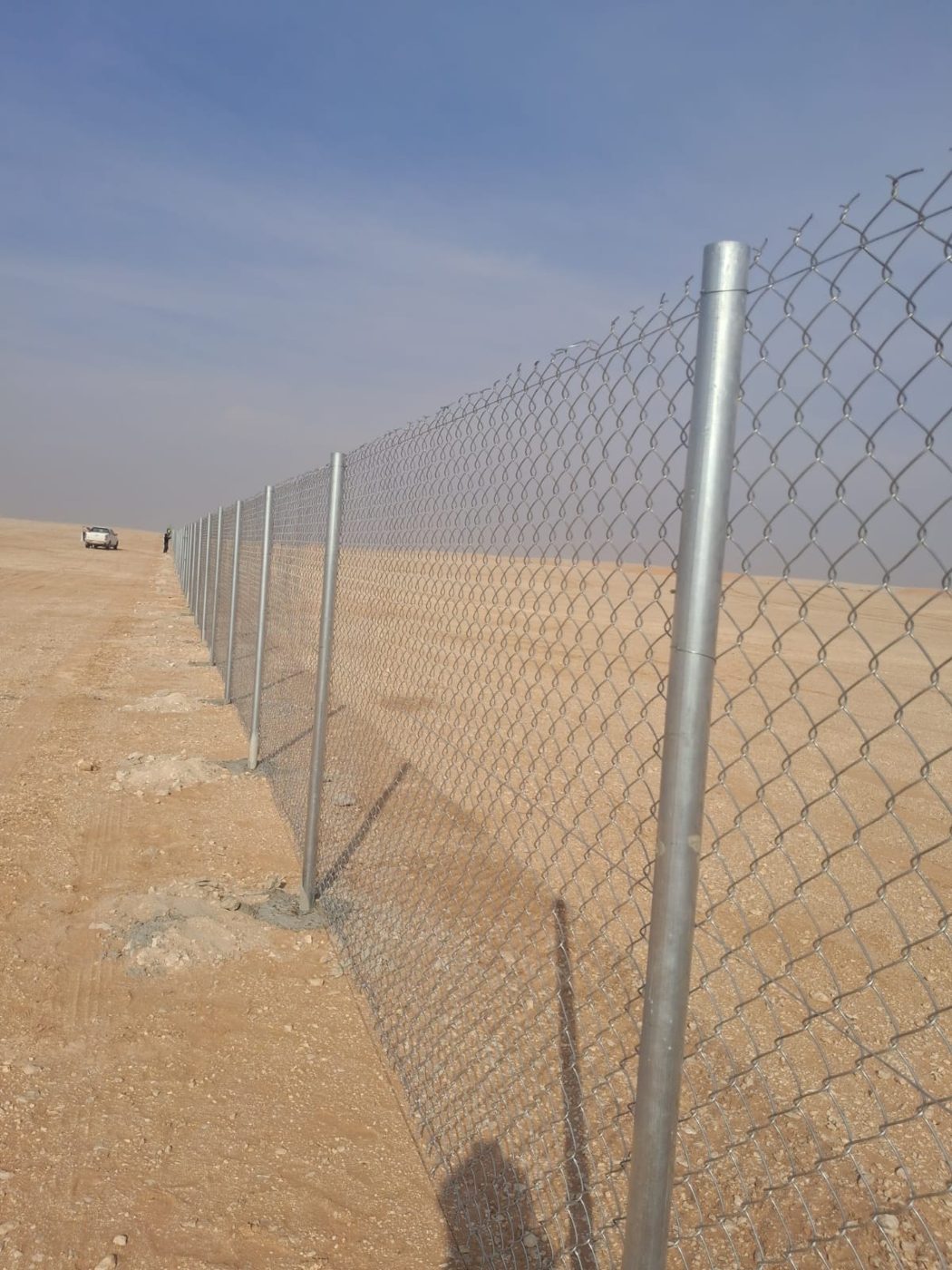
How Do I Calculate the Fence Length for a Truck Yard?
How do I calculate the perimeter of the parking yard?
Measure the approved property boundary or proposed fencing alignment and add the lengths of all relevant sides.
Account separately for gate openings, corners, changes in direction, and existing structures.
Should I use property documents or physical measurements?
Use verified boundaries and field measurements together, resolving inconsistencies before construction.
For complex properties, an appropriate survey may be necessary to avoid encroachment or disputes.
How Do I Install Fences?
What is the first step in truck yard fence installation?
Confirm the boundary, approved specifications, soil conditions, gate locations, and any underground services.
Then establish the fence alignment and prepare the installation plan before excavation.
How are fence posts installed correctly?
Posts should be secured using foundations or anchoring systems designed for the fence loads and ground conditions.
Check alignment, verticality, and required bracing before attaching the mesh.
How do installers tension chain link mesh?
They use appropriate tensioning equipment and fastening components to achieve uniform mesh alignment without overstressing the posts.
All terminal connections and bracing should be inspected after tensioning.
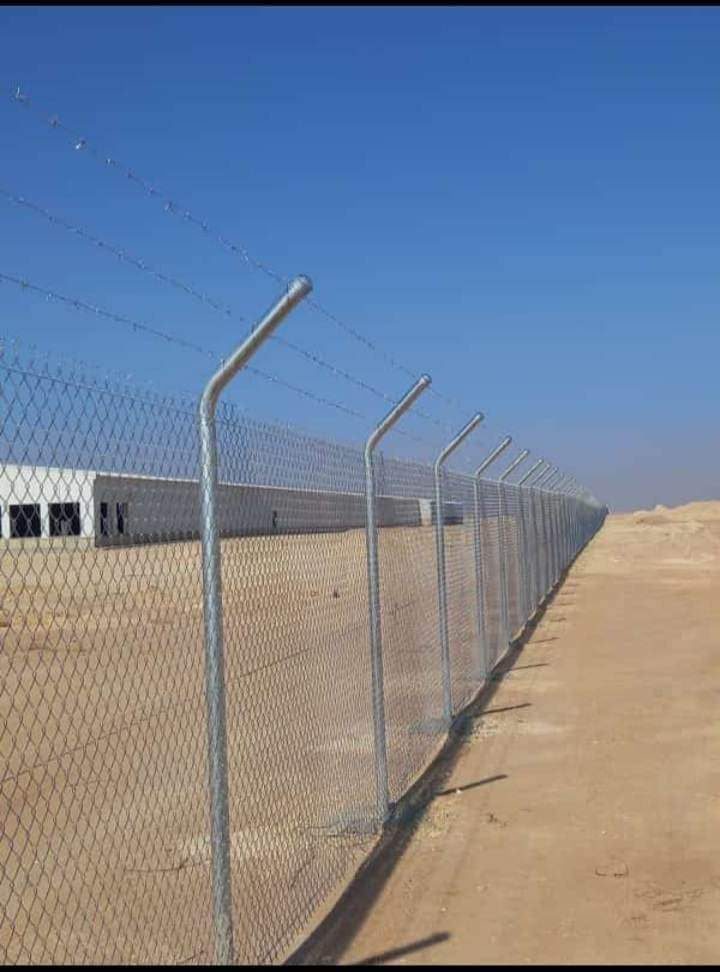
How Deep Should Truck Yard Fence Foundations Be?
Is there a standard concrete foundation depth?
No single foundation depth is appropriate for every truck yard fence.
Depth and dimensions depend on soil bearing conditions, fence height, post loads, wind exposure, and the structural design.
Do sandy soils require special consideration?
Yes. Sandy and variable soils can require different foundation solutions depending on density and site-specific ground conditions.
Assess the soil before selecting foundation dimensions or anchoring methods.
Should gate posts have larger foundations?
They may require larger or differently designed foundations because of gate weight, movement, and additional loading.
The appropriate design should reflect the actual gate system.
| Structural element | Design consideration | Common mistake |
|---|---|---|
| Intermediate post | Fence height and spacing | Undersized steel section |
| Corner post | Mesh tension from different directions | Insufficient bracing |
| Gate post | Gate weight and operating forces | Using standard post details |
| Concrete foundation | Soil and structural loads | Assuming one depth fits all |
| Mesh connection | Tension and fastening strength | Loose or incompatible fittings |
| Corrosion protection | Environmental exposure | Unprotected damaged coatings |
How Do I Fence a Truck Yard With Uneven Ground?
Can chain link fencing follow a sloping boundary?
Yes. Some chain link systems can follow gradual slopes, while more irregular terrain may require stepped sections or other adjustments.
The design should maintain appropriate support and security at the bottom edge.
How do I prevent gaps under the fence?
Use suitable bottom-edge details and ground preparation to prevent unacceptable openings.
Do not block necessary drainage paths or introduce new flooding problems.
How Do I Choose a Security Gate for a Truck Yard?
Is a sliding gate better than a swing gate?
Sliding gates are often worth considering where a large opening is needed and sufficient side clearance is available.
Swing gates can be practical in other layouts, provided there is adequate space for safe operation.
What determines the correct truck entrance width?
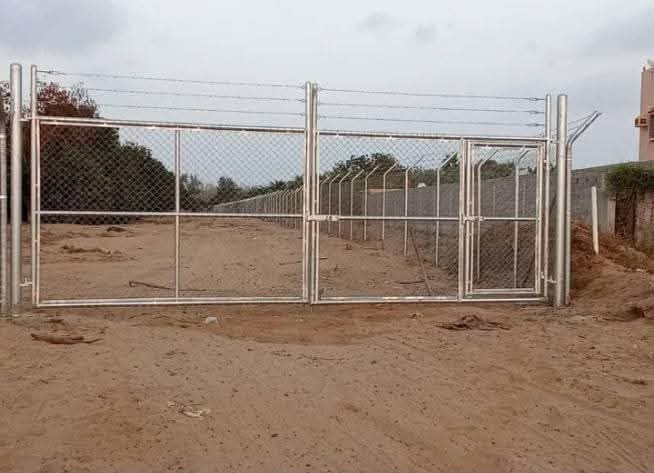
Gate width should be based on vehicle dimensions, turning geometry, load characteristics, and site traffic movements.
Do not calculate the opening from vehicle body width alone.
Should trucks and pedestrians use different entrances?
Separate access points can reduce conflict between pedestrians and heavy vehicles when the site layout permits.
Access planning should follow the yard's traffic and safety requirements.
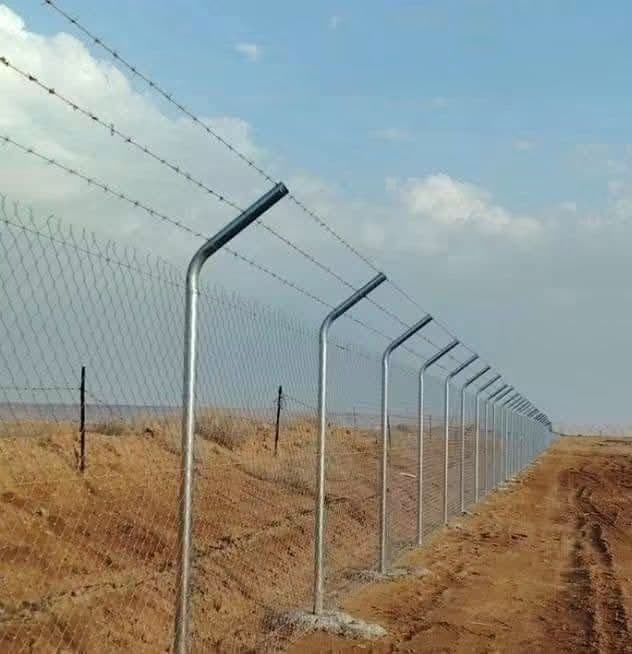
How Wide Should a Truck Parking Yard Gate Be?
Can one gate handle incoming and outgoing trucks?
A single gate may be practical for a lower-traffic facility, but it can create congestion when truck movements are frequent.
Assess vehicle turning paths, peak traffic, and the space available for waiting.
When should I install separate entry and exit gates?
Separate gates may improve traffic organization when the site processes many vehicles or has conflicting internal movements.
The decision should follow an operational layout assessment.
How Do I Protect Fence Posts From Truck Collisions?
Can a chain link fence stop a moving truck?
No. Ordinary chain link fencing should not be treated as a vehicle-impact barrier.
Impact resistance requires a specifically engineered protective system appropriate to the vehicle and hazard.
Where should I install protective barriers?
Evaluate areas near gate posts, sharp turns, loading areas, and parking spaces where vehicles could contact the fence.
Use appropriately designed bollards or barriers rather than relying on fence posts alone.
How much clearance should trucks have from the fence?
Clearance should be determined from the vehicle dimensions, turning movement, parking configuration, and operational safety requirements.
There is no universal separation distance suitable for all truck yards.
How Do I Organize Truck Parking Near the Perimeter?
Should trucks park directly against the fence?
It is generally preferable to maintain a safe separation that prevents accidental vehicle contact and allows inspection and maintenance.
The required clearance depends on parking geometry and equipment movement.
Can the fence be used to support parked equipment?
No. A perimeter fence should not carry loads or equipment for which it was not designed.
Use purpose-built supports and storage systems.
How Do I Secure a Truck Yard Overnight?
Is fencing enough for nighttime security?
Fencing establishes a perimeter, but overnight security may require lighting, cameras, access control, and appropriate operational procedures.
The necessary measures should be based on a site-specific security assessment.
How should the truck yard gates be secured?
Use suitable locking arrangements and maintain gate components in good condition.
Access controls must remain compatible with emergency procedures and applicable safety requirements.
Should the fence be inspected after every incident?
Yes. After a suspected impact, intrusion, or damaging weather event, inspect the relevant posts, mesh, foundations, and gates.
Restrict access to unsafe areas until necessary repairs are completed.
How Do I Prevent Unauthorized Access Under the Fence?
Can people enter through gaps below chain link fencing?
Large gaps or damaged bottom edges can compromise perimeter security.
Include ground clearance and bottom-edge fastening in the installation and inspection plan.
Should the mesh touch the ground?
Not necessarily. Direct contact with soil or persistent moisture can affect certain materials over time.
Use an appropriate bottom treatment that balances corrosion protection, drainage, and security.
How Do I Protect Truck Yard Fencing From Corrosion?
Does galvanized steel rust?
Galvanization improves resistance to corrosion, but damaged coatings and prolonged environmental exposure can still lead to deterioration.
Inspect vulnerable areas and maintain them according to the material requirements.
Is powder-coated fencing better than galvanized fencing?
The appropriate coating system depends on environmental exposure, durability requirements, and the underlying steel preparation.
Some systems combine galvanization with compatible additional coatings.
How do I repair damaged fence coatings?
Use a compatible repair procedure and suitable coating materials for the affected surface.
If the steel has suffered significant structural deterioration, replacing the component may be necessary.
How Do Saudi Weather Conditions Affect Truck Yard Fences?
Can strong winds damage chain link fencing?
Yes. Wind creates loads on the mesh, posts, and foundations, even when the fence has open areas.
Fence design should account for applicable wind conditions and site exposure.
Does desert dust affect fence maintenance?
Dust can accumulate around moving gate components, fittings, and other exposed mechanisms.
Regular cleaning and inspection can help maintain reliable operation.
Are coastal truck yards different from inland yards?
Coastal environments may introduce more aggressive corrosion exposure due to airborne salts and moisture.
Choose coating and maintenance specifications suitable for the actual environment.
Do I Need Approval Before Building a Truck Yard Fence?
Do Saudi regulations affect fence height and location?
They may. Applicable requirements can vary with land use, municipality, industrial zoning, road access, and the type of facility.
Confirm current requirements with the relevant authorities before construction.
Can I install fencing outside my property boundary?
Do not extend fencing beyond approved property limits without the required legal authorization.
Verify the boundary before excavation or installation.
Should I check underground utilities before digging?
Yes. Existing electrical, telecommunications, water, or other services can create serious hazards during excavation.
Confirm utility locations and follow the required excavation procedures.
How Much Does Truck Parking Yard Fencing Cost?
Is fencing priced only by the linear meter?
Many quotations use linear length as a measurement basis, but the total cost also depends on fence height, materials, foundations, gates, site preparation, and installation.
Always confirm exactly what the quoted rate includes.
What increases the cost of industrial fencing?
Higher specifications, reinforced posts, difficult soil, uneven terrain, large gates, and additional protective barriers can increase costs.
Site accessibility and equipment requirements also influence pricing.
Can I calculate the price without a site survey?
A preliminary estimate may be possible from reliable dimensions and specifications, but accurate pricing often requires additional site information.
Complex gates, soil conditions, and hidden services can substantially change the scope.
| Cost component | Specification required | Why it affects price |
|---|---|---|
| Chain link mesh | Height, wire diameter, coating | Determines material quantity and grade |
| Steel posts | Section, spacing, protection | Determines structural material needs |
| Concrete foundations | Dimensions and soil requirements | Affects excavation and concrete work |
| Entrance gates | Width, type, operation | Determines fabrication and hardware |
| Protective barriers | Impact design and quantity | Adds independent safety components |
| Installation | Site access and complexity | Determines labor and equipment |
| Additional works | Ground preparation and drainage | May require separate construction tasks |
How Do I Calculate the Number of Fence Posts?
Can I divide the total perimeter by post spacing?
Dividing perimeter length by proposed spacing can provide a rough starting estimate, but it is not a complete post count.
Account separately for each straight segment, corners, terminal posts, gates, and reinforcement requirements.
Should I include additional materials for corners?
Yes. Corners and terminations may need bracing, extra fittings, and different post sections.
The bill of quantities should include these components explicitly.
How Long Does Truck Yard Fence Installation Take?
Can a truck parking yard be fenced in one day?
Completion time depends on perimeter length, soil conditions, foundation work, crew size, equipment, and the number of gates.
A large permanent truck depot normally requires more planning and work than a small temporary enclosure.
Does concrete curing affect the installation schedule?
Yes. Foundations must achieve the required condition before receiving the intended installation loads.
Follow the approved concrete specifications and construction sequence rather than assuming a universal waiting period.
How can I reduce installation delays?
Confirm approved drawings, material specifications, access arrangements, and utility information before work starts.
Coordinate installation areas with the truck yard operator to avoid unnecessary operational conflicts.
Should I Install Temporary or Permanent Truck Yard Fencing?
When is temporary fencing appropriate?
Temporary systems may suit short-term vehicle storage sites where relocation is expected and the required security level permits their use.
They must still be stable and installed in accordance with relevant safety requirements.
When is permanent fencing a better investment?
Permanent fencing is generally more appropriate for established depots requiring long-term perimeter control and frequent gate operation.
Assess total lifecycle costs, maintenance, and future site expansion.
How Do I Plan Fencing for Future Truck Yard Expansion?
Should I leave space for additional parking?
Include foreseeable expansion in the original layout when the property and operating plan allow it.
This can reduce the need to relocate gates and rebuild perimeter sections later.
Can existing chain link fencing be extended?
Often yes, provided the existing structure is suitable and the new sections are compatible.
Review foundations, terminal posts, mesh specifications, and alignment before extending the system.
How Do I Inspect Truck Yard Fencing Before Acceptance?
What should I inspect in the fence mesh?
Check consistent mesh tension, complete fastening, undamaged coatings, proper alignment, and the absence of unacceptable gaps.
Pay special attention to terminal connections and the bottom edge.
How should I inspect steel posts and foundations?
Check post alignment, secure connections, visible foundation condition, and compliance with the approved construction details.
Visible inspection alone does not replace any required structural or material testing.
What should I test on the entrance gates?
Open and close each gate through its intended travel, checking alignment, hardware, locking, clearance, and safe movement.
Automated gates also require appropriate safety-device testing.
| Inspection item | Acceptance check | Potential problem |
|---|---|---|
| Fence alignment | Matches approved layout | Boundary or positioning error |
| Mesh tension | Uniform and securely fixed | Sagging or loose sections |
| Corner bracing | Matches design requirements | Excessive movement |
| Foundation condition | No unacceptable visible defects | Cracking or instability |
| Gate operation | Moves and locks correctly | Misalignment or interference |
| Surface protection | Coating free of significant damage | Early corrosion exposure |
| Ground clearance | Meets security and drainage design | Unwanted access openings |
What Are the Most Common Truck Yard Fencing Mistakes?
Is installing the fence too close to truck lanes a mistake?
It can be. Insufficient clearance increases the risk of damage from turning trucks and parking movements.
Review actual vehicle paths before finalizing the alignment.
Is choosing undersized fence posts a mistake?
Yes, when the selected posts cannot satisfy the fence's structural and loading requirements.
Specifications should be based on the intended design, not price alone.
Is overlooking gate foundations a serious issue?
Yes. Gate movement and weight can create different loads from those acting on ordinary fence sections.
Use appropriate gate post and foundation details.
Is ignoring drainage around the perimeter a mistake?
Yes. Poor drainage can create erosion, standing water, and deterioration around foundations.
Maintain appropriate water flow and avoid obstructing required drainage routes.
What Is My Truck Parking Yard Fencing Checklist?
What should I check before hiring a fencing contractor?
Prepare a clear site brief that identifies the boundary, security needs, and vehicle movements.
- Verify property boundaries and local requirements.
- Measure the proposed fence perimeter.
- Identify truck entry and exit routes.
- Determine fence height and material specifications.
- Review post spacing and foundation requirements.
- Identify underground services.
- Prepare gate and impact-barrier requirements.
What should I check during installation?
Monitor structural elements, workmanship, and the safety of active vehicle operations.
- Check material specifications against the quotation.
- Inspect post locations and alignment.
- Verify foundation construction details.
- Check corner and gate post reinforcement.
- Monitor mesh tension and fastening.
- Protect work areas from vehicle movements.
- Check corrosion protection and finishing.
What should I check before accepting the completed fence?
Confirm that the installed system meets the approved scope and operates safely.
- Inspect the entire perimeter.
- Check ground clearance and mesh damage.
- Test all gates and locking hardware.
- Confirm required truck clearance.
- Inspect protective barriers where installed.
- Record defects requiring correction.
- Obtain warranty and maintenance information.
What Are the Most Frequently Asked Questions About Truck Yard Fencing?
1. How do I fence a truck parking yard?
Survey the property, plan truck access, select appropriate fencing, install engineered posts and foundations, and inspect gates and perimeter security.
2. What are the strongest types of fences?
Strength depends on the full system, including wire specifications, post sections, fastening, and foundations. Heavy-duty chain link and suitable welded mesh systems can serve different security needs.
3. How do I install fences?
Confirm boundaries and utilities, prepare the alignment, install suitable foundations and posts, attach and tension the mesh, then inspect the complete installation.
4. What distance is required between fence posts?
The correct spacing depends on fence height, loading, materials, and site conditions. Some projects use approximately 2–3 meters, but final spacing must follow the design.
5. What is the security height for fences?
There is no universal security height for truck depots. It depends on risk assessment, applicable requirements, and structural design.
6. Is chain link fencing suitable for heavy vehicle yards?
Yes, when properly specified and installed, with separate protection where vehicle impacts are possible.
7. How wide should a truck depot gate be?
The opening should accommodate the actual vehicle dimensions and turning paths, with appropriate operational and safety clearances.
8. Can I install fencing on sandy land?
Yes, provided the foundation design is suitable for the local soil and expected loads.
9. How much does truck parking yard fencing cost?
Cost depends on perimeter length, fence specifications, foundations, gates, installation conditions, and additional safety requirements.
10. Where can I find a truck yard fencing contractor in Riyadh?
You can contact Shobok Rayat Najd through its official website, phone number, or WhatsApp to discuss the site and requested fencing specifications.
How Do I Choose a Truck Yard Fencing Contractor in Riyadh?
What should a professional fencing quotation include?
The quotation should describe mesh specifications, post sections, foundation scope, gates, protective coatings, installation work, and warranty terms.
Clarify exclusions such as ground preparation, permits, or additional impact barriers.
Should I choose the lowest fencing price?
Not without comparing technical specifications and installation scope.
A cheaper quotation may use different materials, weaker supports, or omit essential construction work.
Is a site inspection important before installation?
Yes, particularly for large vehicle yards with extensive gates, uneven ground, or complex traffic movements.
A site inspection can help identify practical and structural requirements before final pricing.
How Do I Maintain a Truck Parking Yard Fence?
How often should I inspect the perimeter?
Establish a routine based on the yard's traffic, environmental exposure, and security requirements, with additional checks after impacts or damaging weather.
Gate areas and truck turning zones often deserve particular attention.
What components require regular maintenance?
Inspect mesh tension, fittings, post alignment, gates, hinges, locks, foundations, and protective coatings.
Repair defects promptly when they affect security or safe operation.
Can a damaged section be repaired without replacing the whole fence?
Often yes, if damage is localized and the remaining structure is sound.
Major post or foundation damage may require more extensive repair or replacement.
How Can Shobok Rayat Najd Help With Truck Yard Fencing?
What information should I send when requesting a quotation?
Provide the city, approximate location, perimeter measurements, desired fence height, number of gates, and site photographs if available.
Also explain the types of trucks using the yard and whether the fencing will be permanent or temporary.
Can I ask about heavy-duty mesh and security gates?
Yes. You can discuss the intended application and request information about available fencing specifications, gate options, and installation scope.
Confirm technical details, current availability, and quotation terms before approving the work.
How do I contact Shobok Rayat Najd?
Visit the official Shobok Rayat Najd website, call 0555987614, or send your requirements through WhatsApp.
What Is the Best Way to Secure a Truck Parking Yard With Fencing?
What should I prioritize before installation?
Prioritize confirmed property boundaries, vehicle turning paths, appropriate security specifications, and structurally suitable posts and foundations.
Do not choose fence height or post spacing solely from generic examples without evaluating the site.
How do I keep the completed fence reliable?
Protect it from vehicle impacts, maintain gates and coatings, inspect the perimeter regularly, and repair damaged sections before they create security or safety risks.
Fencing should work alongside operational access control and other security measures.
What is the final answer to fencing a truck parking yard?
To fence a truck parking yard successfully, combine durable galvanized mesh, suitable structural supports, properly designed foundations, and gates that accommodate the real movements of heavy vehicles.
For commercial transport yards in Riyadh and across Saudi Arabia, the best fencing solution is one that balances security, safe truck operations, environmental durability, and long-term maintenance requirements.