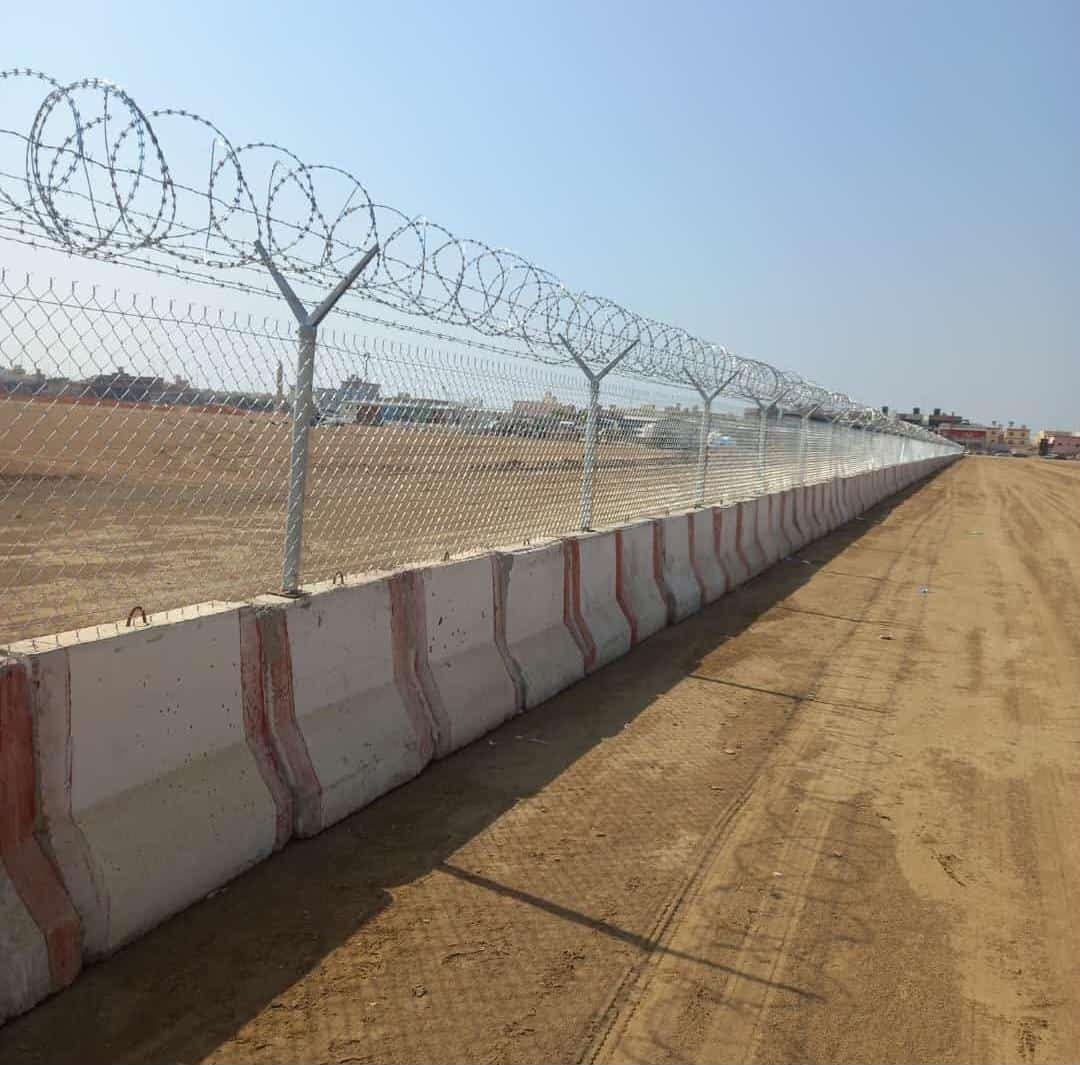



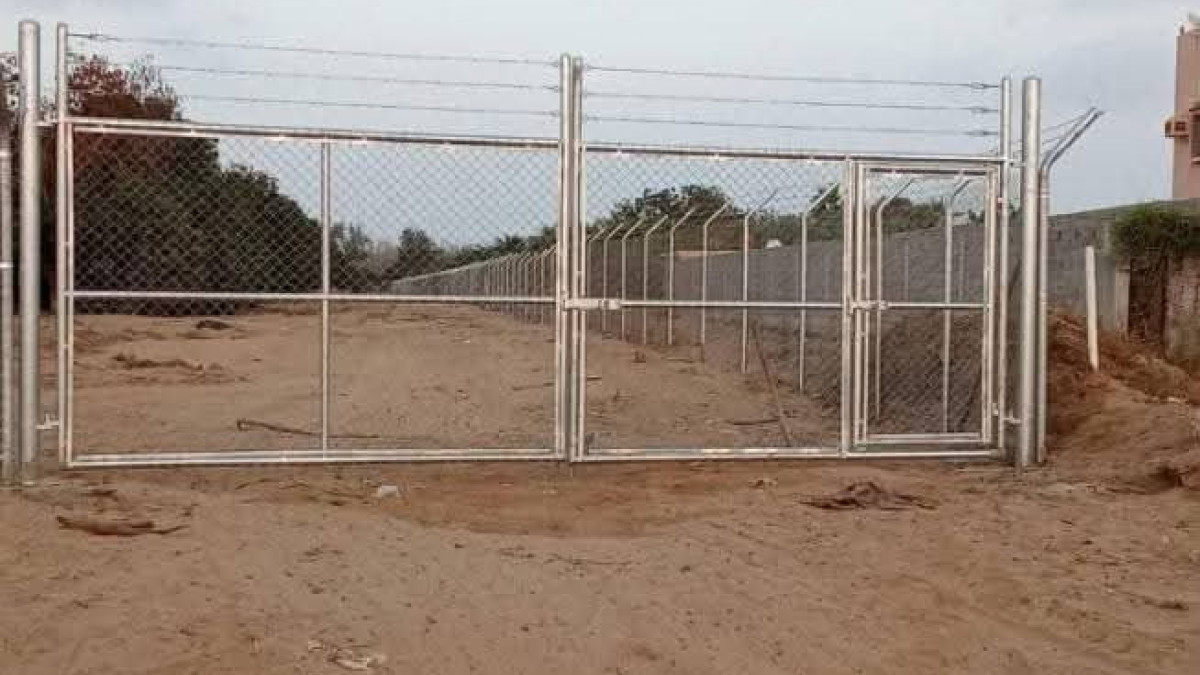
To fence a poultry farm safely, define the farm's controlled perimeter, identify animal intrusion risks, and select a suitable galvanized mesh system with properly designed posts and foundations. Provide secure gates, controlled vehicle access, and appropriate lower-edge protection. The fence should support the farm's biosecurity plan without obstructing ventilation, drainage, emergency access, or routine poultry operations.
Poultry farms in Saudi Arabia require more than a simple boundary around their buildings. These facilities may include poultry houses, feed storage, service roads, ventilation equipment, loading areas, and designated entry points that need to remain organized and protected.
Unauthorized entry, roaming animals, damaged perimeter sections, and uncontrolled movement between external and internal areas can create operational problems for poultry businesses.
A properly planned poultry farm perimeter fence can help reduce unauthorized access and support physical separation between controlled farm areas and surrounding land. However, fencing alone cannot prevent poultry diseases or replace a comprehensive farm biosecurity program.
Shobok Rayat Najd | شبوك رايات نجد provides fencing solutions for agricultural land and outdoor properties in Saudi Arabia. Poultry facility fencing should be specified according to site layout, structural requirements, animal risks, and farm operating procedures.
 Call Now
 WhatsApp
Why Does a Poultry Farm Need Perimeter Fencing?
Does poultry farm fencing improve site security?
Yes. A suitable perimeter fence can help establish a controlled boundary and direct authorized visitors, vehicles, and employees through designated entry points.
Its effectiveness depends on the fence design, gate management, maintenance, and the security procedures implemented by the farm operator.
Can fencing reduce animal intrusion into poultry farms?
Yes. A correctly designed fence can reduce entry by selected animals, depending on their size, behavior, and ability to climb, dig, or pass through openings.
The fence specification should be based on animals actually present near the site rather than assumptions that one mesh type will exclude every species.
Does perimeter fencing help protect farm equipment?
It can help restrict uncontrolled access to feed storage areas, poultry buildings, service equipment, and other farm facilities.
Additional protection may be required for valuable equipment or areas that contain operational hazards.
Can fencing prevent poultry diseases?
No. Fencing alone cannot prevent disease transmission because pathogens may spread through multiple routes, including contaminated equipment, vehicles, footwear, pests, and other exposures.
Physical perimeter control is only one element of a biosecurity program that should be developed with appropriately qualified poultry health and farm management specialists.
| Farm concern | Role of perimeter fencing | Additional protection |
|---|---|---|
| Unauthorized visitors | Direct entry through controlled gates | Access authorization and visitor procedures |
| Roaming livestock | Reduce entry by targeted animals | Suitable height, mesh and lower-edge details |
| Ground-dwelling predators | Provide a physical barrier where properly designed | Species-specific intrusion control |
| Farm equipment access | Separate controlled areas from outside land | Equipment-specific security measures |
| Uncontrolled vehicle movement | Channel vehicles through designated entrances | Traffic and biosecurity procedures |
| Disease introduction | Support controlled physical access | Comprehensive veterinary biosecurity program |
What Are the Strongest Types of Fences?
Is galvanized chain link fencing suitable for poultry farms?
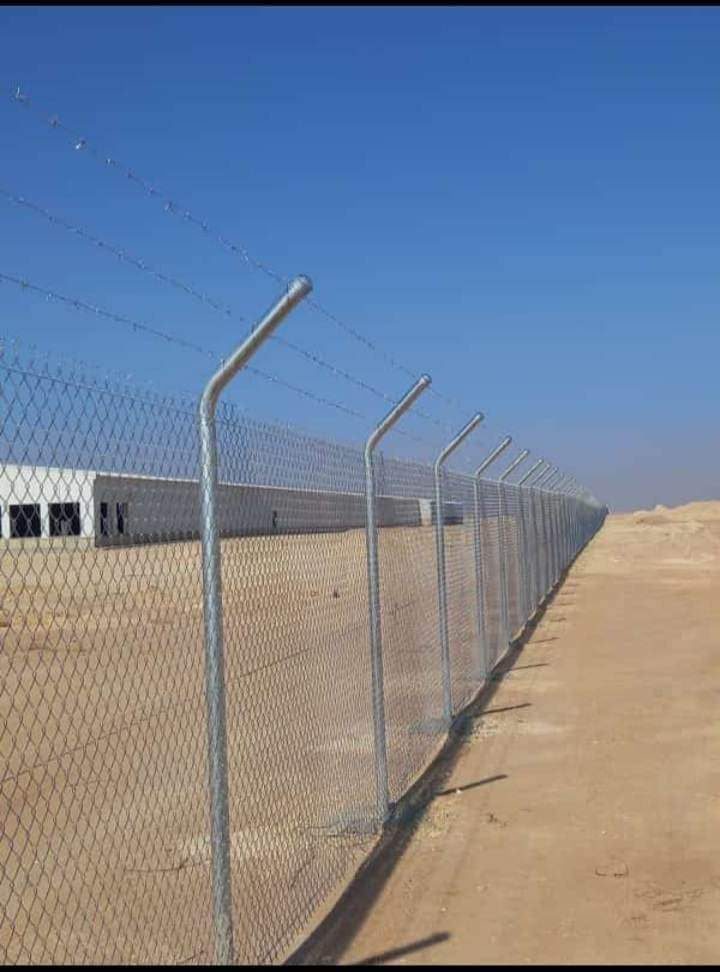
Galvanized chain link fencing can be suitable for the outer perimeter of a poultry farm when the wire, mesh openings, posts, and foundations meet the intended protection requirements.
Its open construction allows visibility through the fence, while the zinc coating provides corrosion protection for outdoor steel components.
Is welded wire mesh better than chain link fencing?
Neither system is universally stronger or better for every poultry farm.
Welded wire mesh uses fixed intersections that form relatively rigid panels, while chain link fencing uses interwoven wires. Their suitability depends on material specifications, structural performance, and the intended application.
Should I use small mesh openings?
Small openings may be necessary where the fence is intended to reduce entry by particular small animals.
However, openings alone do not guarantee exclusion. Animals may dig beneath fences or exploit gaps around gates and structural connections.
Is galvanized steel suitable for Saudi poultry farms?
Yes, when its protective coating and structural specifications are appropriate for the farm's environmental conditions.
Humidity, cleaning activities, chemical exposure, salinity, and surface damage should be considered when specifying materials and maintenance procedures.
Can the same fence be used around the farm and individual poultry houses?
Possibly, but the requirements may differ.
The outer perimeter primarily controls site access, while barriers near poultry houses may require different mesh dimensions, cleaning characteristics, and animal-protection details.
| Fencing option | Main characteristics | Potential application |
|---|---|---|
| Galvanized chain link mesh | Flexible woven steel fencing | General poultry farm perimeter |
| Galvanized welded mesh | Rigid wire intersections | Selected internal or external barriers |
| Small-opening galvanized mesh | Reduced openings for targeted intrusion risks | Selected lower fence sections or protected areas |
| Framed steel mesh panels | Mesh supported by metal frames | Gates and designated access sections |
| Additional coated steel mesh | Protective finish according to specification | Sites with particular corrosion requirements |
| Engineered reinforced fence system | Project-specific structural and security design | Facilities requiring higher perimeter protection |
How Do I Choose a Fence for a Commercial Chicken Farm?
Should I fence the entire property or only the poultry buildings?
The boundary should be determined by the farm's layout, controlled operating areas, security requirements, and biosecurity plan.
Some farms may require a controlled outer perimeter with additional internal separation between defined operational zones.
How does farm size affect fencing selection?
Farm size affects perimeter length, access arrangements, gate locations, construction logistics, and maintenance requirements.
However, a larger property does not automatically require a stronger fence. Structural and security specifications depend on the actual conditions.
Should the fence provide visibility into the farm?
Visibility through a fence may support routine visual inspection of the perimeter and surrounding area.
However, privacy or security requirements may differ between facilities, so any additional visual barriers should be assessed for wind loading and operational effects.
Do poultry farms need internal fencing?
Some facilities may use internal barriers to separate operational areas, vehicle routes, feed storage, or zones with different access requirements.
The design should align with the farm's approved operating and biosecurity procedures.
How Can Fencing Support Poultry Farm Biosecurity?
What does biosecurity mean on a poultry farm?
Biosecurity refers to management practices intended to reduce the introduction and spread of infectious agents within and between animal production facilities.
These practices include controlling people, vehicles, equipment, animals, and other possible routes of contamination.
How does a fence support controlled farm access?
A defined perimeter helps direct authorized traffic through established access points where the farm's required biosecurity procedures can be implemented.
It is the combination of physical barriers and operating controls that creates a more organized system.
Should visitors enter through one controlled location?
The farm's biosecurity plan should specify authorized entry points and the procedures applied to each type of visitor or vehicle.
The number and location of entrances depend on the facility's design, operational requirements, and emergency access needs.
Can a fence keep wild birds away from poultry houses?
Ordinary open chain link perimeter fencing cannot reliably exclude flying wild birds.
Bird exclusion near poultry housing requires separate measures appropriate to the building and veterinary biosecurity plan, such as suitable protected openings and other approved controls.
Does a fence replace cleaning and disinfection?
No. Perimeter fencing is not a substitute for the cleaning, disinfection, protective clothing, and movement-control procedures required by the farm's veterinary health program.
How Do I Prevent Predators From Entering a Poultry Farm?
Can small animals pass through ordinary chain link fencing?
Yes. Depending on the mesh opening and the animal's size, some animals may pass through conventional perimeter mesh.
Additional protection may be required in areas with identified small-animal intrusion risks.
Can predators dig underneath the fence?
Some animals can dig beneath barriers, making lower-edge protection an important consideration for particular sites.
Possible measures should be selected according to the target species, soil conditions, drainage, and applicable wildlife requirements.
Should the fence have a buried lower section?
A buried mesh section or other engineered lower-edge detail may be appropriate when digging is a documented threat.
Its design must account for underground utilities, soil conditions, corrosion, drainage, and the site's environmental requirements.
Can animals enter through the main gate?
Yes. Poorly aligned gates, excessive clearance underneath, or openings around gate posts can weaken the perimeter.
Gate design should provide appropriate closure while allowing safe operation and necessary vehicle movement.
Does fencing eliminate the need for rodent control?
No. Rodents may enter through openings, burrows, building penetrations, or other routes that perimeter fencing alone cannot eliminate.
Rodent management remains a separate component of the farm's pest-control and biosecurity program.
| Intrusion risk | Fence-related consideration | Additional management requirement |
|---|---|---|
| Roaming livestock | Suitable structural strength and height | Inspect adjacent areas and access points |
| Small ground animals | Mesh opening dimensions | Species-specific exclusion measures |
| Digging animals | Lower-edge or underground protection | Inspect soil disturbance along the fence |
| Climbing animals | Fence geometry and nearby objects | Assess actual climbing risks |
| Wild birds | Perimeter fence offers limited exclusion | Separate building-level bird protection |
| Rodents | Perimeter mesh is not sufficient alone | Integrated pest-management program |
What Is the Security Height for Fences?
How tall should poultry farm fencing be?
Fence height should be based on the target animal risks, site security requirements, applicable regulations, and structural design.
There is no universal height that provides the correct level of protection for every poultry farm.
Is a taller fence always safer?
Not necessarily. A taller fence may provide additional separation against some threats, but overall performance depends on mesh openings, gate security, foundations, and lower-edge protection.
Greater height can also increase structural loads, particularly in exposed areas.
Can lower fencing work around internal poultry areas?
Some internal operational barriers may have different requirements from the outer security perimeter.
Any internal fence should be selected based on its actual function and the facility's approved procedures.
Should barbed wire be installed on poultry farm fences?
Barbed wire or other additional security features should only be considered when permitted, justified by a risk assessment, and compatible with the farm's safety requirements.
Potential injury risks to workers, livestock, and wildlife must be evaluated before installation.
What Distance Is Required Between Fence Posts?
How far apart should poultry farm fence posts be installed?
Post spacing depends on the selected fencing system, height, wire tension, post dimensions, wind exposure, and ground conditions.
The correct spacing should follow the approved structural design rather than a fixed assumption.
Do corner posts need additional support?
Corner posts may require reinforcement because they experience changes in fence direction and mesh tension.
Bracing and foundation details should match the design of the complete fencing system.
Should posts be positioned differently near gates?
Gate posts must be designed for the gate's weight, operating forces, and applicable environmental loads.
They should not automatically use the same specification as ordinary intermediate posts.
Can post spacing change on uneven ground?
It may need adjustment where slopes, changes in elevation, soil conditions, or installation details require a different arrangement.
All changes must preserve the structural stability and intended protective function of the fence.
How Do I Install Fences?
What is the first step in poultry farm fence installation?
Start with an approved site boundary survey and confirm where fencing, gates, and internal service routes should be located.
Review underground utilities, drainage, poultry housing, existing farm operations, and any construction restrictions before excavation.
Should fence installation be coordinated with farm operations?
Yes. Construction activities may create dust, noise, traffic, and uncontrolled movement that affect the farm's operating and biosecurity arrangements.
Installation should follow the site manager's access procedures and the farm's veterinary biosecurity requirements.
How should fence foundations be constructed?
Foundations must be designed for soil conditions, fence height, structural loads, and the selected post system.
Concrete footings or other suitable methods may be used according to the approved design. No single foundation depth is appropriate for all farms.
How do I install galvanized chain link mesh?
Use compatible tensioning, fastening, and support components specified for the fencing system.
The completed mesh should be secured consistently and should not contain hazardous loose wires or exposed sharp ends.
Should the fence be checked before the farm resumes normal access?
Yes. Verify that all sections are secure, gates operate correctly, and construction materials or openings do not create uncontrolled entry routes.
Any temporary breaches required during installation should be addressed according to the farm's access-control procedures.
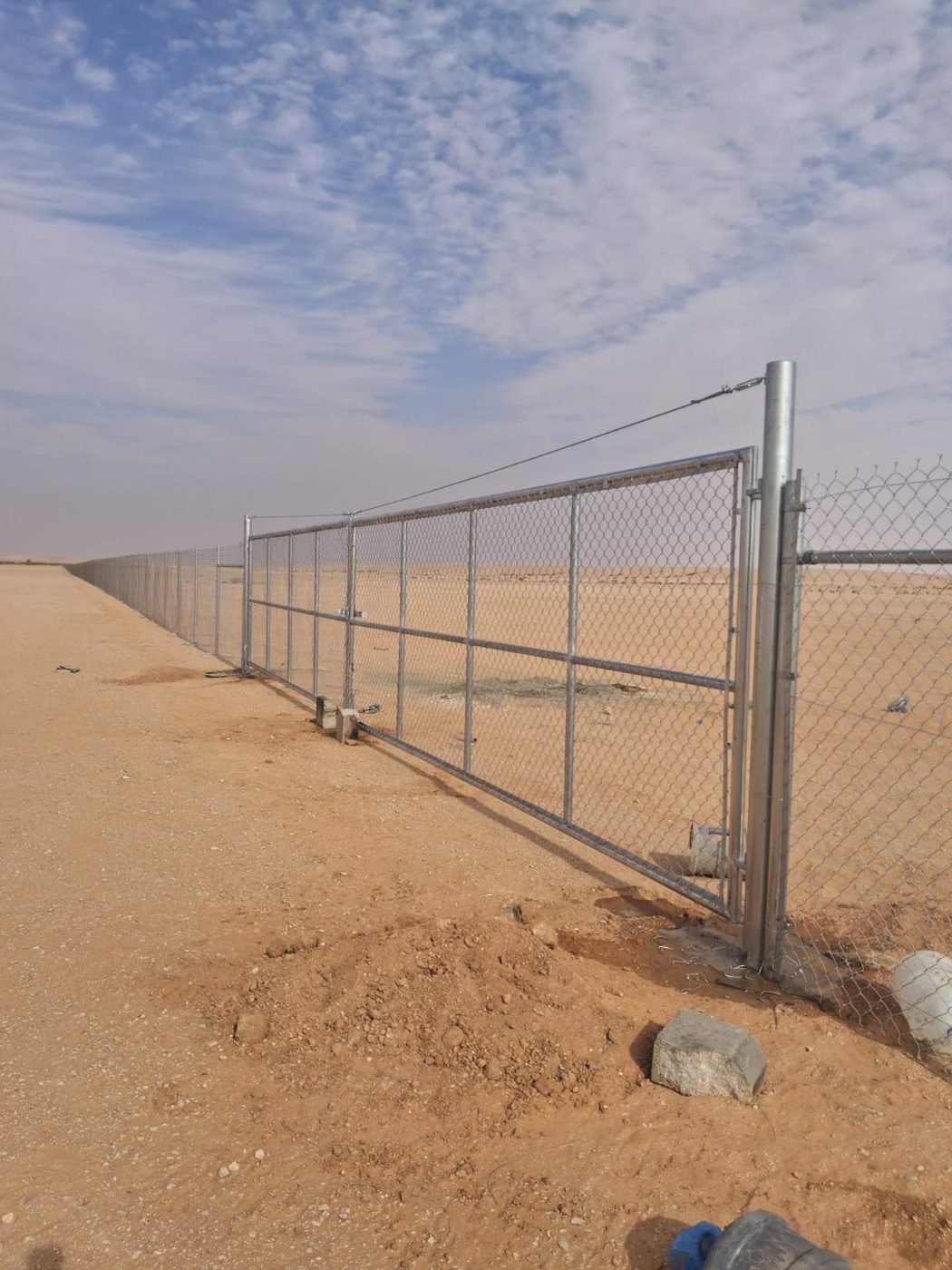
How Do I Protect Poultry Farm Fence Foundations?
Can sandy soil affect fence stability?
Yes. Loose or variable sandy soil can influence the capacity of foundations to resist lateral loads and movement.
Foundation selection should account for the actual soil characteristics, structural demands, and site conditions.
Can water runoff weaken fence posts?
Runoff or erosion may remove supporting soil around posts and foundations.
Drainage should be coordinated with the fencing plan so that the perimeter does not block required water movement.
Should I install fence posts near underground water lines?
Only after the underground services have been identified and protected.
Post excavation must not damage water pipes, electrical cables, drainage systems, or other buried infrastructure.
Can concrete surfaces support fence posts?
Suitable structural concrete may support an appropriately engineered post anchorage system.
However, the concrete's condition, thickness, reinforcement, and support must be verified before installation.
| Ground condition | Potential concern | Required evaluation |
|---|---|---|
| Loose sandy ground | Post movement or settlement | Foundation stability and soil support |
| Compacted agricultural soil | Variable bearing and lateral resistance | Site-specific soil assessment |
| Areas with standing water | Erosion and corrosion exposure | Drainage and foundation protection |
| Sloping ground | Lower gaps and post alignment | Appropriate fence profile and grading |
| Concrete hardstanding | Unsuitable anchorage or local cracking | Structural verification |
| Buried farm utilities | Damage during excavation | Utility identification and safe clearance |
How Should I Design the Main Poultry Farm Entrance Gate?
Should poultry farms have controlled vehicle gates?
Yes. Vehicle access should follow the farm's operating and biosecurity procedures, using appropriate entry points and controls.
Gate placement should account for delivery vehicles, feed transportation, staff access, and emergency response.
How wide should the entrance gate be?
Gate dimensions should accommodate authorized vehicles and equipment, including their turning and maneuvering requirements.
The appropriate opening must be determined from the site's actual traffic and layout.
Should pedestrian entry be separated from vehicle entry?
Separate access arrangements may be appropriate when the farm's operating plan or risk assessment requires them.
The objective is to manage movement safely while supporting access-control and hygiene procedures.
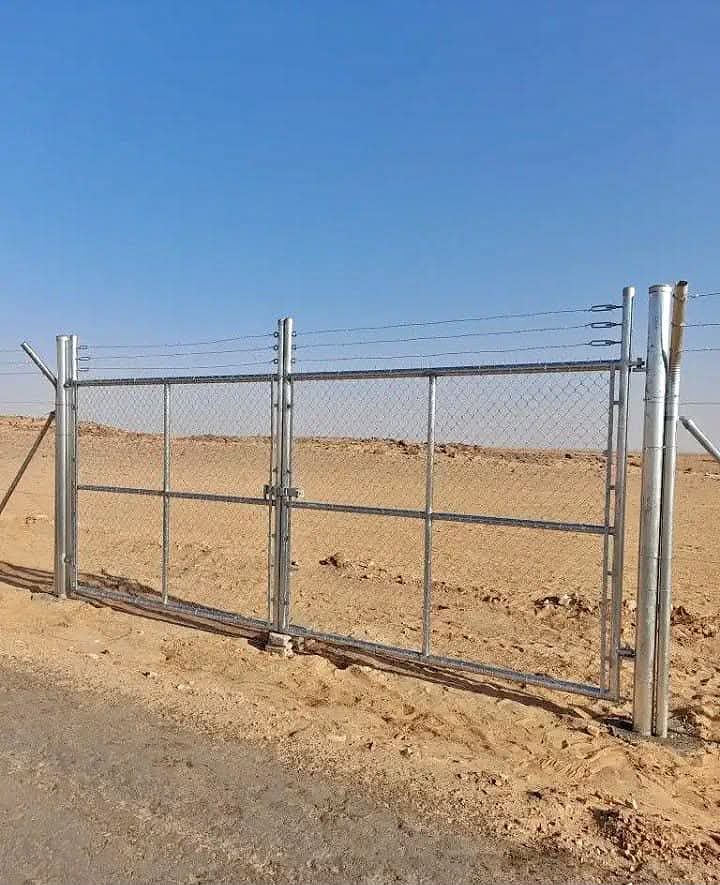
Can I install a double-leaf steel gate?
Yes. A suitable galvanized steel double-leaf gate can be considered where its dimensions and opening arrangement match the site.
Posts, hinges, locking components, and stops must be designed for the gate and its operating loads.
Should the gate remain locked?
The farm should establish access-control rules that support security without interfering with approved emergency escape or response arrangements.
The exact locking system should follow the applicable site and safety requirements.
Can a gate create a biosecurity weakness?
Yes. A gate that is routinely left open or bypasses authorized entry procedures can undermine perimeter control.
Farm management should coordinate the physical gate system with the required visitor, vehicle, and hygiene processes.
How Do I Protect Poultry Fencing From Rust and Moisture?
Does poultry farming create corrosion risks for steel fences?
Certain farm environments may expose steel to humidity, moisture, cleaning substances, dust, and other conditions that contribute to corrosion.
The level of exposure varies depending on the fence location and farm operations.
Does galvanizing prevent all rust?
No. Galvanizing provides protective zinc coating, but its service life depends on the coating specification, environmental conditions, and maintenance.
Damaged or exposed metal sections may require appropriate treatment.
Can cleaning chemicals damage galvanized fencing?
Some chemicals may be incompatible with zinc coatings or other protective finishes.
Before using cleaning or disinfection products near fencing, review chemical compatibility and relevant safety instructions.
Should fence materials resist direct sunlight?
Yes. Components intended for outdoor use should be suitable for the expected temperature and ultraviolet exposure.
Nonmetallic coatings and accessories should be selected according to their environmental ratings.
Can fence corrosion affect farm security?
Yes. Significant corrosion can weaken wires, connections, gate components, or posts, reducing the protective function of the perimeter.
Periodic inspection helps identify affected areas before major structural deterioration occurs.
How Can I Fence a Poultry Farm Without Blocking Ventilation?
Does chain link mesh block airflow around poultry houses?
Open chain link mesh generally allows substantial airflow through its openings, but the complete site arrangement should still be reviewed.
Fence placement must not interfere with ventilation equipment, air intakes, exhaust outlets, or maintenance requirements.
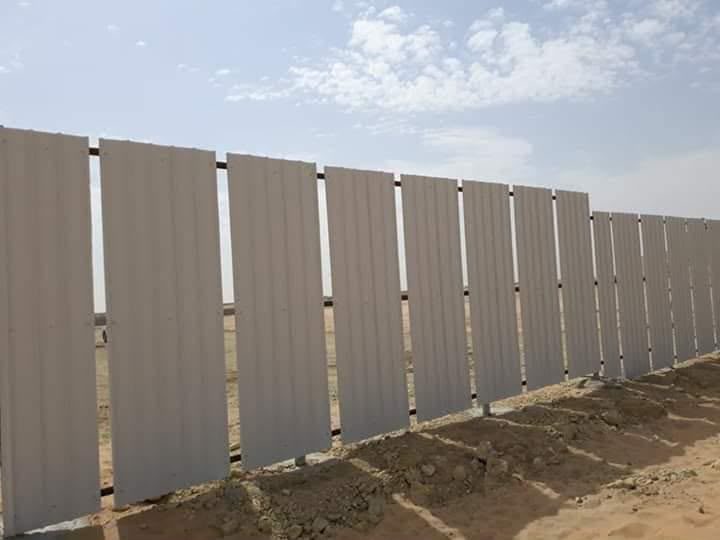
Should I attach solid privacy fabric to poultry fencing?
Not without evaluating the consequences.
Solid coverings may affect airflow and increase wind loads on the fence. They should only be used when the structural design and farm ventilation requirements allow them.
Can a perimeter fence be installed near ventilation fans?
Only when the required clearances, airflow conditions, cleaning access, and equipment maintenance needs are satisfied.
The appropriate position should be coordinated with the poultry house ventilation design.
Will fencing reduce heat inside poultry buildings?
Perimeter fencing is not an active cooling system and should not be presented as a method for controlling poultry house temperature.
Environmental management depends on the building's ventilation, cooling, insulation, operating systems, and flock-management requirements.
How Do I Choose Fencing for Different Poultry Farm Areas?
Should feed storage areas have separate fencing?
Additional fencing may be appropriate when feed storage requires a distinct access-control boundary.
However, feed hygiene and pest management require operational measures beyond a physical fence.
Do poultry loading areas need special access arrangements?
Loading and unloading areas should be designed for authorized vehicle movement, operational safety, and the farm's biosecurity requirements.
Gates and fencing must not obstruct planned traffic or emergency routes.
Should staff facilities be inside the controlled perimeter?
The layout should follow the farm's approved access and biosecurity plan.
Staff entry procedures may require designated transition areas, separate routes, or other controls appropriate to the facility.
Can fencing separate clean and restricted operational areas?
Physical barriers can support the separation of areas with different access rules when incorporated into a comprehensive biosecurity design.
However, the specific meaning and operation of each zone must be established by qualified farm management and veterinary personnel.
Should poultry waste handling areas be fenced?
Separate access or boundary arrangements may be appropriate according to the site's environmental, hygiene, and operating requirements.
Waste management itself must comply with applicable procedures and cannot rely on fencing alone.
| Farm area | Fencing objective | Additional consideration |
|---|---|---|
| Outer property boundary | Control general site entry | Security and animal intrusion risks |
| Poultry house surroundings | Manage local access | Ventilation and maintenance clearances |
| Feed storage area | Restrict unauthorized movement | Feed hygiene and pest management |
| Vehicle loading area | Define traffic and access routes | Delivery operations and emergency access |
| Staff entry zone | Support controlled entry | Farm biosecurity procedures |
| Waste handling zone | Separate selected operational activities | Environmental and hygiene requirements |
| Equipment service area | Control access to machinery | Safe maintenance and equipment operation |
How Much Does Poultry Farm Fencing Cost?
Is there a standard price for fencing a poultry farm?
No single price applies to every poultry facility.
The actual cost depends on perimeter length, fence height, mesh specifications, structural posts, foundations, gates, site conditions, and installation requirements.
Does the number of chickens determine fencing cost?
Not directly. Fencing requirements depend primarily on the site layout and perimeter design rather than the number of birds alone.
Farm capacity may influence the layout and operational requirements, but it does not provide enough information to calculate fence quantities.
Does smaller mesh cost more?
Material costs can differ according to opening size, wire diameter, manufacturing method, coating, and supplier conditions.
The correct specification should be selected according to the actual risks rather than automatically choosing the smallest openings.
Are galvanized fences economical over the long term?
Suitable galvanized fencing may reduce certain corrosion-related maintenance requirements compared with unprotected steel.
Lifecycle value depends on product quality, installation, exposure, and ongoing inspection.
What should I provide for a fencing quotation?
Provide the project location, perimeter dimensions, site photographs, intended protection level, required gates, and any relevant project drawings.
Also describe known animal intrusion risks, existing utilities, and site-access restrictions.
What Are the Common Mistakes in Poultry Farm Fencing?
Is it a mistake to choose mesh based only on price?
Yes, when cost is considered without evaluating durability, animal risks, structural suitability, and maintenance needs.
Can a tall fence still allow small animals inside?
Yes. Animals may enter through openings, beneath the lower edge, or around poorly sealed gates.
Should the main gate remain open for convenience?
Routine gate management should follow the farm's authorized access-control procedures.
Leaving entrances uncontrolled can undermine perimeter security and movement management.
Can I install fence posts without checking buried services?
No. Underground utilities must be identified and protected before excavation begins.
Is ordinary chain link enough to keep wild birds out?
No. Flying wild birds can pass through or over ordinary open perimeter fencing.
Should I place fences directly against ventilation equipment?
No. Required operational and maintenance clearances must be maintained.
Can I ignore drainage beneath the perimeter?
No. Poor drainage or erosion may affect foundations and create maintenance problems.
Should I use damaged galvanized mesh?
No. Damaged or unsuitable components should be repaired appropriately or replaced before installation.
Can fencing replace a veterinary biosecurity plan?
No. Physical boundaries are only one part of controlling the risks associated with poultry production.
Should gate posts use the same specification as every other post?
Not automatically. Gate posts must support the additional loads created by gate weight and operation.
What Checklist Should I Follow Before Fencing a Poultry Farm?
What should I verify before starting the installation?
Confirm the perimeter, access requirements, target animal risks, structural design, underground services, and biosecurity procedures before construction.
- ☐ Confirm the farm's approved property boundaries.
- ☐ Review relevant permits and agricultural requirements.
- ☐ Identify the poultry houses and operational zones.
- ☐ Define the controlled perimeter and entry points.
- ☐ Review the farm's biosecurity plan with responsible specialists.
- ☐ Identify local livestock and predator intrusion risks.
- ☐ Select suitable galvanized mesh specifications.
- ☐ Determine whether lower-edge protection is required.
- ☐ Choose fence height according to site requirements.
- ☐ Specify post spacing and structural reinforcement.
- ☐ Inspect soil and foundation conditions.
- ☐ Identify underground pipes and electrical cables.
- ☐ Review drainage and erosion risks.
- ☐ Plan vehicle and pedestrian access gates.
- ☐ Ensure maintenance equipment can enter safely.
- ☐ Maintain ventilation and equipment clearances.
- ☐ Coordinate installation with poultry farm operations.
- ☐ Apply appropriate worker hygiene and access procedures.
- ☐ Inspect mesh openings and lower-edge gaps.
- ☐ Verify gate alignment and locking arrangements.
- ☐ Check corrosion protection and exposed connections.
- ☐ Confirm emergency routes remain accessible.
- ☐ Establish a routine fence inspection schedule.
- ☐ Document handover and required maintenance.
How Do I Inspect Poultry Farm Fencing After Installation?
How do I check fence post stability?
Inspect posts for unwanted movement, misalignment, damage, and signs of foundation settlement.
Any significant structural concerns should be evaluated by qualified personnel before the affected section is accepted.
How should I check the mesh for gaps?
Inspect mesh joints, lower edges, corners, gate connections, and areas around structural supports.
Compare the completed barrier with its intended animal-exclusion and security requirements.
Should I test all gates before handover?
Yes. Confirm that gates open, close, latch, and lock correctly without creating unsafe movement or blocking essential access.
How do I inspect galvanized coating quality?
Check for visible coating damage, exposed metal, corrosion, and affected fabricated connections.
Repairs should follow the specified protective coating system.
Should the completed fence be reviewed by farm management?
Yes. Farm management should verify that the perimeter supports the intended access routes and does not conflict with required biosecurity or operational procedures.
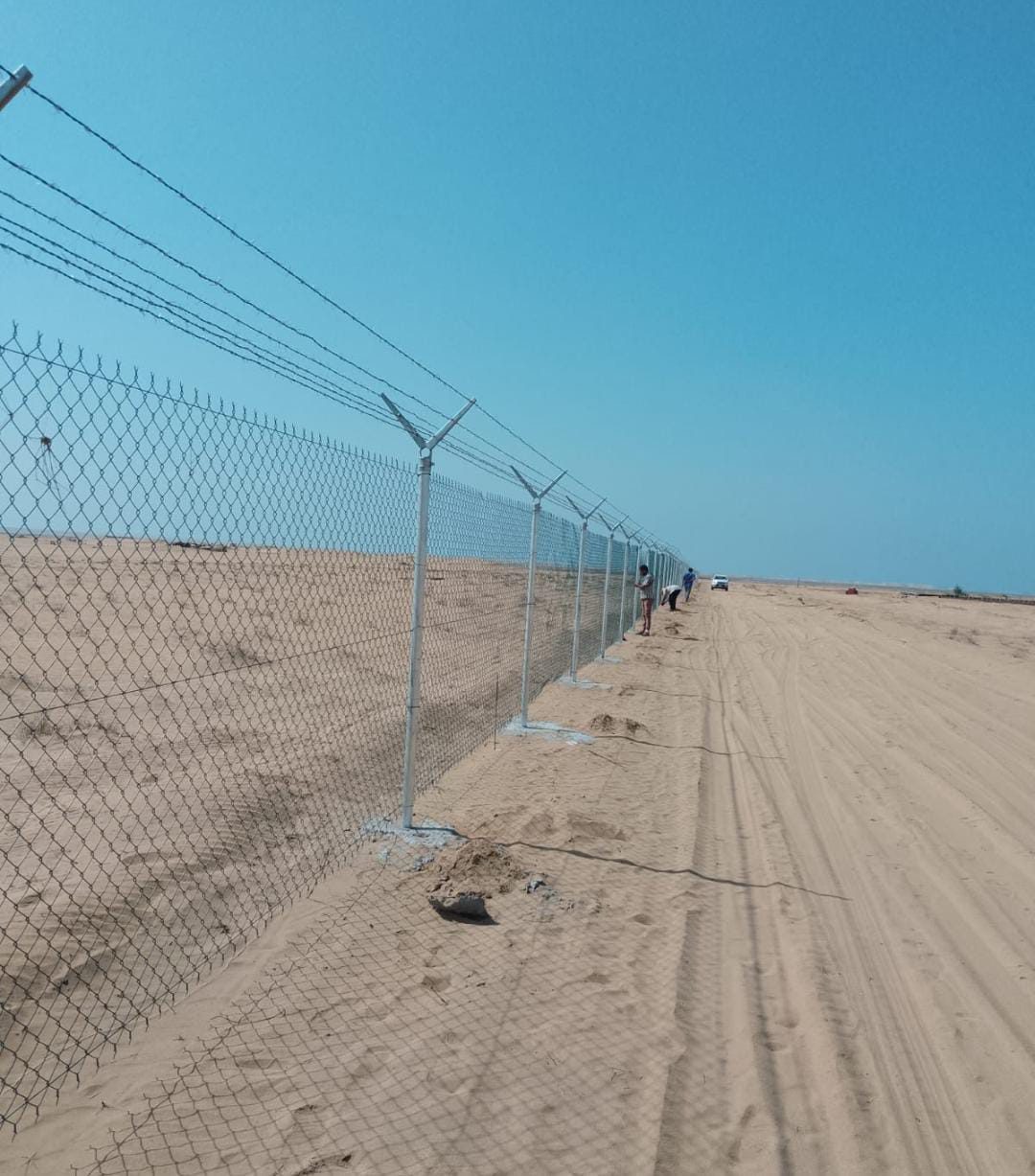
How Do I Maintain Poultry Farm Fencing Over Time?
How often should poultry perimeter fences be inspected?
Inspection frequency should be based on the farm's operating requirements, environmental exposure, and intrusion risks.
Additional checks may be necessary after severe weather, animal contact, or visible damage.
Should I inspect the lower edge for animal digging?
Yes. Soil disturbance, burrows, and newly formed gaps may indicate that animals are attempting to enter beneath the fence.
Any corrective work should account for soil stability, drainage, and the identified animal risk.
Can repeated gate use damage hinges?
Frequent operation may cause wear or loosening in hinges, latches, and other components.
Routine inspection and appropriate maintenance help preserve safe operation.
What should I do when a fence section is damaged?
Control access through the affected area, assess the damage, and arrange suitable repairs or replacement.
Temporary protection may be necessary until the perimeter is restored, particularly where the breach affects the farm's access-control procedures.
Should fencing records be maintained?
Yes. Records of inspections, repairs, incidents, and component replacements can help farm management monitor recurring issues and maintain the perimeter.
How Can Shobok Rayat Najd Help With Poultry Farm Fencing?
Can agricultural fencing be designed for poultry facilities?
Yes. A fencing solution can be planned around the facility's layout, soil conditions, perimeter length, access gates, and identified animal risks.
The design must also respect the operating requirements established by the poultry farm's management and qualified specialists.
Can galvanized fencing be used in different Saudi regions?
Galvanized fencing can be considered for different locations when the coating and structural specifications are appropriate to the environmental exposure.
Soil, wind, humidity, salinity, and maintenance conditions should be assessed for each project.
Can Shobok Rayat Najd discuss fencing for a commercial poultry property?
You can contact Shobok Rayat Najd to discuss the property's fencing requirements and the scope of a suitable agricultural perimeter system.
Provide details of the site and the level of protection required so the project can be evaluated without assuming a standard solution.
Where can I request poultry farm fencing in Saudi Arabia?
Visit the official Shobok Rayat Najd website for company information and fencing inquiries.
What Are the Most Frequently Asked Questions About Poultry Farm Fencing?
1. How do I fence a poultry farm safely?
Define the controlled perimeter, identify animal and access risks, choose a suitable galvanized fence system, and install approved posts, foundations, and gates while maintaining farm operations and biosecurity procedures.
2. What are the strongest types of fences?
Fence strength depends on wire specifications, mesh construction, posts, foundations, and connections. Galvanized chain link and welded mesh are options that can be evaluated for poultry farms.
3. How do I install fences?
Survey the site, identify underground utilities, prepare approved foundations, install posts and mesh, fit access gates, and inspect the completed perimeter.
4. What distance is required between fence posts?
Post spacing depends on fence height, mesh specifications, wind exposure, soil conditions, and structural requirements. No single distance suits every poultry facility.
5. What is the security height for fences?
The appropriate height depends on the site's security objectives, animal intrusion risks, applicable requirements, and fence design.
6. Is galvanized chain link suitable for chicken farms?
Yes, it can be suitable for the outer perimeter when material specifications and structural design meet the farm's requirements.
7. Can poultry farm fencing prevent diseases?
No. Fencing supports controlled access but cannot replace veterinary biosecurity measures, sanitation, pest management, and other disease-control procedures.
8. Can fences stop predators from entering poultry farms?
Proper fencing may reduce entry by selected animals, but effective protection depends on species, mesh openings, lower-edge details, gates, and other controls.
9. How much does poultry farm fencing cost?
Cost depends on perimeter dimensions, mesh type, height, posts, foundations, gates, and site conditions. Request a quotation based on project specifications.
10. Do poultry farm fences require maintenance?
Yes. Posts, mesh, gates, lower edges, and protective coatings should be inspected and maintained according to site conditions and operational risks.
How Do I Know When My Poultry Farm Fence Is Ready for Use?
Should the entire perimeter be checked before handover?
Yes. Inspect all sections to identify incomplete connections, unstable supports, exposed edges, or gaps that conflict with the intended protection.
Gate operation and the required access-control arrangements should also be verified.
Should the farm review biosecurity access after installation?
Yes. The completed fence should be coordinated with farm management to confirm that authorized movement remains practical and controlled.
Physical fencing does not replace the training and operational procedures needed to manage people, vehicles, and equipment.
Can future poultry buildings require fencing modifications?
Yes. Expansion may change the perimeter, access roads, building clearances, or protected operating zones.
Changes should be reviewed before moving posts or modifying gates to ensure the resulting design remains suitable.
Should damaged fencing be repaired immediately?
Damage affecting perimeter security, structural safety, or animal exclusion should be assessed promptly and controlled until a suitable repair is completed.
Repairs should restore the required level of protection rather than simply improving appearance.
What Is the Best Way to Protect a Poultry Farm With Fencing?
The most effective approach to poultry farm fencing in Saudi Arabia is to combine a correctly designed physical perimeter with the farm's security, access-control, and veterinary biosecurity procedures.
Choose a galvanized mesh system suitable for the identified animal risks and outdoor conditions. Determine height, post spacing, and foundation specifications according to the site's structural requirements, and provide gates that support authorized vehicle and pedestrian movement.
Pay particular attention to lower-edge gaps, predator intrusion, underground utilities, ventilation clearances, drainage, and the coordination of construction work with active farm operations.
Remember that a perimeter fence cannot independently exclude flying wild birds, eliminate rodents, or prevent poultry diseases. These risks require additional specialist measures under the facility's biosecurity program.
For commercial poultry farms and agricultural properties in Riyadh and across Saudi Arabia, Shobok Rayat Najd can discuss fencing requirements and a suitable installation scope based on the project's actual conditions.