




To move heavy loads across a construction jobsite safely, determine the load's weight, dimensions, center of gravity, and destination. Inspect the travel route, ground-bearing capacity, slopes, and obstacles before selecting equipment. A suitable pick-and-carry crane, approved transport system, or other handling equipment may be used according to the load and site assessment. Movement must follow an engineered plan and manufacturer operating limits.
Moving heavy machinery, steel assemblies, industrial components, and construction materials between different areas of a project is a common challenge for contractors in Saudi Arabia.
Unlike a conventional stationary lift, moving a suspended load across a jobsite introduces additional considerations, including ground conditions, dynamic forces, equipment stability, travel speed, visibility, and route clearance.
A crane capable of lifting a load at one position is not automatically authorized to travel with that load. The equipment must be specifically designed and approved for the intended movement, with all applicable operating restrictions observed.
MORP | مواكبة الحداثة للمقاولات provides crane and heavy equipment rental solutions in Riyadh and across Saudi Arabia, serving construction, infrastructure, industrial, energy, logistics, and other project sectors.
 Call Now
 WhatsApp
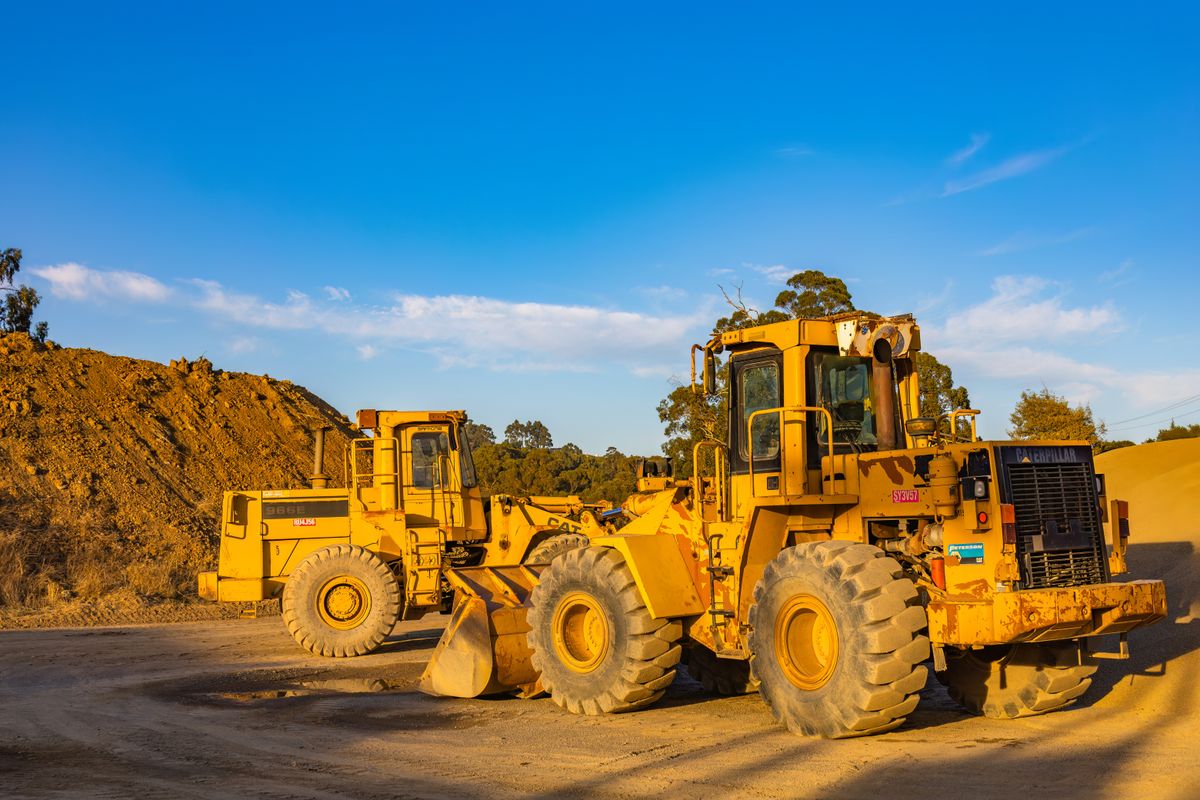
What Is the Safest Way to Move Heavy Loads Across a Jobsite?
Can I move heavy machinery without transporting it on a truck?
Yes, certain equipment can relocate heavy machinery within a jobsite without requiring conventional road transportation.
Possible methods include approved pick-and-carry operations, specialized material-handling equipment, and engineered transport arrangements. The correct method depends on the load, travel distance, surface conditions, and site constraints.
Can a crane lift a load and travel with it?
Only if the crane model and operating configuration are specifically approved for traveling with a suspended load.
Some cranes have defined pick-and-carry capabilities, while others require the machine to remain stationary during lifting. Manufacturer load charts and instructions must govern the decision.
Does the load need to remain suspended during transportation?
No. Keeping a load suspended is not always the preferred transportation method.
Depending on the equipment and route, transferring the load onto an appropriate transport platform or using a different engineered handling arrangement may reduce certain risks.
Who decides which movement method is appropriate?
A qualified lifting or transport-planning team should evaluate the operation and select a method that complies with the equipment manufacturer's requirements and applicable site safety procedures.
The decision should account for the load's characteristics, route conditions, ground capacity, and foreseeable hazards.
| Movement method | Potential application | Critical requirement |
|---|---|---|
| Approved pick-and-carry crane | Relocating suitable suspended loads within a site | Manufacturer-approved travel-with-load operation |
| Telescopic crawler crane | Selected lifting and movement operations | Specific model capability and ground assessment |
| Forklift | Handling compatible palletized or supported loads | Capacity, load center, and travel stability |
| Engineered transport platform | Moving supported heavy equipment | Rated transport system and prepared route |
| Stationary crane with repositioning | Moving loads through separate lifting stages | Approved lifting locations and procedures |
| Alternative specialized handling system | Restricted or complex movement routes | Site-specific engineered methodology |
What Is a Pick-and-Carry Crane?
What does pick-and-carry mean in crane operations?
Pick-and-carry describes a lifting operation in which a crane picks up a load and travels with it under an approved operating configuration.
The capability is subject to the particular crane's rated limits, travel conditions, load position, and manufacturer instructions.
Is a telescopic crawler crane suitable for pick-and-carry work?
Some telescopic crawler cranes are designed with approved pick-and-carry capabilities.
However, the presence of crawler tracks or a telescopic boom does not automatically mean the machine can travel with every suspended load.
The exact model, load chart, operating configuration, and site conditions must be verified before the operation is authorized.
Can a pick-and-carry crane move large steel assemblies?
It may be suitable when the load geometry, weight, center of gravity, rigging arrangement, and travel route fall within the equipment's approved operating limits.
Large steel assemblies may require particular attention to load balance, wind exposure, and the clearance between the load and surrounding structures.
Does pick-and-carry eliminate the need for a lifting plan?
No. Traveling with a suspended load requires careful planning because equipment stability can change during movement.
A suitable plan should define the route, permissible operating conditions, personnel responsibilities, load control, and emergency stopping procedures.
How Do I Choose Equipment for Moving Heavy Loads?
Should I use a crawler crane or a mobile crane?
The choice depends on the intended movement, required lifting configuration, ground conditions, available access, and manufacturer-approved capabilities.
Crawler equipment may offer advantages in certain prepared ground conditions, while mobile cranes can be appropriate for other lifting and relocation arrangements.
Neither category should be assumed suitable for traveling with a suspended load without checking the specific model.
When is a rough-terrain crane appropriate?
A rough-terrain crane may be considered for suitable construction environments where its mobility and lifting configuration match site needs.
Its lifting and travel restrictions depend on the manufacturer and operating configuration. Rough-terrain mobility does not automatically authorize pick-and-carry operations.
Can a forklift replace a crane for equipment relocation?
A forklift may be appropriate for loads designed or safely adapted for forklift handling, provided the load center, weight, dimensions, route, and stability remain within approved limits.
It should not be used to lift an unsuitable load from improvised contact points or outside the manufacturer's requirements.
Are skid steers suitable for transporting heavy industrial loads?
Skid steers may be useful for certain site preparation and material-handling tasks when fitted with approved attachments.
They are not automatically substitutes for cranes or heavy-load transport equipment. Their suitability depends on rated operating capacity, attachment compatibility, and the work being performed.

What Information Do I Need Before Moving Heavy Machinery?
How do I confirm the total load weight?
Use reliable manufacturer data, equipment documentation, or an approved method of establishing the load weight.
The lifting assessment must account for the relevant rigging equipment and other items contributing to the total lifted load under the applicable load-chart conventions.
Why does the center of gravity matter?
The center of gravity affects load balance, sling forces, and how the load behaves during lifting and movement.
An incorrectly identified center of gravity may cause unexpected tilting or shifting, particularly when the load is lifted from unsuitable points.
Should I measure the equipment's width and height?
Yes. The load's dimensions determine the clearance required along the movement route.
Width, height, length, protruding components, and any attachments must be considered before approving the path.
Can machinery be transported with loose parts attached?
Only when those components are properly secured and permitted to remain attached under the equipment's handling instructions.
Loose parts may shift, detach, or alter the center of gravity during movement.
Does the lifting team need manufacturer documentation?
Manufacturer documentation is important for identifying approved lifting points, transportation restrictions, handling instructions, and equipment limitations.
Where information is incomplete, the operation should not proceed based on unsupported assumptions.
| Load information | Why it is required | Source or verification |
|---|---|---|
| Total load weight | Equipment capacity assessment | Manufacturer data or approved measurement |
| Center of gravity | Load balance and rigging design | Technical documentation and assessment |
| Overall dimensions | Route clearance assessment | Drawings and verified measurements |
| Approved lifting points | Safe load attachment | Manufacturer instructions |
| Fragile components | Prevent damage during movement | Equipment inspection and documentation |
| Loose or removable parts | Prevent unexpected movement | Pre-movement inspection |
| Destination location | Define final placement requirements | Project drawings and site verification |
How Do I Plan a Safe Travel Route for Heavy Loads?
What should I check along the movement route?
Inspect ground conditions, slopes, access width, overhead clearance, underground utilities, nearby structures, and pedestrian or vehicle movement.
The entire route must be suitable for the selected equipment and its operating configuration.
Can the load pass through a narrow construction corridor?
Only when the available clearances are sufficient for the complete load and equipment envelope throughout the movement.
Allowances must account for possible load movement, boom positioning, equipment dimensions, and other factors identified in the lifting plan.
Should I inspect the route for underground services?
Yes. Underground pipes, cables, chambers, ducts, and buried structures may affect ground-bearing capacity or create excavation and loading hazards.
Utility information should be verified before equipment travels over potentially vulnerable areas.
Can heavy equipment travel over temporary site roads?
Only after confirming that the route is suitable for the actual equipment, load, and ground pressures.
A road being suitable for ordinary construction vehicles does not automatically mean it can support a heavy crane traveling with a suspended load.
Should the route be closed to other workers?
Appropriate exclusion zones and traffic controls should be established to prevent people or vehicles from entering hazardous areas.
The arrangement must be based on the movement plan and site risk assessment.

How Do I Check Ground Conditions Before Moving a Heavy Load?
Why is ground-bearing capacity important?
Ground-bearing capacity affects whether the soil or supporting surface can safely resist the pressures imposed by the equipment and load.
If the ground is inadequate, settlement or loss of stability may occur.
Do crawler tracks distribute weight across the ground?
Crawler tracks distribute equipment loads over their contact area, but the actual pressures can vary with the boom configuration, load position, movement, and ground conditions.
Tracked equipment can still overload unsuitable ground or buried structures.
How do I calculate the pressure applied by a crawler crane?
Ground-pressure evaluation should use the equipment's relevant technical data and an appropriate engineering assessment of the planned operating conditions.
A simple calculation based only on total machine weight divided by nominal track area may not represent the maximum local pressures experienced during lifting or movement.
Can a crane travel on recently filled ground?
Only if the fill has been assessed and prepared to provide adequate support for the intended operation.
Recent filling may contain uneven compaction or variable material properties that require investigation.
Can rain or water leaks affect the travel route?
Yes. Water can change soil behavior and may reduce bearing performance depending on the soil type and conditions.
Any significant change in the route's condition should trigger reassessment before movement continues.
| Ground condition | Potential hazard | Required evaluation |
|---|---|---|
| Compacted prepared soil | Variable support capacity | Verify bearing performance for the operation |
| Loose sand | Settlement or loss of stability | Geotechnical and route assessment |
| Recently placed fill | Uneven compaction | Verify fill condition and suitability |
| Wet or saturated soil | Reduced strength or rutting | Review moisture and bearing conditions |
| Concrete pavement | Local structural overload | Verify pavement and supporting structure |
| Underground chambers | Collapse under equipment loads | Identify locations and structural capacity |
| Sloping ground | Reduced equipment stability | Check manufacturer limits and engineering assessment |
Can I Move a Suspended Load Over Sloping Ground?
Does ground slope affect crane stability?
Yes. Slope can affect the equipment's center of gravity, load position, and stability during travel.
Any permitted gradient must be established using the exact equipment's manufacturer requirements and the approved travel configuration.
Can a crawler crane carry a load uphill?
Only when the manufacturer specifically permits the operation and the planned conditions remain within all applicable limits.
Do not assume that a machine's unloaded travel capability also applies while carrying a suspended load.
Does traveling downhill introduce additional risks?
Yes. The load and equipment may respond differently to changes in slope, speed, and braking.
The approved movement plan must address these conditions before travel begins.
Can the load swing while traveling on uneven ground?
Yes. Changes in equipment motion and ground conditions can cause a suspended load to move or swing.
Movement must remain within the approved conditions, with effective load control and clear stop procedures.
How Do I Prevent a Heavy Load From Swinging During Travel?
Why do suspended loads swing when a crane moves?
Suspended loads may swing because of acceleration, deceleration, turning, uneven travel surfaces, wind, or changes in boom position.
The movement plan should minimize sudden actions and account for the suspended load's behavior.
Should crane travel speed be restricted?
Yes. Travel speed must comply with the manufacturer-approved pick-and-carry limits and the project lifting plan.
The appropriate speed depends on the equipment, load, ground, route, and operating conditions.
Can tag lines help control load movement?
Tag lines may be appropriate when specified by the lifting plan and used by trained personnel in safe positions.
They must not expose workers to pinch points, suspended-load hazards, or uncontrolled pulling forces.
Should the load be carried close to the ground?
Where permitted by the manufacturer's instructions and lifting plan, minimizing unnecessary load height may help reduce certain risks.
However, the required height must also provide appropriate clearance and must not compromise equipment stability or operation.
Can workers manually stabilize a moving load?
Workers must not be placed in hazardous positions to physically restrain or guide a suspended load.
Approved load-control methods should be established during planning and performed only under safe conditions.

How Do I Move Heavy Equipment Through a Busy Construction Site?
Should normal site traffic stop during heavy-load movement?
Traffic restrictions may be required where workers, vehicles, or equipment could enter the load's hazardous travel area.
The site team should establish controlled routes and communicate restrictions before the operation begins.
Can a crane cross an active equipment route?
Only when crossings are appropriately assessed, coordinated, and controlled.
Simultaneous movement of vehicles and suspended loads must not create uncontrolled interaction risks.
Should a dedicated signal person guide the movement?
A suitably qualified signal person may be required according to the lifting plan, equipment instructions, and site rules.
Communication responsibilities should be clearly assigned, especially when the operator's visibility is restricted.
What happens if the operator loses visual contact?
The operation must follow the approved communication and stopping procedures.
Movement should not continue when the loss of visibility or communication creates an uncontrolled hazard.
Can I Move Heavy Loads Near Power Lines?
Why are overhead power lines dangerous during crane travel?
Crane booms, suspended loads, rigging, and other equipment components may approach energized conductors during movement.
Electrical contact or proximity can create severe hazards for operators, workers, and nearby personnel.
How do I determine a safe clearance from power lines?
Safe clearances depend on the electrical system, applicable regulations, equipment configuration, and site conditions.
The relevant requirements must be established with qualified personnel and the responsible utility or site authority before work begins.
Can spotters replace electrical isolation procedures?
No. Spotters are not a substitute for required electrical protection, isolation, or safe-clearance measures.
The operation must follow the approved electrical and lifting safety arrangements.
Should buried electrical cables also be checked?
Yes. Underground cables and associated structures must be identified where they may be affected by equipment loads or site preparation.
Damage to underground utilities can create electrical, operational, and structural hazards.
How Do I Select Rigging for a Moving Heavy Load?
Are ordinary lifting slings suitable for pick-and-carry work?
Rigging equipment must be selected for the approved lifting and travel operation, taking into account the load, attachment geometry, forces, and manufacturer requirements.
A sling being suitable for one stationary lift does not automatically establish that the complete rigging arrangement is suitable for the proposed movement.
Should shackles be included in load calculations?
Yes. Relevant rigging components and their masses must be accounted for as required by the applicable load-chart and lifting-plan methodology.
All components must be compatible and properly rated for the forces they will experience.
Can spreader beams be used for industrial equipment?
Yes, when a suitably designed and rated spreader beam is required to distribute lifting forces or protect the load.
Its weight, configuration, and connection requirements must be included in the lifting assessment.
Should rigging be inspected before every operation?
Rigging must be inspected according to applicable requirements and the manufacturer's instructions before use.
Damaged, unidentified, or unsuitable equipment must not be used.
Can the load shift inside its lifting frame?
It can if the equipment is not correctly secured or its center of gravity is misunderstood.
The load and lifting arrangement should be evaluated to prevent unexpected movement during the complete operation.
How Do I Plan the Final Placement of Heavy Equipment?
Should the destination be prepared before lifting begins?
Yes. The destination must be assessed and prepared so that the load can be safely lowered and supported.
The supporting surface, access, alignment requirements, and any installation foundations must be checked before movement starts.
Can heavy machinery be placed on temporary supports?
Only when those supports are suitable for the load and have been approved as part of the handling arrangement.
Temporary supports must provide adequate stability and should not create an uncontrolled tipping or settlement hazard.
When can the rigging be disconnected?
Rigging should be disconnected only when the load has been safely positioned and is adequately supported under the approved procedure.
Personnel must remain clear of hazardous contact and pinch points during the operation.
Should the destination be inspected after placement?
Yes. Verify the load's final position, support condition, and any visible damage or unintended movement.
Additional installation inspections may be required before the equipment is connected or operated.
| Operation stage | Main requirement | Verification point |
|---|---|---|
| Load identification | Confirm equipment characteristics | Weight, dimensions, and center of gravity |
| Equipment selection | Choose an approved handling method | Model-specific operating limitations |
| Route preparation | Provide a suitable travel path | Ground, clearance, slope, and utilities |
| Rigging | Secure the load correctly | Approved attachment and rated components |
| Travel | Maintain controlled movement | Stability, communication, and exclusion zones |
| Final placement | Lower onto suitable supports | Destination stability and alignment |
| Completion | Confirm safe handover | Inspection and required documentation |

How Much Does It Cost to Rent Equipment for Moving Heavy Loads?
Is there a fixed price for pick-and-carry crane rental?
No single rental price applies to every operation.
Pricing depends on the required equipment, project location, rental duration, transport arrangements, and operating requirements established through a quotation.
Does travel distance within the jobsite affect rental requirements?
It can. Longer or more complicated routes may introduce additional planning, preparation, and operating considerations.
However, travel distance alone does not determine equipment selection or project cost.
Can I rent lifting equipment by the hour?
MORP offers rental arrangements by the hour, day, week, month, and project contract.
The appropriate option depends on the project's schedule, work scope, and rental conditions.
Is monthly rental suitable for large construction projects?
Monthly rental may be appropriate when a project requires equipment over an extended period.
The decision should consider actual utilization, operating requirements, project sequencing, and the terms of the quotation.
How do I request an accurate equipment rental quotation?
Provide the load details, project location, required movement, ground conditions, approximate travel route, and expected rental duration.
Supporting photographs, equipment specifications, and site drawings can help clarify the request.
Which Saudi Industries Need Heavy-Load Relocation Equipment?
Do infrastructure projects require onsite heavy-load movement?
Yes. Infrastructure projects may involve repositioning structural components, construction machinery, and other equipment between designated work areas.
The appropriate method depends on the specific construction process and site conditions.
Can industrial facilities use pick-and-carry equipment?
Some industrial facilities may use approved equipment for relocating compatible loads within suitable operating areas.
Such operations require site-specific safety evaluation, especially where access restrictions, live equipment, or hazardous processes are present.
Do power plant projects use heavy lifting equipment?
Power and electrical infrastructure projects may require lifting and moving machinery, structural components, and installation equipment.
Any work near energized systems or restricted infrastructure must follow the relevant isolation and access procedures.
Can mining and road projects benefit from crawler cranes?
Crawler cranes can be considered for selected lifting tasks where their characteristics suit the site and load requirements.
Ground conditions and manufacturer limitations remain critical, particularly in changing terrain.
What about petrochemical plant shutdown projects?
Planned industrial shutdowns may involve time-sensitive equipment removal, installation, and relocation.
These projects require coordination with facility operators, approved work permits, lifting procedures, and applicable industrial safety requirements.
How Do I Manage Safety During Heavy-Load Movement?
Should every heavy-load movement have a risk assessment?
Yes. The operation should be assessed according to its complexity, equipment, load characteristics, and site conditions.
The assessment should address foreseeable hazards and the measures required to control them.
Are qualified operators required?
Crane operations must be performed by appropriately qualified and authorized personnel in accordance with applicable regulations and site requirements.
Rigging, signaling, supervision, and other responsibilities must also be assigned to competent personnel.
Does the crane's Load Moment Indicator prevent every accident?
No. A Load Moment Indicator, or LMI, is a safety-related system that assists in monitoring operating conditions according to its design.
It does not replace approved load charts, correct rigging, ground assessments, qualified operation, or the lifting plan.
Should hydraulic systems be inspected?
Yes. Hydraulic systems and other critical components must be inspected and maintained according to manufacturer requirements and applicable procedures.
Defects that affect safe operation must be addressed before equipment is used.
When should a moving operation be stopped?
Stop work when conditions fall outside approved limits, communication fails, the load becomes unstable, ground conditions change unexpectedly, or another uncontrolled hazard arises.
Work should resume only after the cause has been assessed and the operation is confirmed safe.
What Are the Most Common Heavy-Load Moving Mistakes?
Can I assume any mobile crane can travel with a suspended load?
No. Pick-and-carry capability must be explicitly permitted for the specific crane and operating configuration.
Is checking the crane capacity at the starting point enough?
No. Applicable capacities and stability must be evaluated throughout the complete movement.
Can I ignore underground utilities if the ground looks firm?
No. Buried chambers, pipes, cables, and structures may affect the route's suitability.
Should the load travel as high as possible to avoid obstacles?
No. Load height must follow the approved plan and equipment requirements. Unnecessary height can introduce additional hazards.
Can workers walk beside a moving suspended load?
Only within an approved safe arrangement that keeps personnel outside hazardous zones and exposure paths. Workers must never be placed in pinch points or beneath suspended loads.
Can I move a load faster to finish the job sooner?
No. Travel speed must comply with the manufacturer's restrictions and the approved operating procedure.
Should I continue if the ground begins sinking?
No. Unexpected settlement or movement may indicate loss of support and requires stopping the operation safely.
Can I change the movement route without updating the plan?
Material route changes require reassessment and authorization before proceeding.
Can I use damaged slings if their rated capacity is high?
No. Damaged or unsuitable rigging must be removed from service regardless of its original rating.
Can I rely entirely on the LMI?
No. Electronic monitoring systems are only one part of a comprehensive safe lifting process.
What Checklist Should I Complete Before Moving Heavy Loads?
What should be verified before the operation begins?
Verify the load, equipment, route, ground conditions, operating limitations, personnel responsibilities, and safety arrangements before authorizing movement.
- ☐ Identify the load and its destination.
- ☐ Confirm the total load weight.
- ☐ Establish the center of gravity.
- ☐ Verify overall dimensions and protruding components.
- ☐ Identify manufacturer-approved lifting points.
- ☐ Confirm the selected handling method is appropriate.
- ☐ Verify pick-and-carry capability where required.
- ☐ Review the exact crane model and operating configuration.
- ☐ Check applicable load charts and travel restrictions.
- ☐ Inspect the proposed travel route.
- ☐ Evaluate soil and ground-bearing capacity.
- ☐ Locate underground utilities and chambers.
- ☐ Assess slopes, turning areas, and route clearance.
- ☐ Identify overhead obstacles and electrical hazards.
- ☐ Review expected weather and wind conditions.
- ☐ Confirm suitable and inspected rigging equipment.
- ☐ Inspect hydraulic systems and applicable safety devices.
- ☐ Confirm operator and rigging-team qualifications.
- ☐ Assign signaling and communication responsibilities.
- ☐ Establish pedestrian and vehicle exclusion zones.
- ☐ Confirm emergency stopping arrangements.
- ☐ Prepare and verify the destination support area.
- ☐ Obtain required work permits and approvals.
- ☐ Complete the required pre-operation briefing.
- ☐ Document completion and any relevant inspections.
How Can MORP Help With Heavy Equipment Movement Projects?
Does MORP offer telescopic crawler crane rental?
Yes. MORP's equipment rental solutions include telescopic crawler cranes, including pick-and-carry applications subject to the capabilities of the specific equipment and the project conditions.
The exact lifting and travel configuration must be reviewed before selecting equipment for the operation.
Can MORP provide other equipment for construction sites?
MORP's rental categories include mobile cranes, rough-terrain cranes, spider cranes, forklifts, boom lifts, scissor lifts, skid steers, and mobile lighting towers.
Each equipment category has a different intended function, so selection should reflect the actual project task.
Does MORP serve projects outside Riyadh?
MORP is based in Riyadh and serves projects across Saudi Arabia.
Equipment rental arrangements are coordinated according to project location, rental requirements, and the applicable quotation.
Can I request equipment rental for a long-term project?
Yes. MORP offers hourly, daily, weekly, monthly, and project-contract rental arrangements.
Discuss the project schedule and expected operating requirements to determine the suitable rental structure.
How do I contact MORP for heavy equipment rental?
Contact MORP with details of the machinery, proposed movement, project location, and rental period.
For company information and equipment rental inquiries, visit the official MORP website.

What Are the Most Frequently Asked Questions About Moving Heavy Loads Across Jobsites?
1. How do I move heavy loads across a jobsite?
Confirm the load characteristics, assess the travel route and ground conditions, select approved handling equipment, and carry out the movement under a suitable engineered plan with qualified personnel.
2. What is a pick-and-carry crane?
It is a crane designed and approved for certain lifting operations that include traveling with a suspended load under specified operating limits.
3. Can a telescopic crawler crane travel with a load?
Some models can, but the capability depends on the specific manufacturer's approval, load chart, operating configuration, and site conditions.
4. Can any mobile crane perform pick-and-carry operations?
No. Traveling with a suspended load is prohibited unless the particular equipment and configuration are approved for that operation.
5. How do I check whether the ground can support a crawler crane?
Use a suitable ground assessment based on actual equipment pressures, soil conditions, underlying structures, and the planned operating configuration.
6. Can heavy loads be moved across uneven construction ground?
Only when the equipment, route, ground conditions, and manufacturer-approved operating limits permit the proposed movement.
7. Is a forklift suitable for moving heavy machinery?
It may be suitable for properly supported loads within the forklift's approved capacity, load-center, attachment, and travel limits.
8. How much does pick-and-carry crane rental cost in Saudi Arabia?
Rental pricing depends on equipment requirements, location, duration, transportation, and other project conditions. Request a quotation based on the actual scope.
9. Can I rent crawler cranes for projects outside Riyadh?
MORP serves projects across Saudi Arabia, with rental arrangements coordinated according to the project's location and equipment requirements.
10. Does MORP provide equipment rental by the hour or month?
Yes. Available rental arrangements include hourly, daily, weekly, monthly, and project-contract options, subject to the applicable rental quotation.
How Do I Know When the Heavy-Load Movement Is Complete?
Should the load be inspected after reaching its destination?
Yes. Inspect the load for visible damage, confirm its position, and verify that it rests on suitable approved supports.
Additional checks may be required before machinery is connected, commissioned, or operated.
Should rigging be removed immediately after the load is lowered?
Rigging should only be released after the load is confirmed stable and adequately supported.
The process must follow the approved procedure and maintain safe positions for all personnel.
Should the crane travel route be inspected afterward?
Yes, where appropriate. Review the route for damage, rutting, settlement, or other conditions requiring corrective work.
Any affected site infrastructure should be reported according to project procedures.
Do I need to document the completed operation?
Required documentation may include the approved lifting plan, permits, equipment checks, inspection records, and completion or handover information.
The precise records depend on project requirements and applicable procedures.
What Is the Best Way to Move Heavy Loads Across a Construction Site?
The safest approach to moving heavy loads across construction sites begins with understanding the complete movement rather than selecting equipment based only on the load's weight.
Verify the load's center of gravity, dimensions, and approved lifting points. Evaluate the entire travel route, including ground-bearing capacity, slopes, obstacles, underground services, and personnel access.
When considering a telescopic crawler crane or another pick-and-carry solution, confirm that the exact model and operating configuration permit the proposed travel with a suspended load. Follow the manufacturer's load charts, operating restrictions, and the approved lifting plan throughout the operation.
Where transporting the load on suitable supports provides a more appropriate solution, select the handling method according to the project assessment rather than assuming suspended-load travel is always necessary.
MORP | مواكبة الحداثة للمقاولات provides crane and heavy equipment rental options for construction, industrial, infrastructure, and energy projects in Riyadh and throughout Saudi Arabia.
Contact MORP with your load specifications, jobsite details, travel-route requirements, and rental period to discuss appropriate equipment and request a project-specific quotation.