



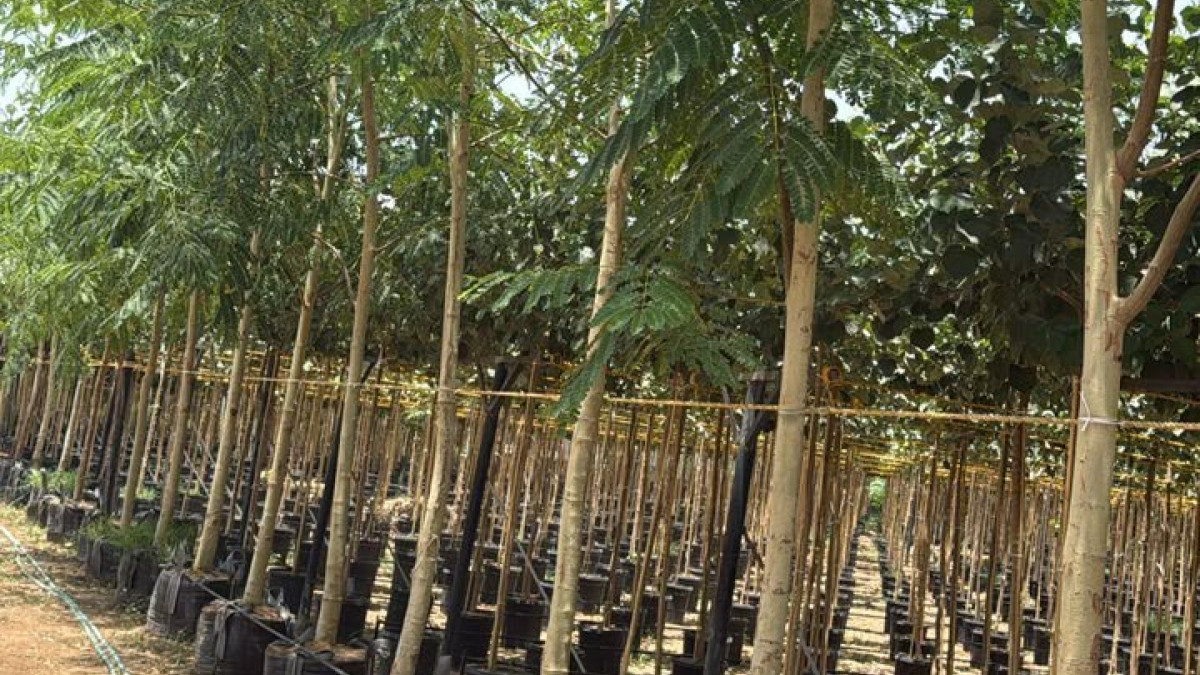
To fix compacted soil before planting trees, first assess how easily water drains and whether roots can penetrate the ground. Remove construction debris, test soil conditions, and loosen the intended rooting area without damaging underground utilities. Improve drainage or soil structure where necessary, then plant at the correct depth and irrigate according to the tree species and site conditions.
Soil preparation is one of the most important stages of a successful landscaping project. In Riyadh and other Saudi cities, residential gardens and commercial landscapes may contain heavily compacted ground following construction, repeated vehicle movement, grading, or previous site activities.
Compacted soil restricts the movement of air and water and can make it difficult for developing roots to spread beyond the original planting area. Even a healthy nursery tree may struggle when its roots encounter dense soil, limited oxygen, or inadequate drainage.
Rayat Najd Landscaping | رايات نجد للتشجير provides landscaping, tree planting, and irrigation solutions in Saudi Arabia. Preparing the soil according to site conditions is an essential part of selecting a suitable planting method and supporting long-term tree establishment.
 Call Now
 WhatsApp
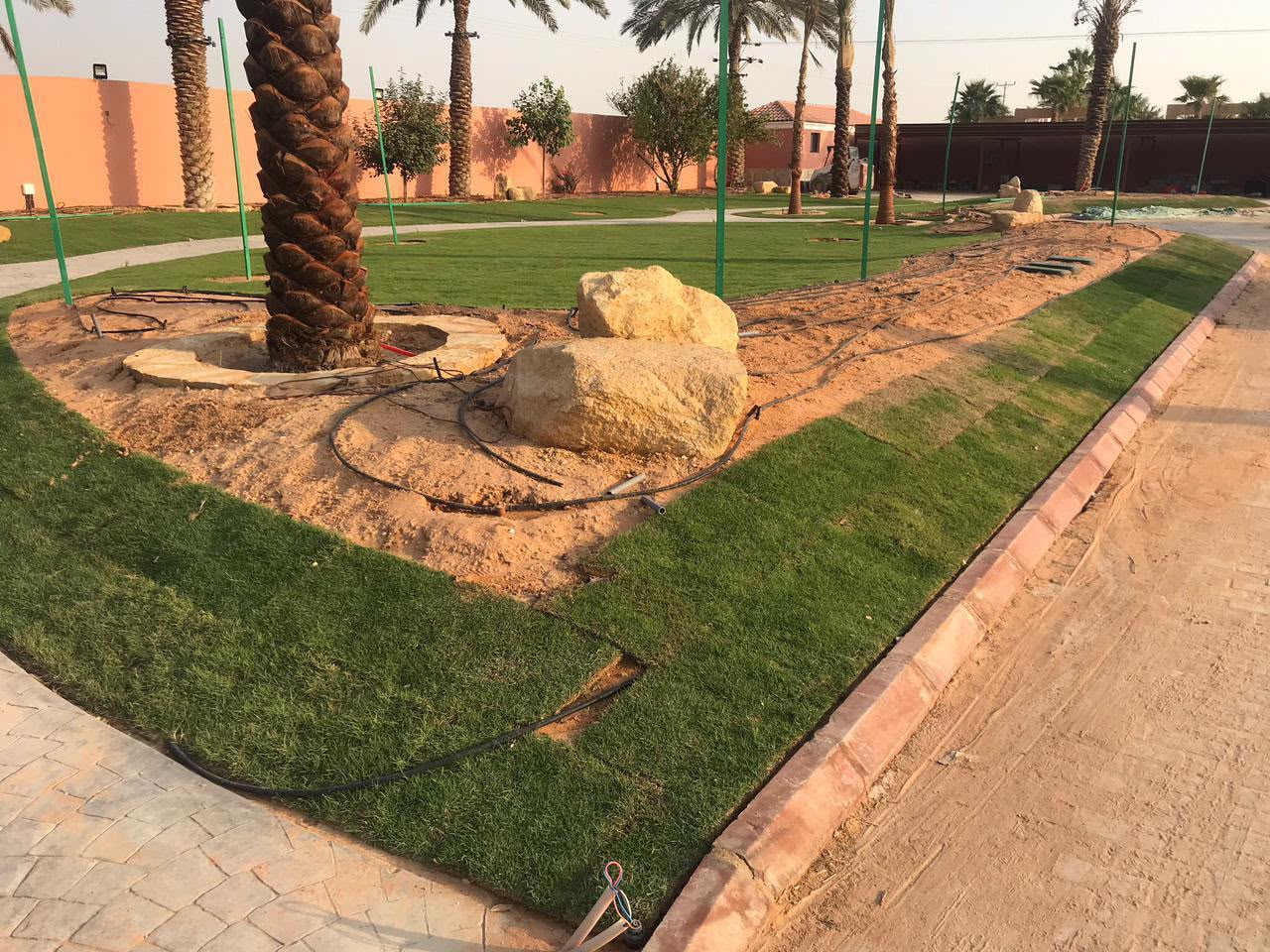
What Is Compacted Soil and Why Is It Bad for Trees?
What happens when garden soil becomes compacted?
Soil compaction occurs when soil particles are pressed together, reducing the pore spaces that normally hold air and water.
As soil becomes denser, roots may have difficulty penetrating it, water infiltration can decrease, and oxygen availability may become limited.
Can compacted soil prevent tree roots from growing?
Yes. Dense soil can physically restrict root extension and reduce the volume of soil available for water and nutrient uptake.
The effect varies according to soil texture, moisture, compaction severity, and the tree species. Some roots may grow along cracks or less compacted areas rather than spreading evenly.
Does compacted soil always cause poor drainage?
No. Compaction can reduce infiltration and drainage, but the actual behavior depends on the soil profile and site conditions.
A sandy soil may still drain differently from a compacted clay-rich soil. Underground layers, grading, and irrigation practices also influence water movement.
Can trees survive in hard soil?
Some tree species tolerate difficult soil conditions better than others, but tolerance does not eliminate the need for suitable planting conditions.
Long-term performance depends on the available rooting volume, aeration, drainage, irrigation, and environmental stress.
| Soil condition | Possible effect on trees | Recommended assessment |
|---|---|---|
| Compacted surface layer | Reduced water infiltration | Inspect surface condition and infiltration |
| Dense subsurface layer | Restricted root extension | Evaluate soil profile and penetration resistance |
| Poorly drained soil | Reduced oxygen around roots | Investigate drainage and water accumulation |
| Construction debris | Obstructed rooting space | Inspect planting area for buried material |
| Saline soil | Difficulty taking up water | Test soil salinity and irrigation water |
| Shallow usable soil | Limited rooting volume | Assess soil depth and underlying materials |
How Do I Know If My Garden Soil Is Too Compacted?
What are the visible signs of soil compaction?
Possible signs include hard ground, shallow or restricted root growth, persistent surface puddles, and difficulty penetrating the soil with suitable tools.
However, these symptoms may have other causes. A hard surface alone does not establish how severely the soil is compacted.
Can I test compacted soil with a garden tool?
A simple penetration check can provide an initial indication of resistance, especially when comparing areas at similar moisture levels.
For more reliable assessment, use appropriate soil investigation methods. Penetration resistance changes with moisture, so dry soil can appear harder even without unusually high compaction.
Should I inspect the soil below the surface?
Yes. A loose surface layer can hide a dense layer underneath.
Inspecting the soil profile can reveal changes in texture, construction fill, compacted subsoil, and other conditions that affect root development.
Do I need a laboratory soil test?
Laboratory testing can be useful when soil texture, salinity, alkalinity, nutrient status, or other chemical properties may affect planting decisions.
A chemical soil test does not automatically measure every aspect of physical compaction. The testing program should match the problem being investigated.
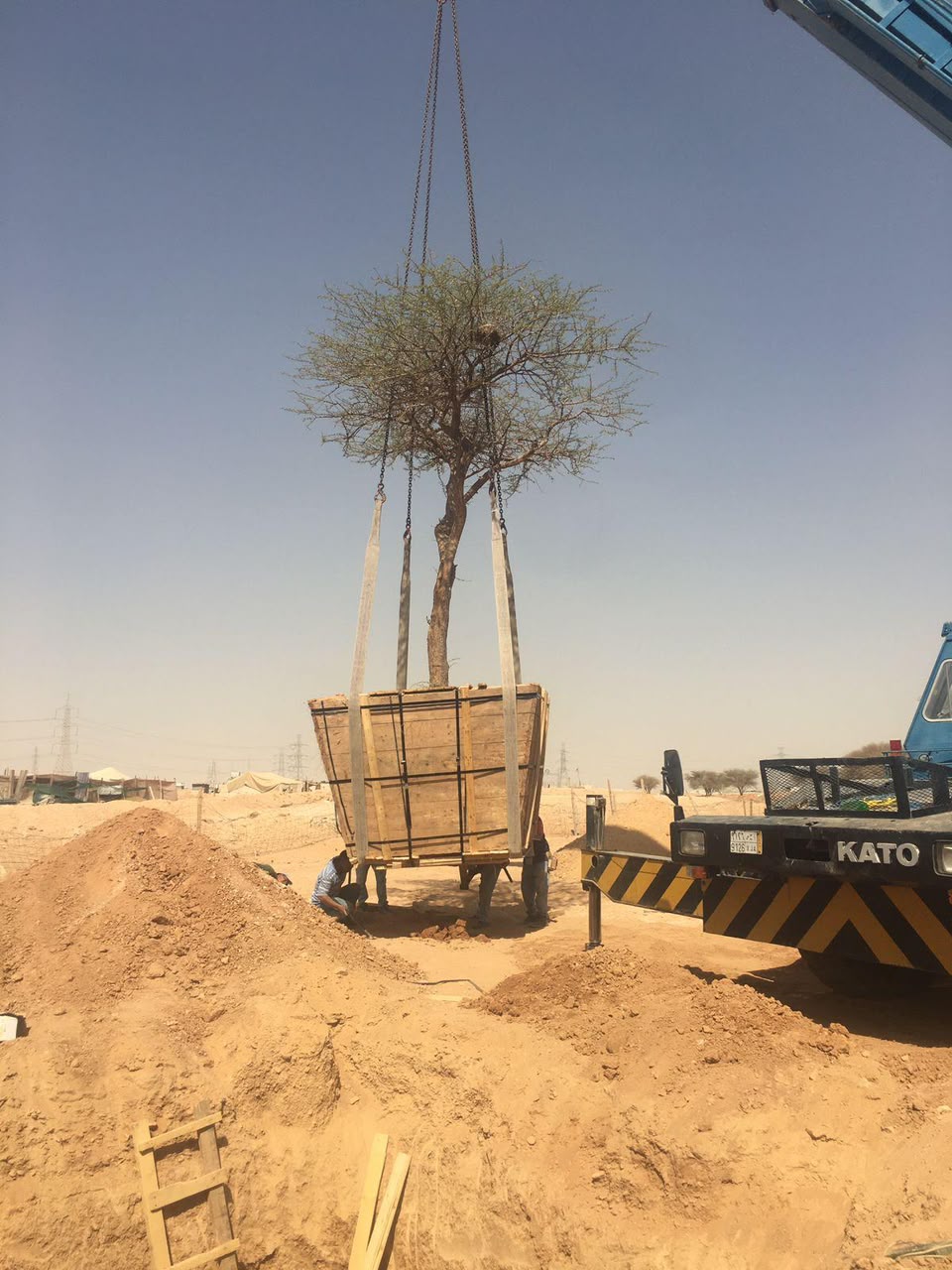
How Do I Test Soil Drainage Before Planting Trees?
Why should I check drainage before planting?
Drainage affects the availability of oxygen around roots and the risk of water remaining in the planting area.
A tree planted in a poorly drained location may struggle even when irrigation is carefully managed.
Can I use a test hole to assess drainage?
A test hole can help identify whether water infiltrates and drains through the intended planting area.
The procedure and interpretation should consider soil texture, initial moisture, test-hole dimensions, and site conditions. A single observation is not sufficient to characterize an entire landscape.
What if water remains in the hole for a long time?
Persistent water may indicate slow drainage, an impermeable layer, high local groundwater, or another subsurface restriction.
Investigate the cause before planting rather than automatically adding gravel to the bottom of the hole.
Will adding gravel underneath the tree fix drainage?
Not necessarily. A gravel layer at the base of a planting hole can create an unfavorable boundary between soil textures and may not solve poor drainage in the surrounding ground.
Drainage solutions should address the complete site conditions and provide a suitable path for excess water where required.
How Do I Loosen Compacted Soil Before Planting?
Should I loosen only the planting hole?
Loosening a wider appropriate rooting area is often more beneficial than preparing a narrow isolated hole surrounded by dense soil.
However, the treatment area and depth must be selected according to the soil profile, available space, nearby utilities, and landscape design.
Can I break up compacted soil mechanically?
Mechanical loosening may be appropriate before planting, provided the work is carried out at suitable soil moisture and without damaging buried infrastructure.
The method should match the severity and depth of compaction. Excessive cultivation or working wet soil can damage soil structure rather than improve it.
Should I loosen the soil when it is very wet?
Generally, avoid aggressive soil working when the ground is excessively wet and vulnerable to smearing or additional compaction.
Appropriate working moisture varies with soil texture, so timing should be based on actual conditions.
Can soil be too dry for effective loosening?
Yes. Extremely dry, hard soil can be difficult to work and may break into large clods rather than developing a suitable planting structure.
Preparation methods should account for both soil moisture and the type of equipment being used.
| Preparation method | Potential benefit | Important limitation |
|---|---|---|
| Manual loosening | Targeted treatment of smaller planting areas | Limited effectiveness in extensive dense layers |
| Mechanical cultivation | Preparation of larger accessible areas | Can damage structure if soil is too wet |
| Subsurface loosening | Disruption of suitable compacted layers | Requires utility checks and site assessment |
| Organic matter incorporation | May support soil structure over time | Must suit soil conditions and material quality |
| Drainage improvements | Address site-specific excess water problems | Require a suitable discharge or drainage design |
| Raised planting areas | Provide additional suitable rooting medium | Need proper grading, stability, and irrigation |
How Do I Prepare Soil for Tree Planting in Riyadh?
Should I remove construction waste before planting?
Yes. Remove unsuitable debris, contaminated material, and physical obstructions from the intended rooting area where safely possible.
Construction waste can limit root growth, disrupt water movement, and create inconsistent planting conditions.
Do I need to replace all the existing soil?
Not always. Soil replacement should depend on the actual physical and chemical suitability of the existing material.
Unnecessary replacement may increase cost and create abrupt soil interfaces without solving the underlying problem.
Should I mix compost into the planting area?
Appropriate, mature, low-salinity organic material may help improve some soils when used according to a site-specific plan.
Compost quality, soil texture, drainage, and plant requirements should be evaluated first. Excessive amendments can create undesirable conditions.
Does Riyadh soil always need gypsum?
No. Gypsum is not a universal soil-loosening treatment.
It may be useful in certain sodic soils when supported by testing and proper drainage, but it should not be applied automatically to every hard or compacted soil.
Can imported planting soil solve all problems?
No. Imported soil may provide a suitable growing medium in some situations, but poor drainage or compacted layers underneath can continue to restrict roots.
Assess the interaction between the imported material and the existing soil before installation.
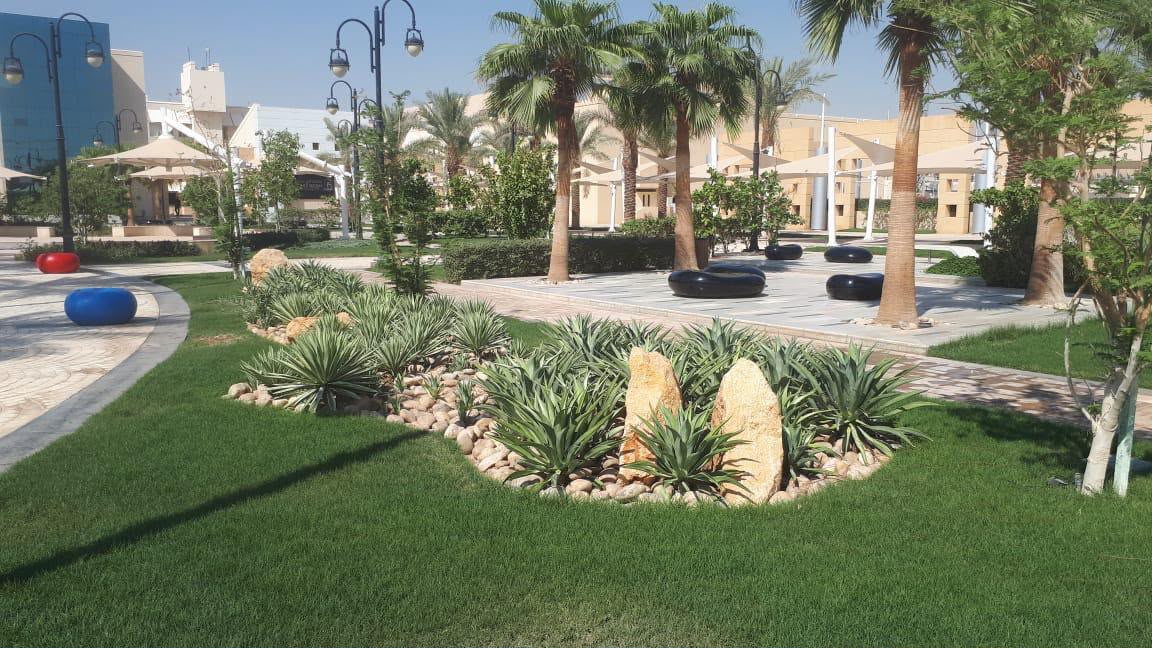
How Wide Should I Prepare the Soil Around a New Tree?
Should the prepared area be wider than the root ball?
Yes. A planting area wider than the root ball can encourage roots to extend into surrounding soil rather than remain confined to the original nursery medium.
The appropriate dimensions depend on root ball size, soil conditions, available rooting space, and the selected planting method.
Should I dig the planting hole deeper than the root ball?
Generally, avoid planting too deeply. The tree should be positioned so its root flare or appropriate planting reference remains at the correct final grade.
The bottom of the planting area should provide stable support to reduce unwanted settling after planting.
What if the ground contains a hard layer below the hole?
Investigate whether the layer restricts drainage or root development and determine whether it can be safely treated.
The solution may involve modifying the planting area, correcting drainage, or selecting a different tree location.
Can I create a raised planting bed?
Yes. Raised planting areas can be considered where site conditions justify additional suitable rooting medium.
However, the design must account for root stability, drainage, irrigation, and transitions to surrounding ground.
How Do I Plant a Tree in Hard Soil Without Damaging Its Roots?
How should I handle the root ball?
Keep the root ball supported during transport and planting, and avoid unnecessary disturbance that could damage fine roots.
Inspect for circling or defective roots and address them using appropriate nursery and arboricultural practices for the tree type.
Should I loosen the soil around the root ball?
The surrounding planting area should provide a suitable transition from nursery media to existing soil.
Avoid creating an excessively smooth or glazed planting-hole wall that restricts root penetration.
Should I apply fertilizer immediately?
Not automatically. Fertilizer requirements depend on soil testing, species needs, nursery conditions, and the planting plan.
Excessive or poorly placed fertilizer may damage roots or increase salt stress.
When should I water after planting?
Watering is usually needed to settle appropriate backfill around the root system and provide initial moisture.
The volume and subsequent schedule should depend on the species, root ball size, soil drainage, climate, and irrigation design.
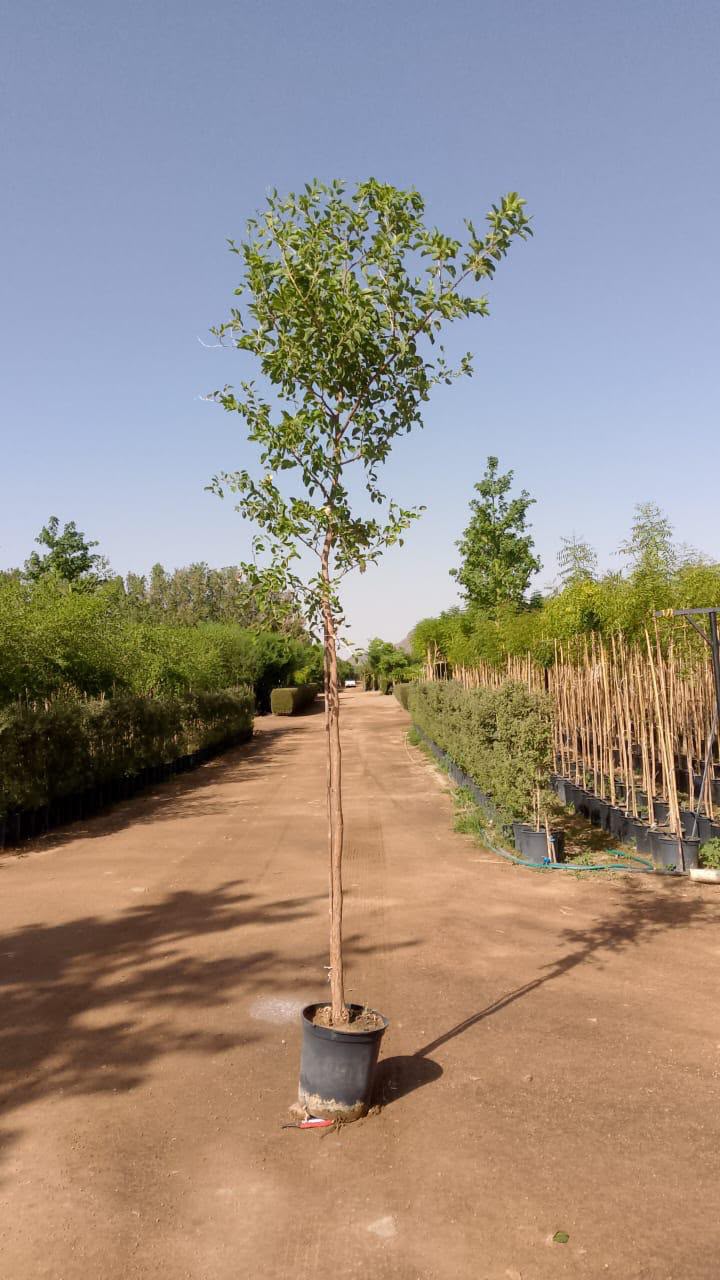
What Are Trees?
What makes a tree different from other landscape plants?
A tree is generally a perennial woody plant with an established structural framework and a root system supporting long-term growth.
Trees vary considerably in mature size, branching structure, root characteristics, water requirements, and adaptation to local growing conditions.
Why do tree roots need air in the soil?
Most tree roots require oxygen for normal respiration and metabolic activity.
Compaction and prolonged waterlogging can reduce available soil oxygen, making healthy root development more difficult.
Do all trees tolerate compacted soil equally?
No. Species differ in root growth patterns and tolerance of restricted rooting conditions.
Even relatively tolerant species benefit from appropriate planting depth, drainage, and sufficient soil volume.
What Are the Benefits of Palm Trees?
Can palm trees improve outdoor landscaping in Saudi Arabia?
Yes. Suitable palm species can contribute architectural character, vertical landscape structure, and visual identity in Saudi gardens and public spaces.
Species selection should account for mature size, site exposure, irrigation requirements, and the landscape's intended use.
Can date palms grow in compacted soil?
Date palms can adapt to a range of growing conditions, but severe compaction and unsuitable drainage can still restrict their root development.
Planting preparation should consider root space, aeration, salinity, and the irrigation system.
Do palm trees need the same planting preparation as broadleaf trees?
Not exactly. Palms and broadleaf trees can differ in root architecture, planting requirements, and sensitivity to planting depth.
Follow species-appropriate planting guidance rather than applying one procedure to all trees.
What Are the Benefits of Washingtonia Palms?
Why are Washingtonia palms used in landscaping?
Washingtonia palms are valued for their distinctive upright appearance and their suitability for selected ornamental landscape applications.
They can be considered for appropriately designed outdoor spaces where their mature height, maintenance requirements, and environmental suitability have been assessed.
Can Washingtonia palms tolerate hard soil?
Their performance depends on species characteristics and the actual soil conditions.
Hard or compacted ground should still be assessed for drainage, root growth, and irrigation suitability before planting.
Should Washingtonia palms be planted close to buildings?
Planting distance should account for mature height, structural clearances, utilities, access, and maintenance requirements.
A site-specific landscape plan is preferable to applying a universal distance.
Where Are Trees Planted?
Where should I plant trees in a Riyadh residential garden?
Choose locations with adequate rooting volume, suitable drainage, appropriate sunlight, and sufficient separation from buildings and underground services.
Consider mature canopy spread and irrigation accessibility before finalizing positions.
Can trees be planted in narrow strips beside walls?
Only when the available soil volume and species characteristics make the location suitable.
Narrow planting strips often present challenges because of restricted roots, nearby foundations, utilities, and heat exposure.
Should trees be planted where rainwater collects?
Not without checking drainage.
Some species tolerate periodic wet conditions, but persistent standing water around roots can cause problems for many landscape trees.
Can I plant trees over underground utility lines?
Tree placement should account for known underground utilities and applicable clearance requirements.
Utility locations should be verified before excavation, and planting must not compromise access or safety.
| Planting location | Potential concern | Recommended evaluation |
|---|---|---|
| Residential garden | Compacted construction fill | Inspect rooting volume and soil profile |
| Roadside planting strip | Limited soil space and vehicle compaction | Review root space and protection |
| Commercial landscape | Foot traffic and utilities | Coordinate planting and access |
| Public courtyard | Hard surfaces around planting areas | Assess aeration and drainage |
| Farm boundary | Variable soil conditions | Test soil and irrigation suitability |
| Area near buildings | Restricted root space and structural proximity | Review mature size and clearances |
How Are They Planted?
What is the correct sequence for planting a tree?
Assess the site, select a suitable species, prepare the rooting area, inspect the root ball, position the tree at the correct depth, backfill appropriately, and establish a suitable irrigation program.
Additional support or protection should be used only when required by the species, site, and planting conditions.
Should I compact the backfill firmly around the tree?
Avoid excessive compaction of the backfill.
The objective is to provide suitable root contact with the surrounding soil without creating dense conditions that restrict oxygen and root movement.
Should I add mulch after planting?
A suitable organic mulch layer can help moderate soil temperature, reduce evaporation, and protect the soil surface.
Keep mulch away from direct contact with the trunk or palm base and follow appropriate material and application practices.
Do newly planted trees need support stakes?
Some trees may need temporary support when the root ball is unstable or site conditions justify it.
Staking should not be automatic, and any supports should be installed and monitored to avoid trunk damage or unnecessary restriction.
How Do I Irrigate Trees After Improving Compacted Soil?
Does loosened soil need more frequent watering?
Not necessarily. Soil texture, rooting depth, drainage, temperature, and plant requirements determine irrigation needs.
Improved infiltration may change how water enters the soil, but irrigation frequency should still be based on measured or observed moisture conditions.
Should I use drip irrigation for newly planted trees?
Drip irrigation can be suitable for many landscaping projects because it allows water to be delivered to selected planting areas.
Emitter placement and system design should be adjusted as the root system develops.
Can too much irrigation recreate soil problems?
Yes. Excessive irrigation can contribute to prolonged saturation, poor aeration, or soil deterioration under certain conditions.
A suitable irrigation schedule should avoid both severe drying and unnecessary waterlogging.
How do I know whether the root zone is receiving enough water?
Monitor soil moisture at relevant depths and evaluate tree condition alongside irrigation records.
Do not rely solely on a wet soil surface, because surface moisture may not reflect conditions throughout the rooting area.
| Irrigation factor | Why it matters | Recommended action |
|---|---|---|
| Soil texture | Influences water movement and retention | Adjust irrigation to soil conditions |
| Drainage | Determines how excess water moves | Avoid prolonged saturation |
| Root ball size | Influences initial water distribution needs | Monitor moisture near the developing roots |
| Tree species | Determines water tolerance and demand | Use species-specific irrigation guidance |
| Summer temperatures | Increase potential evaporative demand | Review seasonal watering requirements |
| Emitter placement | Controls where water is delivered | Adjust as roots expand |
| Water quality | May contribute to salinity problems | Test when conditions justify it |
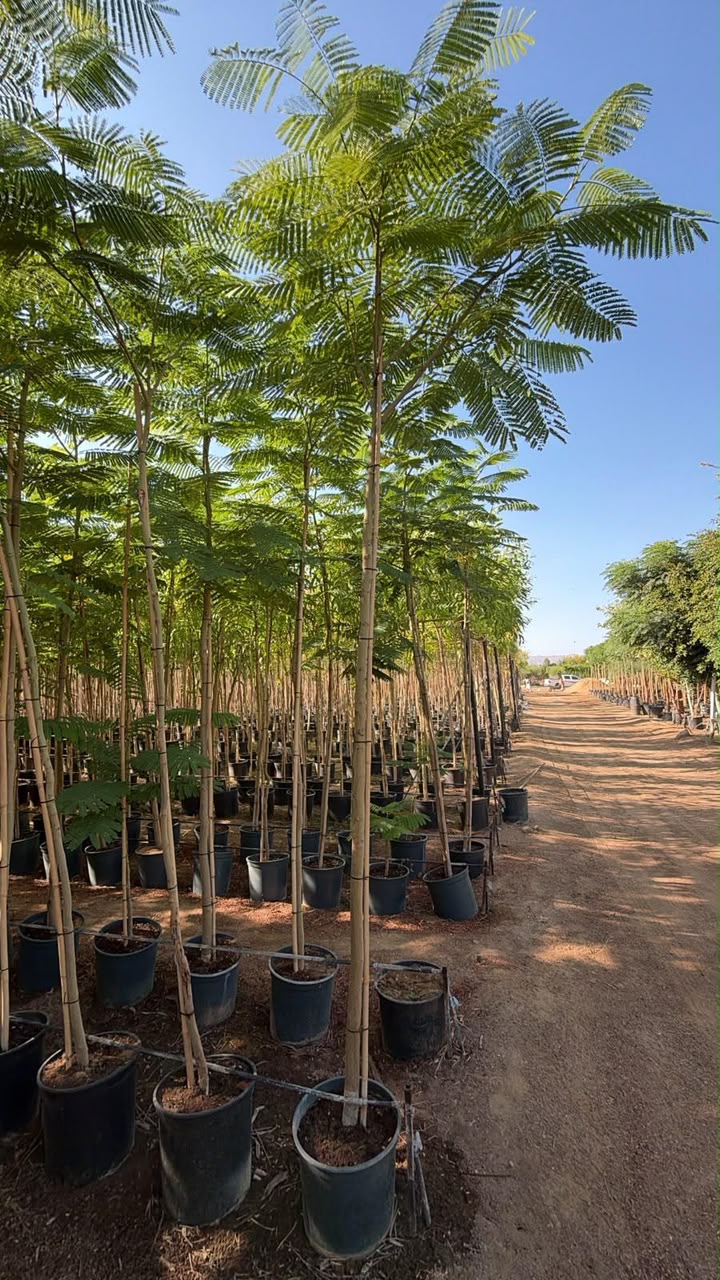
How Much Does Planting Cost?
Does compacted soil increase tree planting costs?
It may increase preparation requirements when additional testing, loosening, drainage work, debris removal, or soil improvement is needed.
The actual cost depends on the site, soil conditions, tree selection, equipment access, and project scope.
Is soil preparation more expensive than planting the tree?
That depends on the particular project.
Large trees, restricted site access, poor soil, and complex irrigation requirements can influence the relative costs of planting and preparation.
Can I receive a fixed tree planting price without a site inspection?
A preliminary estimate may be possible from reliable project details, but a final quotation should reflect the actual scope and conditions.
It would be inappropriate to assume a standard price for every garden or planting location.
What details should I provide for a planting quotation?
Share the project location, approximate planting area, intended tree types, quantity, available water source, and photographs of the existing soil.
If known, include soil test results, underground utility constraints, and any drainage problems.
What Is the Lifespan of Trees in Years?
How long can a healthy landscape tree live?
Tree lifespan varies widely by species and growing conditions, and there is no single lifespan applicable to all landscape trees.
Soil volume, water availability, climate, disease, mechanical damage, and maintenance can all affect longevity.
Does compacted soil shorten tree lifespan?
Severe or persistent compaction may contribute to long-term stress by restricting roots and limiting oxygen and water movement.
However, the effect on lifespan depends on the species, degree of compaction, and other environmental conditions.
Can proper soil preparation extend a tree's useful life?
Appropriate preparation supports healthier establishment and can reduce avoidable stresses.
It does not guarantee a particular lifespan because tree health is influenced by many continuing factors.
What Are the Types of Trees, How, When and Why?
What types of trees are suitable for planting in Riyadh?
Suitable choices may include locally adapted species and other trees proven appropriate for the specific landscape conditions.
Selection should consider heat tolerance, water requirements, soil salinity, mature size, maintenance, and the intended landscape function.
How should I choose between palms and shade trees?
Choose according to the project's goals and the space available.
Palms may contribute vertical structure and a distinctive appearance, while broad-canopy trees may provide more extensive shade when planted in suitable locations.
When should I plant trees in Riyadh?
Milder weather periods are often preferable for many planting operations because they can reduce environmental stress during establishment.
The best timing still depends on species, nursery stock, soil conditions, irrigation availability, and the project's maintenance capacity.
Why should tree species be selected before soil preparation?
Different species have different root behavior, drainage tolerances, water needs, and mature dimensions.
Knowing the species helps determine suitable rooting space and soil preparation rather than preparing every planting location identically.
What Are the Most Common Soil Preparation Mistakes?
Is digging a deep narrow hole enough for a tree?
No. A narrow hole surrounded by compacted soil can restrict lateral root development and may create drainage problems.
Should I add large amounts of sand to clay soil?
Not automatically. Small or poorly designed additions may fail to improve the soil structure and can create undesirable results.
Any amendment should be selected according to actual soil properties and the intended improvement.
Can I plant immediately after construction equipment leaves?
Only after evaluating whether the ground has been compacted or contaminated and whether underground services are properly identified.
Should I place the tree deeper to improve stability?
No. Excessive planting depth can bury the root flare and create unfavorable conditions around the trunk or root system.
Can I solve compacted soil by watering more often?
No. Additional irrigation does not automatically correct physical compaction and may worsen saturation where drainage is inadequate.
Should I apply gypsum without testing the soil?
No. Gypsum is appropriate only for particular soil conditions and should not be treated as a universal remedy.
Can I ignore soil beneath a layer of imported topsoil?
No. Underlying compacted layers can still restrict drainage and root development even when the surface soil appears suitable.
What Checklist Should I Follow Before Planting Trees in Hard Soil?
What should I inspect before the landscaping work begins?
Evaluate physical soil conditions, water movement, available rooting space, tree requirements, and site access before deciding how to prepare the planting area.
- ☐ Identify the intended tree species and mature size.
- ☐ Inspect the planting area for construction debris.
- ☐ Locate underground utilities before excavation.
- ☐ Evaluate visible surface compaction.
- ☐ Investigate the soil below the surface.
- ☐ Assess drainage and water accumulation.
- ☐ Determine whether soil laboratory testing is needed.
- ☐ Review salinity and irrigation water quality when relevant.
- ☐ Identify the depth and extent of compacted layers.
- ☐ Choose a suitable soil loosening method.
- ☐ Avoid cultivation when the soil is excessively wet.
- ☐ Determine whether drainage improvements are necessary.
- ☐ Use soil amendments only when justified.
- ☐ Prepare sufficient rooting space for the selected tree.
- ☐ Check root ball condition before planting.
- ☐ Position the tree at the correct planting depth.
- ☐ Prepare an irrigation plan suited to the species.
- ☐ Apply suitable mulch without covering the trunk base.
- ☐ Monitor soil moisture and establishment after planting.
- ☐ Maintain records of significant soil treatments and inspections.
How Can Rayat Najd Landscaping Help With Compacted Soil?
Can soil preparation be included in a tree planting project?
Yes. Soil preparation should be evaluated as part of the overall planting plan rather than treated as an unrelated activity.
The requirements depend on the existing ground, proposed trees, access conditions, irrigation system, and desired landscape design.
Can landscaping and irrigation be planned together?
Yes. Coordinating irrigation with soil preparation and planting helps ensure that water can reach the intended root zone without unnecessarily saturating unsuitable soil.
The system should account for tree establishment and future root development.
Does every Saudi landscaping site need the same soil treatment?
No. Sites differ in soil texture, compaction, salinity, drainage, grading, and previous land use.
A treatment suitable for one Riyadh garden may not be appropriate for another property or agricultural site.
Where can I request landscaping and tree planting services in Riyadh?
Contact Rayat Najd Landscaping to discuss tree planting, site preparation, landscaping, and irrigation requirements.
For company information and service inquiries, visit the official Rayat Najd Landscaping website.
What Are the Most Frequently Asked Questions About Compacted Soil and Tree Planting?
1. How do I fix compacted soil before planting trees?
Assess the soil profile and drainage, remove obstacles, loosen the appropriate rooting area, and correct site-specific soil problems before planting at the proper depth.
2. Can I plant a tree directly into hard soil?
It may be possible under some conditions, but severe compaction can restrict root growth and should be assessed before planting.
3. What are trees?
Trees are perennial woody plants with root systems and structural growth characteristics that vary by species.
4. What are the benefits of palm trees?
Suitable palms can provide visual structure and distinctive landscape character, depending on the species and planting design.
5. What are the benefits of Washingtonia palms?
Washingtonia palms can contribute a tall, recognizable ornamental form to suitable landscapes, provided their mature size and maintenance needs are considered.
6. Where are trees planted?
Trees should be planted where suitable soil volume, drainage, sunlight, irrigation, and clearances are available for their mature development.
7. How are they planted?
Prepare the rooting area, inspect the root ball, position the tree correctly, backfill appropriately, and provide suitable irrigation and establishment care.
8. How much does planting cost?
Cost depends on tree type, quantity, size, soil conditions, site access, irrigation requirements, and necessary preparation work. A project-specific quotation is needed.
9. What is the lifespan of trees in years?
Lifespan varies by species and environmental conditions. No single number accurately describes the lifespan of every landscape tree.
10. What are the types of trees, how, when and why?
Tree types include palms, broadleaf shade trees, and other landscape species. Choose according to site conditions and intended function, plant using species-appropriate methods, and favor suitable weather and establishment conditions.
How Do I Know Whether Soil Improvement Has Worked?
Should the soil become completely loose after treatment?
No. Healthy planting soil needs a suitable balance of structure, pore space, drainage, and stability.
Excessively disturbed or poorly structured soil is not necessarily better for tree growth.
Can I evaluate drainage after soil preparation?
Yes. Reassess water movement and observe whether the treatment has addressed the identified restriction.
Where serious drainage problems remain, additional investigation may be necessary before planting.
How do I monitor root establishment?
Monitor tree condition, soil moisture, new growth, and structural stability over time.
Visible foliage alone does not reveal the full condition of the root system, so interpretation should account for species and seasonal behavior.
What if the newly planted tree begins declining?
Investigate irrigation, planting depth, drainage, root condition, salinity, pests, and other site factors rather than assuming compaction is the only cause.
Early diagnosis is preferable to applying fertilizer or additional water without identifying the problem.
What Is the Best Way to Prepare Compacted Soil for Healthy Tree Growth?
The best approach to fixing compacted soil before planting trees is to diagnose the soil rather than automatically digging deeper, adding large quantities of amendments, or replacing all existing material.
Understand the soil profile, determine whether drainage is suitable, identify compacted layers, and select a preparation method that creates adequate rooting space without damaging utilities or surrounding infrastructure.
For gardens and landscaping projects in Riyadh, successful preparation should also consider tree species, irrigation water quality, seasonal heat, salinity, and long-term maintenance.
Rayat Najd Landscaping provides tree planting, landscaping, and irrigation solutions for projects in Saudi Arabia. Contact the company to discuss your site's soil conditions and the planting requirements before starting work.