



How Do I Rent Equipment to Install Glass Facade and Cladding Panels?
To rent suitable equipment for glass facade and cladding panel installation, identify the verified weight and dimensions of each panel, the installation height, horizontal access requirements, building geometry, ground conditions, and the approved installation method. Depending on the project, suitable equipment may include mobile cranes, personnel access platforms, specialized glass handling devices, and manufacturer-approved panel lifting attachments.
Glass curtain walls, aluminum composite panels, architectural glazing, and exterior cladding systems require careful coordination between lifting equipment and facade installation teams. These materials can be fragile, sensitive to handling pressure, and affected by wind during installation.
For construction contractors, facade specialists, architectural glazing companies, and commercial property developers in Riyadh and across Saudi Arabia, selecting equipment according to the actual installation requirements can help reduce unnecessary rental expenses, material damage, and project delays.
This guide from MORP explains how businesses can prepare an equipment rental request for glass facade and exterior cladding installation projects without relying on unsupported equipment capacities or universal rental prices.
 Call Now
 WhatsApp
Why Does Glass Facade Installation Require Specialized Equipment?
What makes architectural glass different from ordinary construction materials?
Architectural glass panels may combine considerable weight with large surface dimensions and sensitivity to impact, concentrated pressure, and edge damage. Their handling requirements depend on glass composition, panel construction, manufacturer instructions, and the approved installation system.
Why is conventional lifting equipment not sufficient by itself?
A lifting machine must work with suitable attachments and an approved handling arrangement. Equipment that can lift the required weight may still be unsuitable if it cannot safely accommodate the panel geometry, installation position, or handling restrictions.
What Types of Facade Projects Require Equipment Rental?
Do all exterior building systems require the same equipment?
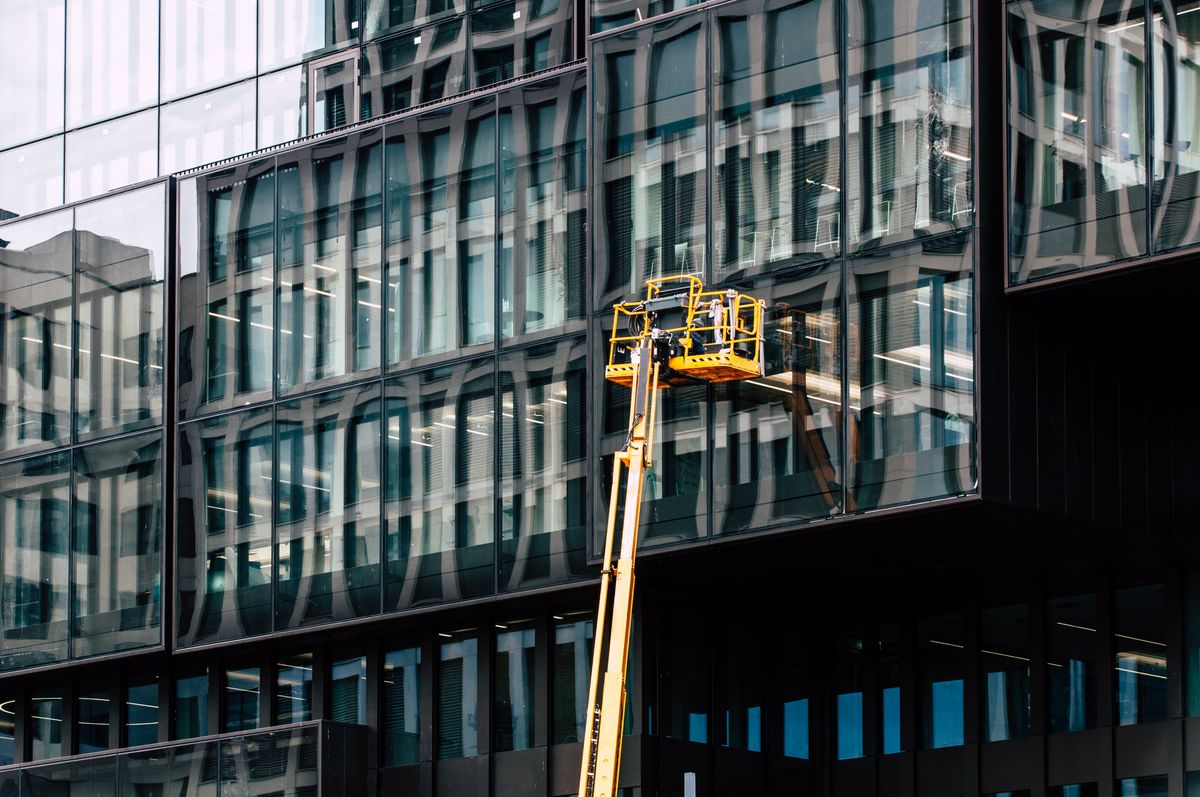
No. Different facade systems use different materials, structural connections, installation sequences, and handling methods. Equipment selection must reflect the characteristics of the actual system being installed.
Which facade systems commonly require lifting or access equipment?
| Facade System | Typical Application | Equipment Requirement to Evaluate |
|---|---|---|
| Glass curtain wall | Commercial offices and modern buildings | Approved glass handling and elevated installation access |
| Unitized curtain wall | Prefabricated facade installation | Equipment suitable for complete facade modules |
| Stick curtain wall | Facade systems assembled on site | Component handling and installer access equipment |
| Aluminum composite cladding | Commercial and architectural exterior finishes | Panel handling and appropriate access platforms |
| Metal rainscreen cladding | Exterior architectural protection and finishes | Equipment suitable for panel dimensions and installation geometry |
| Architectural stone cladding | Selected commercial and premium building facades | Approved lifting arrangements for heavy or fragile components |
| Large storefront glazing | Retail outlets and commercial entrances | Controlled glass positioning and suitable installation access |
The equipment requirements listed above are general planning considerations. Final suitability and availability must be confirmed for each project.
What Is the Difference Between Glass Facades and Cladding Panels?
What is an architectural glass facade?
A glass facade is an exterior building system that incorporates glazed panels to provide architectural appearance, daylight access, environmental separation, and other functions determined by the building design.
What is exterior cladding?
Exterior cladding consists of materials installed on the outside of a building as part of its architectural envelope. Cladding systems may incorporate aluminum, composite materials, metal, stone, or other approved products.
Although glass and cladding may appear together on the same building, their handling and installation requirements can differ considerably.
How Do I Determine the Weight of Glass Facade Panels?
Can glass panel weight be estimated from its dimensions alone?
Dimensions may support an initial engineering estimate, but equipment rental decisions should use verified panel weight information provided by the manufacturer, facade contractor, or responsible technical representative.
Which factors influence the actual panel weight?
- Glass thickness and composition.
- Number of glass layers.
- Laminated or insulated glazing construction.
- Aluminum framing components.
- Factory-installed accessories.
- Structural support elements.
- Approved handling attachments.
The complete load assessment must account for the components involved in the actual lifting operation and the applicable equipment documentation.
How Do Panel Dimensions Affect Equipment Selection?
Why is panel size important even when the weight is relatively low?
Large panels may require additional clearance, specialized handling arrangements, and careful consideration of environmental forces. Their dimensions can influence maneuverability and access to the installation location.
What dimensional information should facade contractors provide?
Provide the verified panel width, height, thickness, overall geometry, framing dimensions, and any handling restrictions specified by the manufacturer or approved installation documentation.
Equipment selection should not be finalized using photographs alone.
Which Equipment Can Be Considered for Facade Installation?
What are the main equipment categories?
Facade installation may require separate equipment for material lifting, personnel access, specialized panel positioning, and approved ground-level material handling.
How do these equipment categories differ?
| Equipment Category | Potential Application | Selection Consideration |
|---|---|---|
| Mobile crane | Lifting approved facade components to installation locations | Verified load, operating radius, configuration, and site conditions |
| Articulating boom lift | Personnel access around selected architectural obstacles | Working height, horizontal reach, and approved platform capacity |
| Telescopic boom lift | Personnel access requiring suitable extended reach | Manufacturer operating envelope and ground requirements |
| Scissor lift | Selected vertical access applications | Surface suitability, platform requirements, and working height |
| Vacuum glass lifter | Approved handling of compatible architectural glass | Glass surface, attachment suitability, and manufacturer instructions |
| Specialized glazing robot | Selected controlled glass positioning applications | Panel compatibility, operating space, and approved capacity |
| Material handling equipment | Approved movement of packaged facade materials | Load characteristics, attachments, and transport conditions |
These are equipment categories that contractors may evaluate. They do not represent a confirmed inventory or equipment availability list for MORP.
When Is Mobile Crane Rental Suitable for Glass Facade Projects?
Why might a facade contractor require a mobile crane?
A mobile crane may be considered when complete glazing modules, large framed panels, or other facade components need to be transferred to elevated installation locations using approved lifting arrangements.
Can the crane be selected from panel weight alone?
No. Qualified lifting personnel must also assess the operating radius, installation height, equipment configuration, lifting attachments, ground conditions, environmental limitations, and surrounding structures.
A crane's nominal capacity does not establish its available lifting capacity under every operating condition.
When Should I Rent a Boom Lift for Facade Installation?
What is the purpose of a boom lift in facade construction?
A boom lift is a mobile elevating work platform intended to provide authorized personnel with access to elevated work locations within the machine's approved operating limits.
Facade installation activities may require elevated access for inspection, alignment, fastening, sealing, and other approved tasks.
Can a boom lift replace a crane for lifting heavy glass panels?
Ordinary personnel access platforms should not be treated as substitutes for material lifting cranes. Any material handling application must be specifically permitted by the equipment manufacturer and included within the approved working arrangements.
What Is the Difference Between Articulating and Telescopic Boom Lifts?
Why does building geometry influence boom lift selection?
Building entrances, balconies, architectural projections, landscaping, podiums, and nearby structures can affect access to elevated installation positions.
How do common access equipment options compare?
| Access Equipment | Potential Advantage | Project Limitation to Review |
|---|---|---|
| Articulating boom lift | May provide access around certain obstacles | Actual operating envelope and available positioning space |
| Telescopic boom lift | May provide suitable direct horizontal and vertical reach | Reach limitations, ground conditions, and machine configuration |
| Scissor lift | Provides vertical access in suitable locations | Limited horizontal outreach compared with boom platforms |
| Specialized compact access platform | May suit selected restricted access environments | Transport dimensions and approved operating conditions |
| Engineered suspended access system | May support specific facade installation applications | Separate structural design, approval, and specialized operating requirements |
The appropriate equipment depends on verified site dimensions, task requirements, manufacturer documentation, and professional assessment.
How Do I Determine the Required Working Height?
Is building height the same as required equipment working height?
No. The total building height may differ from the elevation of the actual installation task. Different sections of the facade may require access to different working levels.
What information should be measured before requesting equipment?
Provide the installation elevations, relevant building drawings, surrounding ground levels, access restrictions, and the position of the work relative to the proposed equipment operating area.
The relationship between working height and horizontal reach must be checked against the equipment manufacturer's specifications.
Why Is Horizontal Reach Important for Facade Projects?
Can equipment always operate directly beside the building?
No. Architectural projections, underground structures, entrances, landscaping, existing construction work, and designated access routes may prevent equipment from operating immediately adjacent to the facade.
How does this affect rental requirements?
Equipment may need to reach the work location from an approved position farther away from the building. This changes the required operating geometry and may influence the equipment category and configuration.
Provide accurate site information rather than relying exclusively on the building's elevation drawings.
What Is a Vacuum Glass Lifter?
How is a vacuum glass lifter used in architectural glazing?
A vacuum glass lifter is a specialized handling attachment designed to grip compatible glass surfaces through an approved vacuum system. Depending on its design, it may support controlled handling and positioning during glazing operations.
Can every vacuum lifter handle every type of architectural glass?
No. Suitability depends on the verified panel weight, surface characteristics, geometry, material condition, equipment design, approved lifting orientation, and manufacturer instructions.
Specialized attachments must be assessed for the actual glass product and handling operation before use.
Can Vacuum Glass Lifters Be Used on Coated or Textured Glass?
Why does the glass surface matter?
Vacuum gripping systems depend on compatibility between the equipment and the contact surface. Certain coatings, textures, contamination, moisture, or surface characteristics may affect suitability.
What should be verified before selecting the attachment?
The glass manufacturer and handling equipment manufacturer should confirm the compatibility of the proposed contact surface and handling arrangement. Specialized assessment may be necessary for glass with unusual coatings or geometry.
Do not assume that equipment suitable for one architectural glass product is automatically suitable for another.
How Do I Prevent Glass Panel Damage During Equipment Handling?
Which parts of architectural glass require particular attention?
Glass edges, corners, coated surfaces, framing connections, and other sensitive areas may be vulnerable to impact or unsuitable handling pressure.
What should the project team establish before lifting?
The facade contractor should provide approved material handling instructions, suitable attachment requirements, transport arrangements, and acceptance criteria. Qualified lifting personnel should incorporate these requirements into the approved installation process.
Panels displaying damage or uncertain structural integrity should receive appropriate technical assessment before installation.
What Is Unitized Curtain Wall Installation?
How does a unitized facade system differ from conventional glazing?
A unitized curtain wall typically consists of prefabricated facade modules assembled before installation. These modules may incorporate glass, framing, seals, and other components within a complete assembly.
Why does equipment selection require module-specific information?
The complete module may have different weight, dimensions, structural characteristics, and approved handling points compared with its individual components.
The manufacturer or responsible facade designer should provide the relevant installation and handling documentation.
What Equipment Is Needed for Stick Curtain Wall Installation?
How is a stick curtain wall generally assembled?
A stick curtain wall system is commonly assembled from framing and glazing components at the construction site. Its installation sequence depends on the approved facade design and manufacturer requirements.
How can this affect equipment rental?
Separate stages may require different combinations of material handling equipment, elevated personnel access, and specialized glazing attachments. Contractors should plan equipment rental around the approved installation schedule rather than assuming one machine will cover every stage.
What Equipment Is Suitable for Aluminum Cladding Installation?
Are aluminum cladding panels easier to handle than glass?
Some aluminum cladding panels may be lighter than comparable glass assemblies, but their dimensions, finished surfaces, structural configuration, and sensitivity to deformation still require suitable handling.
Which equipment requirements should contractors evaluate?
Depending on the project, contractors may need suitable personnel access platforms, approved material handling equipment, and specialized attachments compatible with the cladding system.
Equipment selection should reflect the complete installation process and the requirements of the panel manufacturer.
How Do Composite Cladding Panels Differ From Solid Metal Panels?
Why does material construction matter?
Composite panels and solid metal panels can have different structural properties, thicknesses, handling limitations, and surface protection requirements.
Can both panel types use identical handling attachments?
Not automatically. Attachment suitability should be verified against the specific panel construction and the manufacturer's approved handling methods.
Equipment rental planning must not replace the separate assessment of facade material compliance, fire performance, structural suitability, and approved building design.
How Do I Coordinate Equipment Rental With Facade Installation Stages?
Why should equipment be scheduled according to construction progress?
Facade installation may involve several dependent activities, including preparation of supporting structures, installation of framing, delivery of panels, glazing, fastening, sealing, and inspection.
Renting equipment before the relevant work area is ready can result in unnecessary waiting time and additional coordination problems.
What equipment needs may arise during different installation stages?
| Installation Stage | Equipment Requirement to Evaluate | Readiness Check |
|---|---|---|
| Facade support preparation | Suitable personnel access equipment | Approved structural drawings and accessible work areas |
| Framing installation | Approved component handling and elevated access | Verified framing specifications and connection readiness |
| Glass module installation | Suitable lifting machinery and glazing attachments | Verified panel weight and approved handling arrangements |
| Cladding panel installation | Suitable panel handling and personnel access equipment | Prepared supporting framework and approved materials |
| Sealing and finishing | Appropriate access equipment | Completed preceding installation activities |
| Final inspection | Approved inspection access arrangements | Completion of the relevant facade installation scope |
The actual installation sequence must follow the facade contractor's approved method statement and engineering documentation.
How Do I Prepare the Ground for Facade Installation Equipment?
Is a paved surface automatically suitable for lifting machinery?
No. A paved area may conceal underground parking, utility corridors, drainage structures, chambers, or other conditions that influence its ability to support equipment loads.
Who should assess the operating surface?
Qualified engineering and equipment specialists should evaluate the proposed operating locations and verify their suitability for the equipment configuration and expected loads.
Ground-bearing limitations should be established before the equipment is mobilized.
How Does Underground Parking Affect Equipment Positioning?
Why are podiums and parking structures important?
Many commercial and residential developments include underground parking levels or elevated podium structures beneath external working areas. These structures may have specific loading restrictions.
Can heavy equipment operate above underground parking?
Only when the responsible structural specialists confirm that the proposed equipment, loading conditions, and operating arrangements are compatible with the structure.
Surface appearance alone must not be used to determine structural capacity.
How Does Wind Affect Glass Facade Installation?
Why are large facade panels sensitive to wind?
Glass and cladding panels can present substantial exposed surface areas. Wind may influence panel movement and the forces acting on handling equipment, especially during elevated installation activities.
Is there one safe wind speed for every facade project?
No. Applicable operating limits depend on the machinery, attachments, panel characteristics, operating configuration, manufacturer instructions, and approved project procedures.
Work should not proceed when conditions exceed the approved operating limits or when qualified personnel determine that safe control cannot be maintained.
How Does Saudi Arabia's Climate Affect Facade Equipment Planning?
What environmental conditions should contractors consider?
Facade installation projects in Saudi Arabia may encounter intense sunlight, high temperatures, airborne dust, seasonal winds, and other environmental conditions that affect equipment operation and material handling.
What should be reviewed before renting equipment?
Review equipment operating temperature limits, manufacturer maintenance requirements, site-specific environmental conditions, material handling restrictions, and the approved safety arrangements for personnel working at elevated locations.
Rental scheduling should remain flexible enough to accommodate conditions that prevent authorized operation.
How Do I Manage Facade Installation Around Existing Buildings?
What challenges arise when neighboring structures are close?
Limited access corridors, narrow setbacks, restricted operating areas, neighboring property boundaries, and occupied spaces may influence equipment positioning and installation logistics.
How should these conditions be communicated to the rental provider?
Provide accurate photographs, site dimensions, building plans, neighboring structure information, and relevant access restrictions. Final equipment suitability should be determined through appropriate technical review.
How Do I Rent Equipment for Facade Replacement Projects?
Is replacing an existing facade the same as installing a new one?
No. Replacement projects may involve removing damaged or outdated panels, working around occupied spaces, protecting existing building elements, and coordinating temporary exposure of the building envelope.
What additional information should be prepared?
Identify the condition of the existing facade, approved removal requirements, replacement panel specifications, access restrictions, building occupancy conditions, and responsibilities for material removal and replacement.
Existing facade conditions must be assessed before selecting equipment or approving removal operations.
Can Equipment Be Rented for Glass Panel Replacement in Occupied Buildings?
What makes occupied commercial buildings more complex?
Office employees, retail customers, visitors, building services, and active entrances may remain present during selected maintenance or replacement projects.
How can contractors reduce interference with building operations?
Coordinate authorized working periods, access arrangements, approved protective measures, and communication procedures with the building management team before mobilizing equipment.
Work areas must be managed according to the approved project safety arrangements and applicable requirements.
How Do I Organize Glass Panel Delivery Before Installation?
Should glass panels arrive before lifting equipment?
Delivery and equipment mobilization should follow a coordinated installation schedule. The appropriate sequence depends on the availability of approved storage areas, installation readiness, material protection requirements, and project logistics.
What should contractors confirm with the glass supplier?
Confirm delivery quantities, packaging requirements, approved storage arrangements, handling instructions, panel identification, installation sequence, and procedures for reporting damaged materials.
Glass storage and transportation arrangements should remain compatible with manufacturer requirements.
Why Is Panel Identification Important During Facade Installation?
Can visually similar glass panels have different specifications?
Yes. Panels may differ in dimensions, glass composition, coating, thermal performance, structural configuration, or intended installation location despite having similar appearances.
How can incorrect panel installation be prevented?
Maintain a reliable identification system linking each panel or facade module to its approved location and technical documentation. Verify the relevant identification before handling and installation.
Effective panel identification also supports more organized equipment scheduling and reduces avoidable material movements.
How Do I Coordinate Crane Operators and Facade Installation Teams?
Why should team responsibilities be established before work begins?
Facade installation often involves several organizations, including equipment rental providers, facade specialists, glazing contractors, structural engineers, site management teams, and safety personnel.
What responsibilities should be clarified?
| Responsible Party | Primary Responsibility | Required Confirmation |
|---|---|---|
| Facade designer or manufacturer | Provide approved system specifications | Panel dimensions, verified weight, and handling restrictions |
| Facade installation contractor | Coordinate approved installation activities | Installation sequence and work area readiness |
| Equipment rental provider | Supply agreed machinery and included services | Equipment specifications and confirmed rental scope |
| Qualified lifting specialist | Assess and approve the lifting operation | Equipment suitability and approved handling arrangements |
| Qualified equipment operators | Operate machinery within authorized limitations | Equipment readiness and applicable qualifications |
| Structural specialist | Assess relevant structural and support conditions | Suitability of equipment operating areas and building interfaces |
| Site safety representative | Coordinate applicable safety arrangements | Approved work controls and emergency procedures |
Actual contractual responsibilities must be confirmed through project documentation and the agreed scope of work.
Can One Equipment Rental Contract Cover an Entire Facade Project?
Is it practical to rent the same equipment for every stage?
Not necessarily. Different facade sections may require different access arrangements and material handling solutions. Equipment that is suitable for lower-level cladding may not meet the requirements of elevated glazing installation.
How can a coordinated rental arrangement help?
A project-specific rental arrangement can identify the required equipment categories, anticipated operating periods, delivery schedules, and responsibilities for equipment changes or additional services.
Equipment availability and suitability must be confirmed before finalizing the project schedule.
Should I Rent Facade Installation Equipment Daily or Monthly?
When might short-term rental be appropriate?
Short-term rental may be suitable for isolated glazing installations, selected panel replacement activities, individual facade sections, or projects with clearly defined operating periods.
When might longer rental arrangements be worth evaluating?
Longer rental arrangements may be suitable for continuous facade construction, repeated installation activities, multiple building elevations, or projects requiring consistent access equipment over an extended period.
The appropriate rental structure should reflect the confirmed project workload, equipment suitability, expected utilization, and commercial terms.
How Do I Reduce Equipment Waiting Time During Facade Installation?
What commonly causes equipment to remain idle?
- Delayed delivery of glass or cladding panels.
- Incomplete facade supporting structures.
- Missing or unapproved installation documentation.
- Incorrect panel dimensions or identification.
- Unprepared equipment operating areas.
- Unavailable specialist installation personnel.
- Unexpected access restrictions.
- Weather conditions outside approved operating limits.
How can contractors improve equipment utilization?
Coordinate rental periods with verified work area readiness, material delivery schedules, authorized installation activities, and realistic construction progress.
Establish a clear communication process between the equipment provider and the responsible facade contractor before equipment mobilization.
How Much Does Facade Installation Equipment Rental Cost in Saudi Arabia?
Is there a fixed rental price for glass and cladding installation equipment?
No. Rental prices depend on the selected equipment, project location, operating duration, transportation arrangements, equipment configuration, required attachments, and included services.
What should a detailed equipment rental quotation contain?
| Cost Component | Required Project Information | Commercial Purpose |
|---|---|---|
| Lifting equipment | Equipment category and approved operational requirements | Define the material lifting rental scope |
| Personnel access equipment | Required access geometry and operating environment | Determine suitable elevated access arrangements |
| Specialized attachments | Panel characteristics and approved handling requirements | Clarify additional equipment needs |
| Rental duration | Expected operating period and installation schedule | Determine time-related rental charges |
| Equipment transportation | Project location and mobilization requirements | Identify delivery and collection arrangements |
| Operator services | Whether qualified operation is included | Clarify contractual responsibilities |
| Waiting and overtime | Agreed conditions for delays and extended operations | Reduce unexpected commercial charges |
| Additional project support | Agreed assessment or other supporting services | Establish the complete rental scope |
Customers should request a project-specific quotation rather than relying on unverified market prices or generic equipment rental estimates.
How Do I Compare Equipment Rental Quotations for Facade Projects?
Should the lowest rental price determine the final decision?
No. Quotations should first be compared according to technical suitability, confirmed service scope, equipment documentation, availability, and compatibility with approved project requirements.
What questions should contractors ask before accepting a quotation?
- Which equipment category and configuration are proposed?
- Has suitability been confirmed for the actual project requirements?
- Are transportation and equipment collection included?
- Are qualified operator services included?
- Are specialized attachments included or arranged separately?
- How are waiting time and overtime handled?
- What happens when weather prevents approved operation?
- Which services remain the customer's responsibility?
- What equipment documentation will be provided?
Clear commercial terms are particularly important when several contractors and equipment categories are involved in the same facade project.
Does Equipment Rental Include Glass and Cladding Installation?
Are equipment rental and facade contracting the same service?
No. Equipment rental generally concerns the provision of machinery and any specifically agreed supporting services. Glass fabrication, facade engineering, panel installation, structural fastening, waterproofing, and finishing may represent separate contracting activities.
How can customers avoid misunderstandings?
Review the quotation and contract carefully. Confirm whether the agreement includes equipment only, operator services, transportation, specialized attachments, or other expressly agreed project support.
Do not assume that renting machinery automatically includes complete facade installation.
What Safety Information Should Be Reviewed Before Facade Work?
Can this article replace a professionally approved installation plan?
No. This guide is intended to help customers prepare equipment rental requests and understand the commercial and technical considerations involved in facade projects.
It does not authorize machinery operation, prescribe lifting configurations, establish structural capacity, or replace engineering approval and professionally prepared installation documentation.
What general safety requirements should project managers confirm?
- Verified panel specifications and handling requirements are available.
- Equipment suitability has been professionally assessed.
- Specialized attachments are approved for the intended application.
- Required equipment inspections and documentation are available.
- Operating surfaces and relevant structural conditions have been assessed.
- Qualified personnel are assigned to the relevant activities.
- Approved work-at-height arrangements are established.
- Unauthorized access to affected work areas is controlled.
- Applicable weather and operating limits are reviewed.
- Emergency and rescue arrangements are established where required.
- Relevant site requirements and regulatory obligations are verified.
How Do I Prepare an Equipment Rental Request for MORP?
What project information should I provide?
- Project city and exact site location.
- Building type and construction stage.
- Facade system type.
- Glass or cladding panel dimensions.
- Verified panel or module weight.
- Number of panels requiring installation.
- Installation elevations and access requirements.
- Available equipment operating areas.
- Relevant site photographs and drawings.
- Known structural and access restrictions.
- Manufacturer-approved handling requirements.
- Expected equipment rental period.
- Proposed installation schedule.
- Required operator or transportation services.
- Specialized attachments requiring separate confirmation.
Can MORP confirm the required equipment from this information?
The information provides a foundation for discussing the project and evaluating available rental options. Final equipment selection remains subject to confirmed availability, technical suitability, appropriate documentation, and professional approval of the proposed operation.
Can Equipment Be Rented for Facade Projects Outside Riyadh?
Does MORP serve projects across Saudi Arabia?
MORP provides crane and heavy equipment rental services for projects in Riyadh and across Saudi Arabia.
What additional information is needed for regional projects?
Customers should provide the project location, expected rental duration, site accessibility, equipment requirements, and proposed work schedule so that transportation arrangements, availability, and commercial terms can be discussed.
Specialized equipment and attachments must be confirmed directly for the individual project.
How Do I Review Completed Glass and Cladding Installation Work?
Does completing the lifting operation mean the facade is ready for use?
No. Completed lifting and positioning activities must be followed by the required installation, structural, sealing, quality, and acceptance checks defined by the approved facade system.
Who should approve the completed facade installation?
The authorized facade contractor, engineering representatives, quality control personnel, and other responsible specialists should review the completed work according to the approved project documentation and contractual requirements.
Equipment rental completion should not be confused with final technical approval of the building facade.
What Are the Most Common Facade Equipment Rental Mistakes?
Which mistakes occur during equipment selection?
- Selecting lifting equipment using nominal capacity alone.
- Providing estimated rather than verified panel weights.
- Ignoring panel dimensions and material characteristics.
- Confusing personnel access equipment with material lifting equipment.
- Assuming every vacuum attachment is suitable for every glass surface.
- Ignoring the horizontal reach required by building geometry.
- Choosing equipment exclusively according to the lowest rental price.
- Assuming specialized equipment is available without confirmation.
Which mistakes occur during installation planning?
- Booking equipment before the facade structure is ready.
- Failing to coordinate glass delivery and installation schedules.
- Ignoring underground parking and structural loading restrictions.
- Failing to assess weather-related operating limitations.
- Providing insufficient site access information.
- Leaving responsibilities between contractors unclear.
- Failing to protect sensitive panel surfaces during approved handling.
- Proceeding without appropriate professional installation and lifting approval.
What Is the Facade Installation Equipment Rental Checklist?
What should be confirmed before requesting a rental quotation?
- ☐ Identify the facade system and panel materials.
- ☐ Obtain verified panel dimensions and weights.
- ☐ Review manufacturer-approved handling requirements.
- ☐ Identify the actual installation elevations.
- ☐ Document horizontal access requirements.
- ☐ Review building geometry and architectural obstacles.
- ☐ Provide accurate site photographs and drawings.
- ☐ Identify equipment operating areas.
- ☐ Document known underground structures and loading restrictions.
- ☐ Determine whether specialized glass handling attachments are required.
- ☐ Separate personnel access requirements from material lifting requirements.
- ☐ Confirm the anticipated installation schedule.
- ☐ Establish the expected rental duration.
- ☐ Request confirmation of equipment availability.
- ☐ Obtain a detailed project-specific quotation.
What should be confirmed before equipment mobilization?
- ☐ The proposed equipment has received appropriate technical approval.
- ☐ Required attachments are suitable for the intended materials.
- ☐ Qualified personnel and agreed services are available.
- ☐ Equipment operating surfaces have been assessed.
- ☐ Facade supporting structures are ready for the relevant installation stage.
- ☐ Panels and required installation components are available.
- ☐ Relevant site permissions and access arrangements are established.
- ☐ Weather conditions satisfy approved operating requirements.
- ☐ Emergency and work-at-height arrangements are established.
- ☐ Commercial responsibilities and waiting charges are understood.
- ☐ The responsible project representatives have authorized the operation.
What Are the Frequently Asked Questions About Glass Facade and Cladding Equipment Rental?
1. What equipment is required to install large glass facade panels?
Equipment may include suitable cranes, approved vacuum glass handling attachments, specialized glazing devices, and personnel access platforms. The final selection depends on verified panel specifications, building geometry, site conditions, and professional approval.
2. Can a mobile crane be used to install curtain wall glass panels?
A mobile crane may be suitable when qualified lifting specialists confirm that its configuration, operating capacity, approved attachments, and site conditions meet the requirements of the actual glazing operation.
3. What equipment is suitable for aluminum cladding installation?
Depending on the panel design and installation location, contractors may require suitable access platforms and approved material handling equipment. The selection should follow the cladding manufacturer's instructions and approved installation documentation.
4. Can an ordinary boom lift carry large glass panels?
Personnel access platforms must only be used for applications authorized by their manufacturers. They should not be assumed suitable for lifting large glass panels or materials outside their approved operating scope.
5. What information is needed to rent equipment for glass facade installation?
Provide the verified glass panel weight, dimensions, facade system type, installation elevations, horizontal access requirements, project location, site drawings, photographs, and expected installation schedule.
6. Can vacuum glass lifting equipment handle coated glass?
Only when the equipment and glass manufacturers confirm compatibility with the relevant surface characteristics and approved handling application. Coated or textured glass may require specific assessment.
7. Can facade installation continue during windy conditions?
Operations must remain within the approved environmental limitations for the equipment, attachments, materials, and working arrangements. Work should be suspended when these limitations are exceeded or safe operation cannot be maintained.
8. How much does facade installation equipment rental cost in Riyadh?
Rental costs depend on equipment selection, operating duration, project location, transportation, specialized attachments, and agreed services. Contact MORP for a quotation based on verified project requirements.
9. Does MORP provide specialized glass lifting attachments?
Customers should contact MORP directly to confirm the availability of specialized attachments and equipment suitable for their specific facade installation project. Availability should not be assumed before receiving confirmation.
10. How can I rent equipment for glass facade and cladding installation from MORP?
Call 0553925756 or send your project details through WhatsApp. Include verified panel specifications, building drawings, installation requirements, site information, and expected rental dates to discuss suitable equipment rental options.
How Can MORP Help With Glass Facade and Cladding Installation Projects?
Why should facade contractors discuss equipment requirements before construction begins?
Early equipment planning helps identify the relationship between facade materials, installation geometry, machinery requirements, site restrictions, and construction schedules.
By discussing these requirements before mobilization, contractors can reduce the likelihood of selecting unsuitable equipment or arranging rental periods before installation areas are ready.
MORP provides crane and heavy equipment rental services for construction projects in Riyadh and across Saudi Arabia. Customers can discuss their architectural glazing, curtain wall, exterior cladding, and building access requirements directly with the company.
Specific equipment models, capacities, specialized attachments, operator services, and rental arrangements remain subject to technical assessment, actual availability, and contractual confirmation.
How should you start your facade equipment rental request?
Prepare your facade drawings, verified panel weights, panel dimensions, installation elevations, building access information, site photographs, and expected project schedule. Contact MORP to discuss the equipment rental requirements and request a customized quotation.
Conclusion: Renting equipment for glass facade and cladding panel installation requires more than selecting machinery according to building height or panel weight. Contractors must consider the fragility of facade materials, approved handling arrangements, horizontal access, structural loading restrictions, environmental conditions, and coordination between lifting and installation teams. A project-specific equipment rental approach helps organize facade construction, reduce avoidable material handling problems, and improve equipment utilization. All lifting and elevated installation activities must remain subject to appropriate professional assessment, manufacturer instructions, and approved project procedures.