



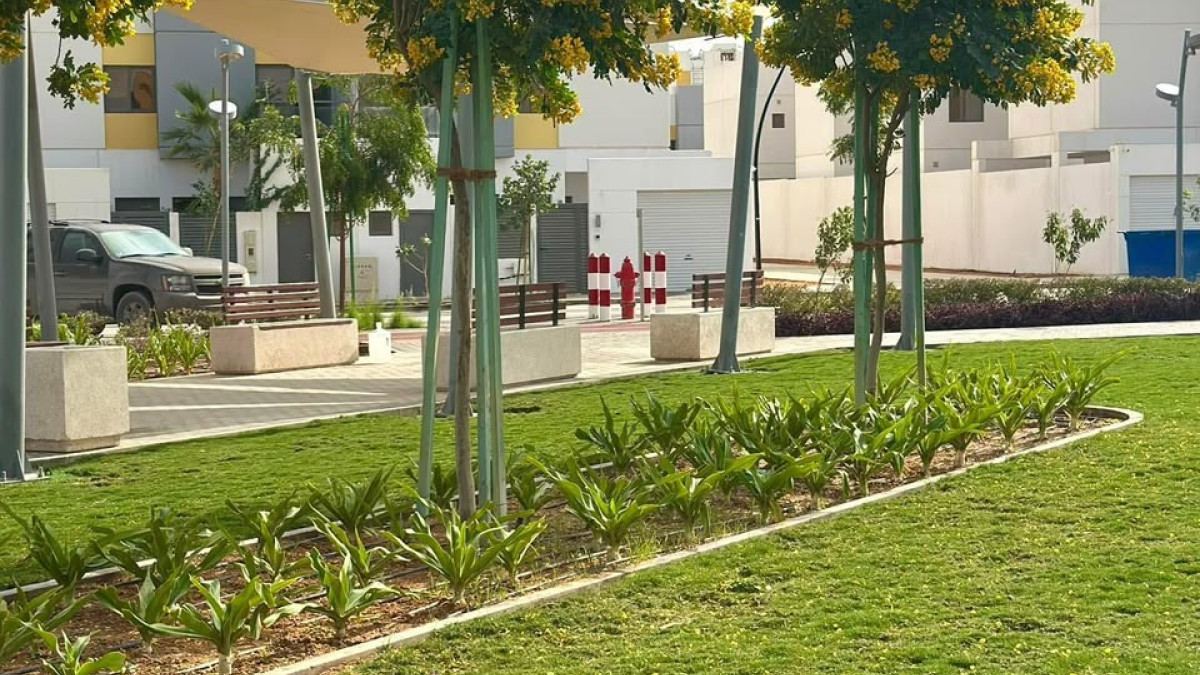
To use mulch around trees in Riyadh gardens, select a suitable soil-covering material, distribute it evenly across the root zone, maintain clearance around the trunk, and adjust irrigation according to actual soil moisture. Properly installed mulch can reduce surface evaporation, moderate soil temperature fluctuations, suppress some weeds, and improve growing conditions around landscape trees.
Mulching is particularly relevant to landscaped properties in Riyadh because exposed soil can experience intense sunlight, rapid surface drying, wind exposure, and considerable temperature fluctuations throughout the year.
However, applying mulch incorrectly can introduce moisture problems, restrict soil aeration, conceal irrigation faults, or damage the base of the tree.
This practical guide from Rayat Najd Landscaping explains how homeowners, farm owners, property developers, and landscape managers can use mulch effectively in Saudi landscaping projects.
 Call Now
 WhatsApp
What Is Mulch and Why Is It Used Around Trees?
What does mulching mean in landscaping?
Mulching is the practice of covering the soil surface with suitable organic or inorganic materials. The covering creates a protective layer between exposed soil and surrounding environmental conditions.
Is mulch the same as fertilizer?
No. Mulch primarily provides soil surface coverage. Some organic mulches gradually decompose and contribute organic matter, but they should not be considered a complete replacement for a properly assessed fertilization program.
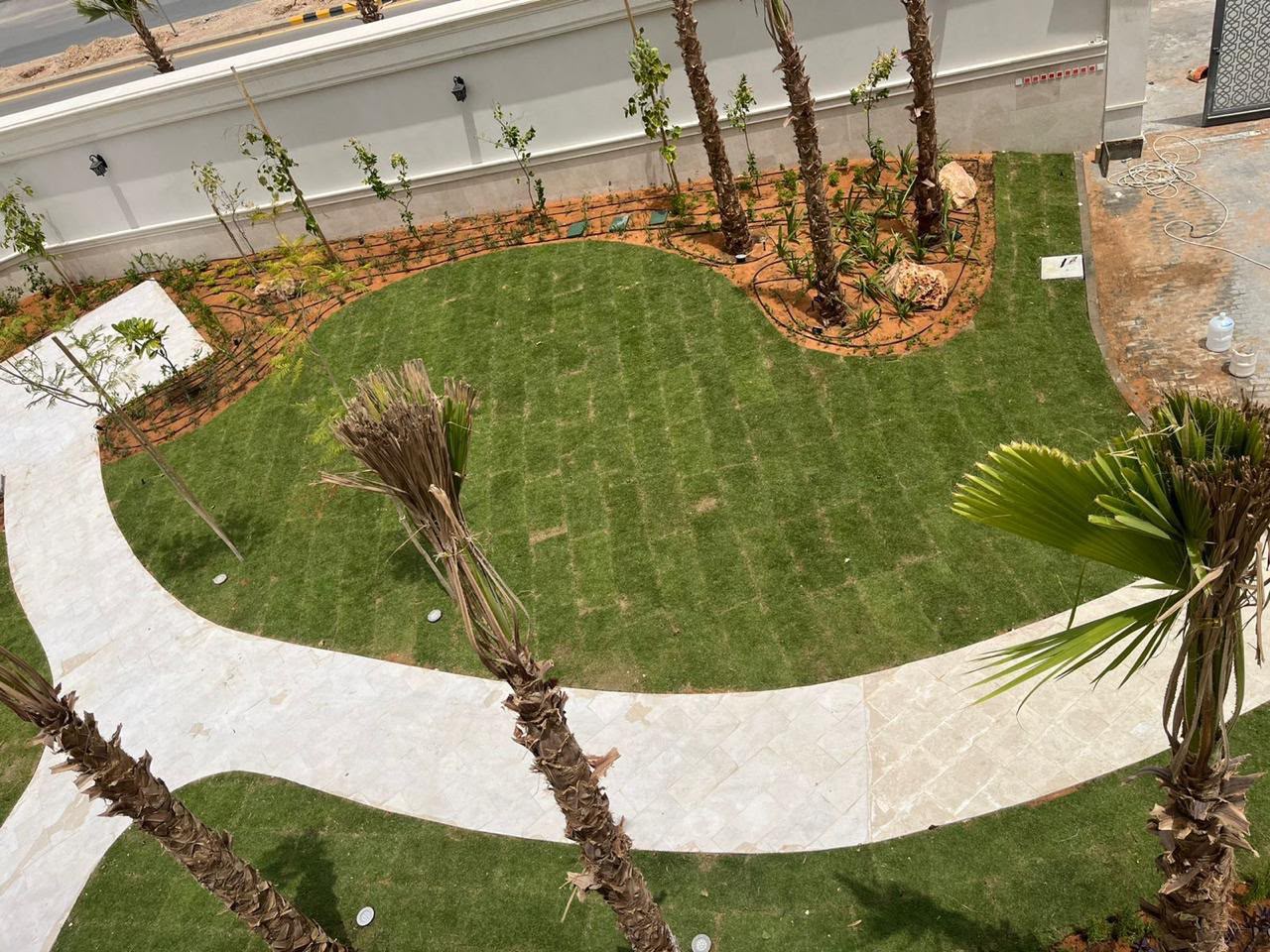
Why Is Mulching Useful in Riyadh Gardens?
How does exposed soil behave in Riyadh's climate?
Exposed soil can heat considerably under direct sunlight and lose moisture through surface evaporation. Wind may also redistribute loose soil particles and contribute to surface drying.
How can mulch improve these conditions?
A suitable mulch layer can reduce direct sunlight exposure at the soil surface, limit some evaporation, and moderate temperature fluctuations within the covered area.
The actual benefits depend on the mulch material, soil characteristics, irrigation system, application depth, and surrounding environment.
What Are the Main Types of Landscape Mulch?
What is organic mulch?
Organic mulch consists of materials derived from plant matter or other suitable organic sources. Examples include untreated wood chips, shredded bark, and appropriately processed plant residues.
What is inorganic mulch?
Inorganic mulch includes materials such as decorative gravel and suitable landscaping stones. These materials do not decompose in the same way as organic mulch and are commonly selected for appearance and surface coverage.
How Do Organic and Inorganic Mulches Compare?
Which mulch type is better for tree health?
Organic mulch is often a useful starting point for improving conditions around landscape trees, particularly when the objective includes adding organic matter over time.
However, inorganic materials may be suitable in specific landscape designs when their thermal characteristics, drainage implications, and maintenance requirements are properly evaluated.
What are the practical differences between mulch materials?
| Mulch Material | Main Advantage | Important Consideration |
|---|---|---|
| Untreated wood chips | Soil coverage and gradual organic matter contribution | Requires periodic replenishment |
| Shredded bark | Natural appearance and surface protection | Material movement and decomposition should be monitored |
| Suitable mature compost | Organic matter contribution | Quality, maturity, and salinity require verification |
| Decorative gravel | Long-lasting visual finish | May increase heat exposure depending on site conditions |
| Natural landscape stones | Defined appearance and durable surface coverage | Weight and thermal behavior should be considered |
| Processed plant residues | Potential reuse of suitable organic material | Must be free from unacceptable contamination and plant health risks |
What Is Wood Chip Mulch?
How does wood chip mulch work around trees?
Wood chips form a loose protective layer over the soil. When appropriately applied, they can reduce direct exposure to sunlight, help retain soil moisture, and gradually decompose at the surface.
Should all wood waste be used as mulch?
No. Avoid painted, chemically treated, contaminated, or unidentified construction wood. Select suitable materials from reliable sources and review potential pest, disease, and contamination concerns.
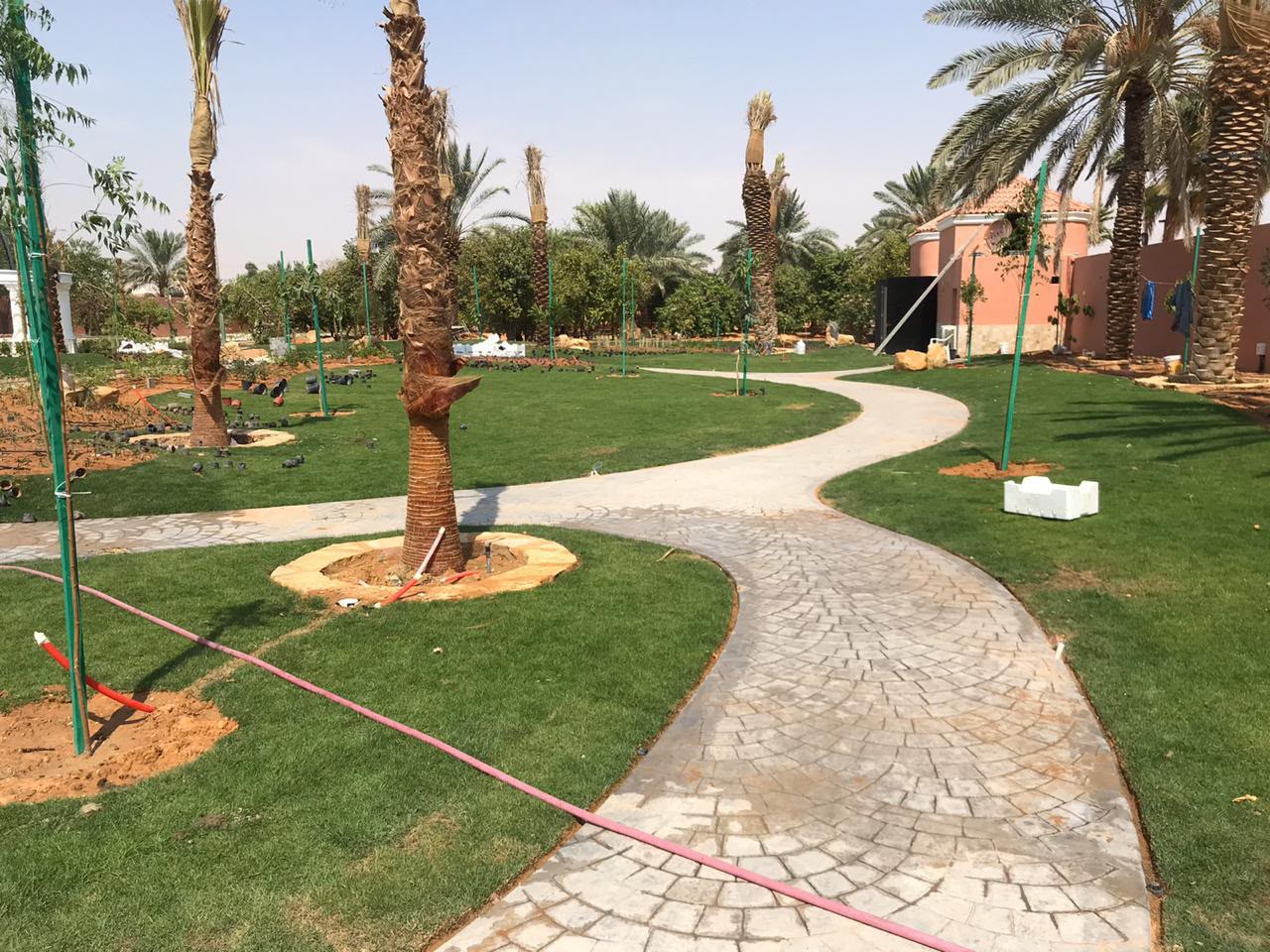
Is Decorative Gravel Suitable Around Landscape Trees?
Why is gravel popular in Saudi landscape designs?
Decorative gravel provides a clean visual appearance and can complement modern architecture, dry landscape designs, courtyards, and commercial outdoor spaces.
What are the disadvantages of gravel around trees?
Some stone surfaces absorb and release considerable heat, potentially increasing thermal exposure around nearby vegetation. Gravel also does not contribute organic matter through decomposition.
Its suitability should be assessed according to sunlight exposure, stone characteristics, tree species, irrigation arrangements, and landscape objectives.
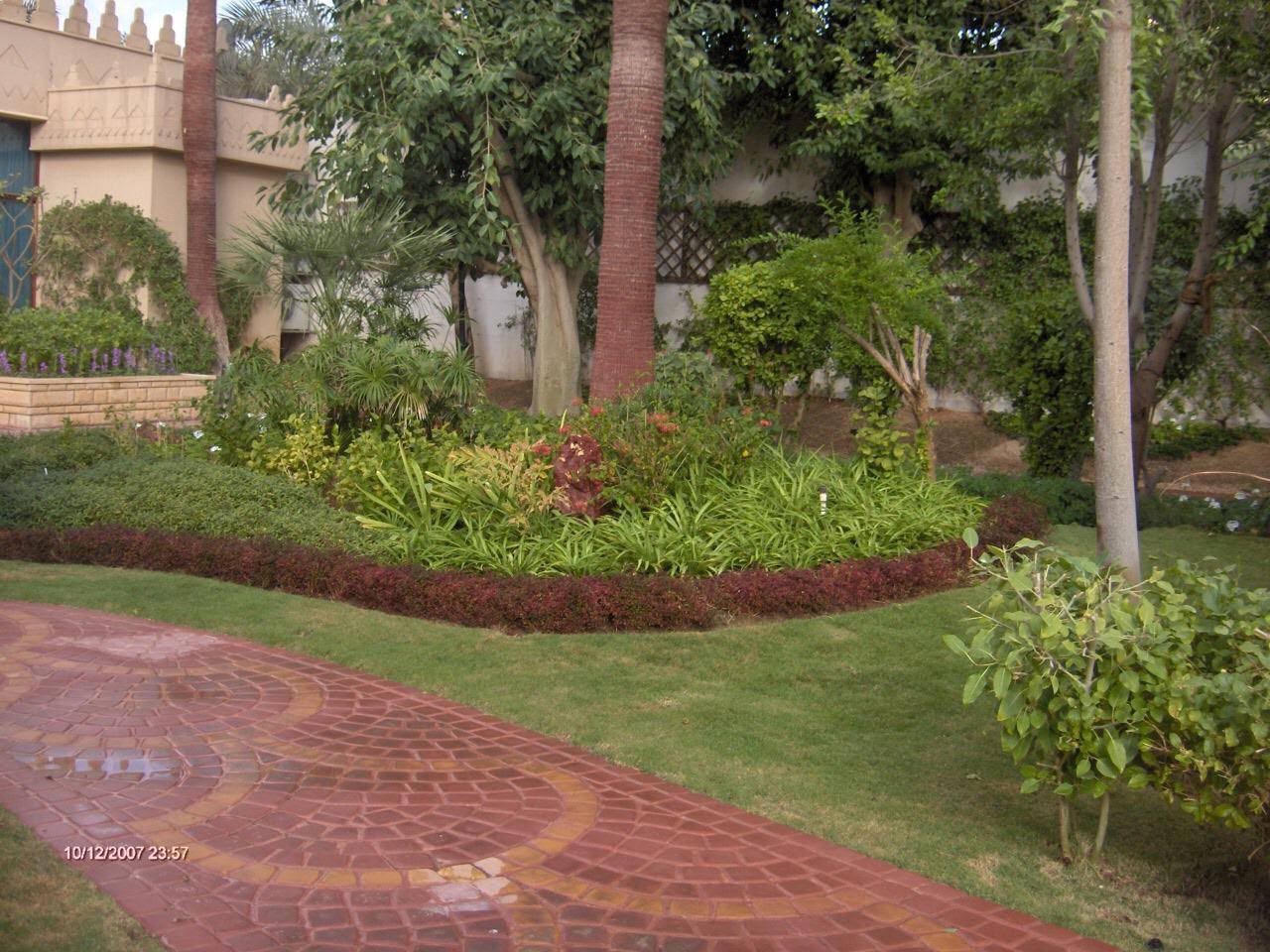
How Thick Should Mulch Be Around Trees?
Is a thicker mulch layer always better?
No. Excessive mulch depth can interfere with soil aeration and moisture movement, particularly when the material becomes compacted or remains continuously wet.
What mulch depth is commonly appropriate?
A loose organic mulch layer of approximately 5 to 10 centimeters is a commonly used general starting range for established landscape trees. The appropriate depth depends on material texture, soil drainage, climate, irrigation, and tree condition.
Fine or easily compacted materials may require a thinner application. Existing mulch should also be included when evaluating total layer depth.
Why Should Mulch Be Kept Away From Tree Trunks?
What happens when mulch touches the trunk?
Continuous contact between moist mulch and trunk bark may create unfavorable moisture conditions, conceal damage, and increase certain pest or disease concerns.
How should the trunk area be protected?
Maintain a clear, mulch-free space immediately around the trunk and keep the root flare visible. The required clearance should reflect tree size and site conditions.
Do not pile mulch into a mound against the trunk.
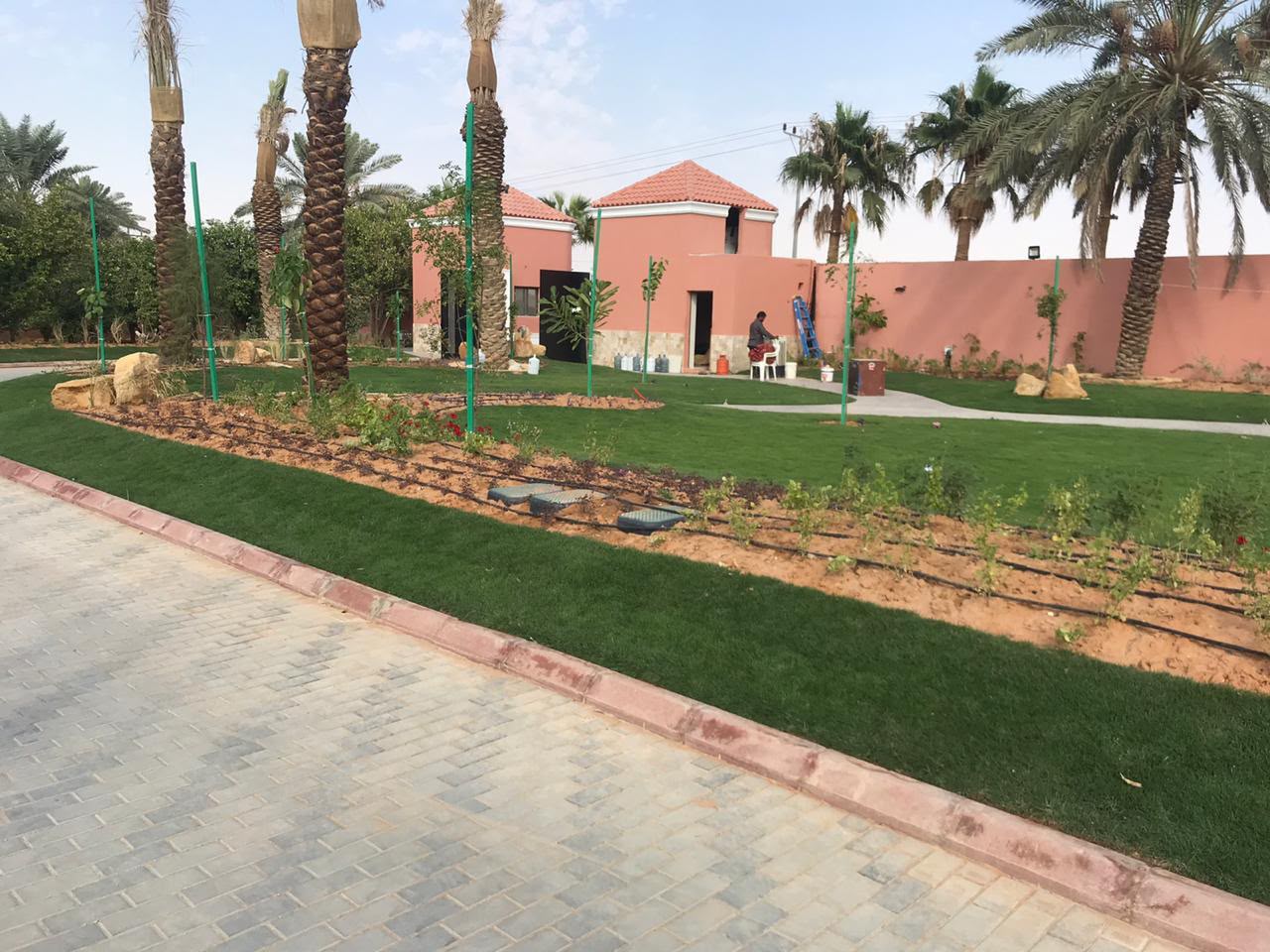
What Is Volcano Mulching?
Why is mulch sometimes piled around tree trunks?
Some landscaping installations create decorative cone-shaped mulch piles around trees. Although this may appear organized, excessive material against the trunk can create unfavorable growing conditions.
How can incorrect mulch mounds be corrected?
Carefully redistribute excess mulch away from the trunk, maintain a suitable overall layer depth, and inspect the exposed trunk base for existing problems.
If the tree appears damaged or the root flare is deeply buried, consult a qualified tree care specialist before undertaking extensive corrective work.
How Wide Should a Mulched Tree Area Be?
Should mulch cover only a small circle around the trunk?
A wider mulched area can provide soil surface protection across a greater portion of the root zone. Tree roots frequently extend beyond the immediate trunk area and may extend beyond the canopy.
What determines the appropriate mulch coverage?
Available landscape space, tree size, planting bed design, surrounding vegetation, irrigation coverage, and accessibility requirements determine the practical mulching area.
How Do I Calculate the Amount of Mulch Required?
What information is needed for the calculation?
Measure the area to be covered and determine the appropriate application depth. Mulch volume is calculated by multiplying the area in square meters by the depth in meters.
Mulch volume=Coverage area × Application depth
What are some example mulch quantities?
| Coverage Area | Application Depth | Calculated Volume |
|---|---|---|
| 5 m² | 5 cm | 0.25 m³ |
| 10 m² | 5 cm | 0.50 m³ |
| 20 m² | 7.5 cm | 1.50 m³ |
| 40 m² | 7.5 cm | 3.00 m³ |
| 50 m² | 10 cm | 5.00 m³ |
| 100 m² | 5 cm | 5.00 m³ |
These examples represent geometric volume calculations. Actual purchasing quantities should account for existing mulch, material settlement, uneven ground, and the coverage excluded immediately around tree trunks.
How Do I Prepare the Soil Surface Before Mulching?
Should mulch be applied directly over weeds?
It is generally preferable to manage established weeds before applying mulch. Some persistent weeds can continue growing through mulch and may require separate management.
What other conditions should be reviewed?
Inspect soil moisture, drainage, existing mulch depth, irrigation access, trunk condition, and any surface debris that should be removed before installation.
How Do I Apply Mulch Around Newly Planted Trees?
Is mulch useful immediately after planting?
Correctly applied mulch can help protect exposed soil around newly planted trees and support moisture management during establishment.
What precautions are necessary?
Keep the trunk base and root flare visible, avoid burying the root ball beneath excessive material, and confirm that irrigation reaches the soil where developing roots need moisture.
Mulch should complement appropriate planting practices rather than conceal planting-depth or irrigation problems.
Can Established Trees Benefit From New Mulch?
Should mature trees receive mulch even if they appear healthy?
Established trees may benefit from suitable soil surface coverage, especially where their root zones contain exposed soil or experience unnecessary surface disturbance.
What should be checked before applying mulch around mature trees?
Review existing root conditions, drainage, irrigation arrangements, trunk health, and previous soil coverings. Avoid disturbing major roots while preparing the area.
How Does Mulch Affect Garden Irrigation?
Can mulch reduce irrigation requirements?
Mulch may reduce evaporation directly from the soil surface. However, it does not eliminate water loss through plant transpiration or change every aspect of a tree's water requirements.
Should irrigation schedules be changed immediately after mulching?
Irrigation adjustments should be based on actual soil moisture observations and tree requirements. Avoid reducing water automatically by a fixed percentage without assessing the site.
Should Drip Irrigation Tubing Be Installed Above or Below Mulch?
Can drip irrigation operate beneath organic mulch?
Yes. Suitable surface drip tubing may be positioned beneath mulch to reduce direct exposure and maintain a cleaner appearance, provided the irrigation system is designed and maintained appropriately.
How can hidden irrigation problems be detected?
Provide practical access to emitters and connections, inspect the system periodically, and verify that water reaches the intended soil areas rather than relying only on the appearance of the mulch surface.
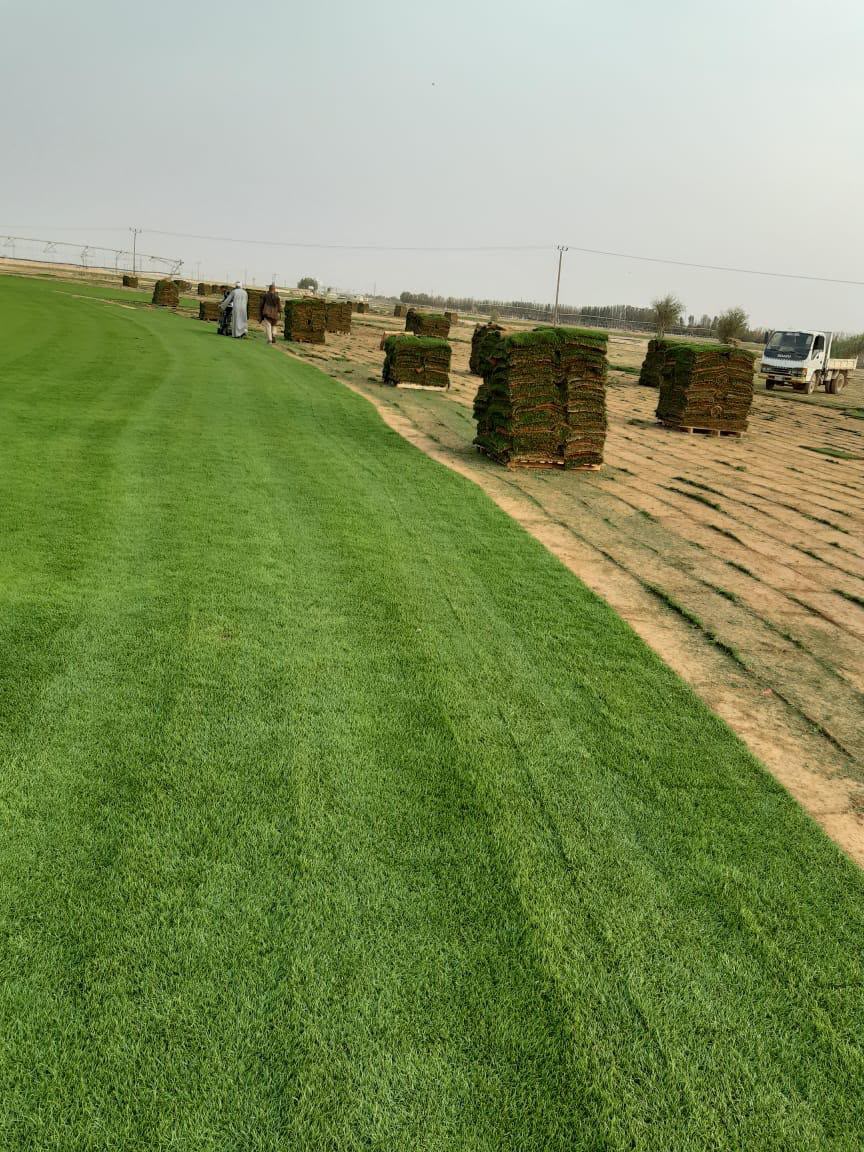
How Do I Check Soil Moisture Beneath Mulch?
Can the mulch surface indicate whether a tree needs water?
Not reliably. The surface may appear dry while the soil underneath remains moist, or it may appear damp without adequate water reaching deeper roots.
What should gardeners inspect instead?
Check moisture within the relevant root-zone soil using appropriate observation methods or suitable moisture measurement equipment. Interpret the results according to tree species, soil characteristics, and irrigation design.
Can Mulch Cause Excessive Soil Moisture?
When can moisture retention become a problem?
Excessive irrigation, poorly draining soil, compacted mulch, and unsuitable application depths can contribute to persistently wet conditions.
How should this problem be managed?
Review irrigation frequency, inspect drainage conditions, and evaluate the mulch layer. Correct the underlying cause rather than simply adding more mulch or changing its appearance.
How Does Mulch Influence Weed Growth?
Can mulch prevent all weeds from growing?
No. A suitable mulch layer can suppress the emergence of some weeds by limiting light at the soil surface, but persistent weeds may grow through the material or establish within decomposing mulch.
What is the best approach to weed management?
Combine appropriate mulch coverage with routine inspection and targeted weed removal. Avoid damaging tree bark or roots during maintenance.
Should Landscape Fabric Be Installed Beneath Mulch?
What is landscape fabric intended to do?
Landscape fabric is commonly used as a separation layer or weed-management component in certain landscape installations.
Is landscape fabric recommended around every tree?
No. Its suitability depends on permeability, drainage, material characteristics, future root growth, irrigation access, and maintenance objectives.
For organic mulch around trees, fabric may interfere with the natural incorporation of decomposed material into the soil. It can also complicate maintenance as roots and weeds develop around the fabric.
How Do Different Mulches Affect Soil Temperatures?
Do all mulch materials provide the same thermal protection?
No. Thermal behavior differs according to material composition, color, particle size, moisture content, thickness, and exposure to sunlight.
How should thermal characteristics influence material selection?
| Material | Potential Thermal Behavior | Selection Consideration |
|---|---|---|
| Loose wood chips | Can moderate soil surface temperature fluctuations | Maintain appropriate coverage and depth |
| Shredded bark | Provides organic surface insulation | Monitor compaction and decomposition |
| Dark decorative stone | May absorb considerable solar heat | Evaluate exposure near sensitive vegetation |
| Light-colored gravel | May reflect more sunlight than darker stone | Evaluate reflected heat and site conditions |
| Fine organic material | Thermal behavior depends partly on moisture and compaction | Avoid excessive depth and restricted aeration |
Can Mulch Improve Soil Quality Over Time?
What happens when organic mulch decomposes?
Suitable organic mulch gradually breaks down through biological processes and may contribute organic matter to the upper soil layers.
Does this improve every type of soil equally?
No. The effect depends on soil characteristics, climate, biological activity, moisture, material quality, and decomposition rates.
Soil improvement should be evaluated over time rather than assumed from the installation of mulch alone.
Can Fresh Wood Chips Affect Soil Nutrients?
Do wood chips always remove nitrogen from the soil?
Microorganisms decomposing woody material may use available nitrogen, particularly where fresh woody material is mixed directly into the soil.
How does surface application differ?
Using suitable wood chips as a surface mulch is different from incorporating large quantities into the root-zone soil. Avoid mixing fresh woody mulch into planting soil without appropriate assessment.
Do not automatically apply additional fertilizer without reviewing tree condition and actual nutrient requirements.
How Do I Select Safe Organic Mulch Materials?
What should mulch suppliers disclose?
Suppliers should provide relevant information about the material's origin, composition, processing, and suitability for landscape use.
What materials should generally be avoided?
- Painted or chemically treated construction timber.
- Materials contaminated with industrial waste.
- Organic material with unidentified chemical residues.
- Plant debris associated with unmanaged pest or disease risks.
- Materials containing excessive plastic, glass, or metal debris.
- Unsuitable organic waste with uncontrolled decomposition characteristics.
Can Mulch Attract Insects or Other Pests?
Does organic mulch automatically create a pest infestation?
No. Organic mulch supports biological activity, and the presence of organisms does not necessarily indicate a harmful infestation.
When should landscape managers investigate further?
Investigate unusual insect activity, damage to bark or nearby structures, persistent moisture problems, or signs of an established pest infestation.
Maintain suitable clearance around tree trunks and follow appropriate building protection and professional pest management recommendations near structures.
How Do I Prevent Mulch From Moving During Strong Winds?
Why does mulch sometimes disappear from planting beds?
Lightweight, dry, or finely fragmented materials may move during strong winds, especially in exposed areas of Riyadh and other parts of Saudi Arabia.
What can improve mulch stability?
Select suitable material texture and particle size, maintain well-defined planting beds, and evaluate practical edging arrangements without obstructing drainage or damaging tree roots.
How Should Mulch Be Used in Commercial Landscaping Projects?
Why do commercial properties need standardized mulch specifications?
Large developments require consistent material quality, appearance, installation methods, irrigation coordination, and maintenance procedures across multiple planting areas.
What should a commercial mulch specification include?
| Specification Area | Required Information | Purpose |
|---|---|---|
| Material selection | Approved mulch type and source | Maintain consistent quality |
| Coverage area | Planting beds and designated tree zones | Determine quantities and installation scope |
| Application depth | Approved depth based on material and site conditions | Avoid insufficient or excessive coverage |
| Trunk clearance | Clear space around tree trunks and root flares | Reduce direct mulch contact with bark |
| Irrigation coordination | Emitter access and soil moisture verification | Maintain effective irrigation |
| Maintenance requirements | Inspection and replenishment procedures | Preserve long-term performance |
| Acceptance criteria | Approved appearance and functional installation | Support consistent project handover |
When Is the Best Time to Apply Mulch in Riyadh?
Should mulch be installed before summer?
Applying suitable mulch before periods of intense heat can help protect the soil surface as temperatures increase. However, mulching may also be undertaken during other seasons when site conditions are appropriate.
Can mulch remain around trees throughout winter?
Yes, provided the layer remains suitable and irrigation is adjusted according to seasonal soil moisture conditions. Mulch should not be removed or replaced solely because the season changes.
How Often Should Organic Mulch Be Replenished?
Does organic mulch need replacement every month?
No fixed replacement schedule applies to every material or garden. Decomposition, movement, maintenance activity, and environmental exposure determine how quickly coverage changes.
How do I know when more mulch is required?
Inspect the remaining layer depth, exposed soil areas, material condition, and trunk clearance. Replenish only the amount needed to restore the appropriate coverage.
Adding a complete new layer over existing mulch without measuring its depth can gradually create excessive accumulation.
Can Mulch Be Used Around Palm Trees?
Is mulching suitable for landscaped palm planting beds?
Suitable mulch may be used around palm planting areas to protect exposed soil and improve surface management, provided the material does not accumulate against the palm base.
What should palm owners monitor?
Review irrigation distribution, drainage, material accumulation, and the condition of the palm base. Different palm species and planting environments may require different management approaches.
Can Mulch Improve the Appearance of Villa Gardens?
How does mulch contribute to landscape design?
Consistent mulch coverage can create clearly defined planting beds, reduce the appearance of exposed soil, and provide contrast between trees, shrubs, pathways, and architectural features.
Should decorative appearance be the main selection criterion?
No. Appearance should be considered alongside tree health, irrigation requirements, material suitability, environmental exposure, and maintenance costs.
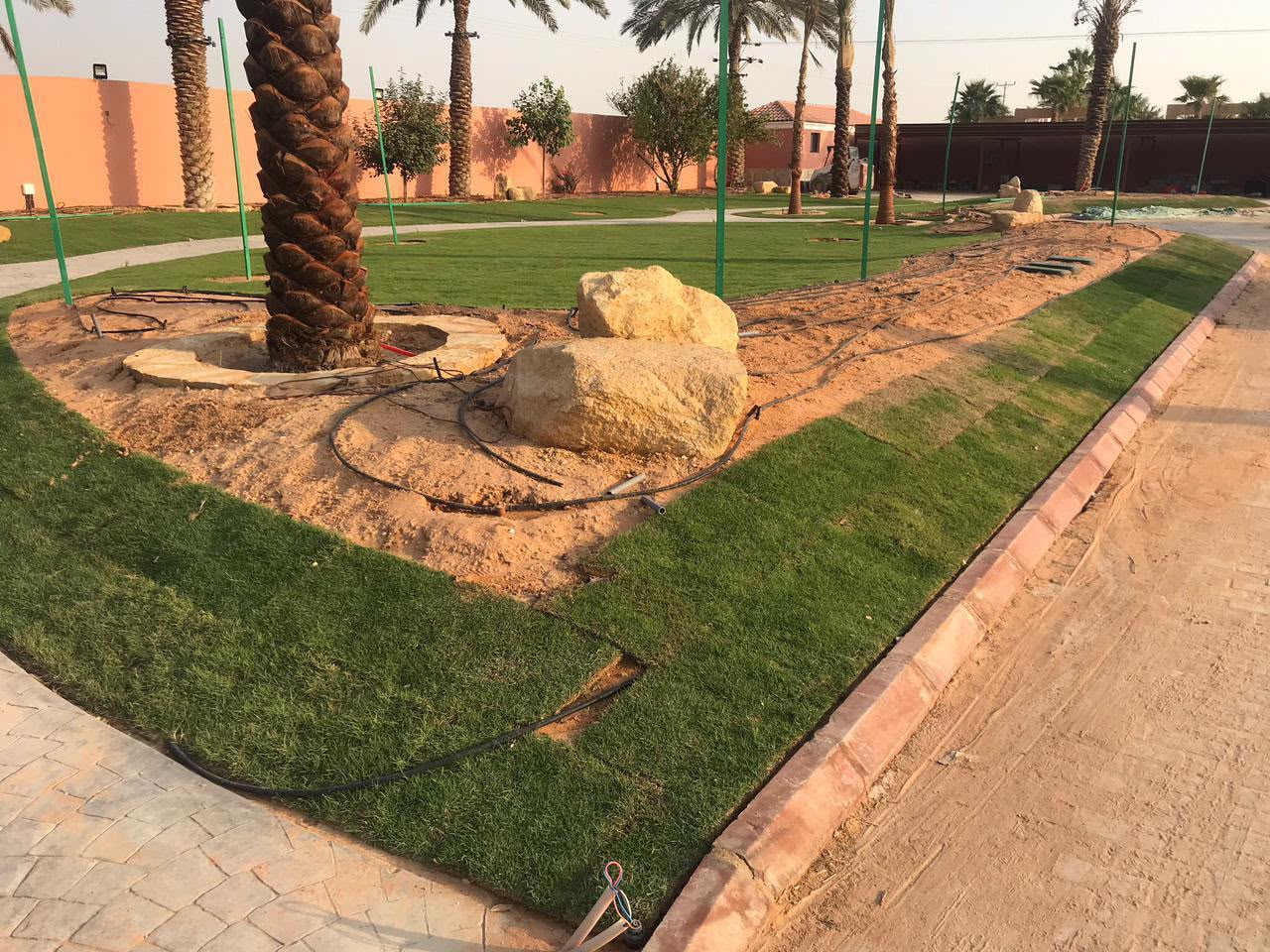
How Much Does Tree Mulching Cost in Riyadh?
What determines the total installation cost?
Mulching costs depend on the coverage area, material type, required volume, supplier quality, transportation, installation labor, site preparation, and ongoing maintenance requirements.
What should a professional mulch quotation include?
| Cost Component | Information Required | Purpose |
|---|---|---|
| Mulch material | Approved type, source, and quality | Establish material suitability and cost |
| Coverage area | Total square meters requiring mulch | Calculate installation quantities |
| Material volume | Required cubic meters at the approved depth | Determine purchasing requirements |
| Transportation | Delivery location and material volume | Calculate logistics requirements |
| Site preparation | Existing weeds, debris, and surface conditions | Define preparatory work |
| Installation labor | Tree count, accessibility, and distribution requirements | Determine execution cost |
| Maintenance | Inspection and replenishment scope | Estimate ongoing management requirements |
Actual prices should be obtained from a project-specific quotation based on the selected materials and verified site quantities. A universal price may not reflect the requirements of an individual garden or commercial development.
How Do I Inspect Mulch After Installation?
What should a completed mulching project look like?
The planting beds should contain consistent coverage at the approved depth, with visible trunk bases, accessible irrigation components where required, and no unnecessary accumulation against tree bark.
How do I verify functional performance?
Check soil moisture beneath the mulch, inspect irrigation distribution, review drainage, and identify any areas where material has become compacted, displaced, or excessively accumulated.
What Are the Most Common Tree Mulching Mistakes?
What mistakes occur during material selection and installation?
- Choosing mulch exclusively according to decorative appearance.
- Using contaminated or chemically treated wood waste.
- Applying excessive mulch depth.
- Piling mulch directly against tree trunks.
- Covering the root flare.
- Installing unsuitable stone mulch in highly exposed areas.
- Ignoring the characteristics of existing soil and drainage.
- Mixing fresh woody material into the soil without assessment.
What mistakes occur during ongoing maintenance?
- Adding new mulch without measuring the existing layer.
- Reducing irrigation automatically without checking soil moisture.
- Allowing mulch to conceal leaking irrigation components.
- Ignoring material compaction and surface drainage problems.
- Failing to inspect tree trunk clearance.
- Assuming mulch eliminates all weeds and pests.
- Allowing lightweight materials to accumulate outside designated planting areas.
What Is the Tree Mulching Checklist for Riyadh Gardens?
What should be reviewed before installation?
- ☐ Identify the trees and planting areas requiring mulch.
- ☐ Review existing soil conditions and drainage.
- ☐ Inspect trunk bases and root flares.
- ☐ Determine the primary purpose of mulching.
- ☐ Select an appropriate mulch material.
- ☐ Verify material quality and source.
- ☐ Determine the appropriate application depth.
- ☐ Measure the intended coverage area.
- ☐ Calculate required material volume.
- ☐ Review irrigation access and emitter placement.
- ☐ Manage established weeds and unsuitable surface debris.
- ☐ Obtain a detailed material and installation quotation.
What should be checked after installation?
- ☐ Confirm consistent mulch distribution.
- ☐ Verify the approved application depth.
- ☐ Maintain clearance around tree trunks.
- ☐ Keep root flares visible.
- ☐ Confirm appropriate irrigation operation.
- ☐ Check soil moisture beneath the mulch.
- ☐ Monitor drainage and material movement.
- ☐ Establish periodic inspection procedures.
- ☐ Replenish material only when necessary.
Where Can I Learn More About Appropriate Tree Mulching?
Which professional resources explain tree care practices?
The International Society of Arboriculture provides educational resources about tree care through its TreesAreGood website.
Where can landscape managers find additional environmental guidance?
The Food and Agriculture Organization of the United Nations provides resources concerning soil management, agriculture, water conservation, and sustainable land management.
These resources provide general educational information. Individual mulch specifications should be determined according to local soil conditions, tree requirements, irrigation design, and professional landscape assessment.
What Are the Frequently Asked Questions About Tree Mulching?
1. What is the best mulch for trees in Riyadh?
Suitable untreated wood chips or other appropriate organic materials can be effective options for many landscape trees. The final choice should reflect irrigation, soil, climate, material quality, and landscape design requirements.
2. How thick should mulch be around trees?
A loose organic mulch layer of approximately 5 to 10 centimeters is a commonly used starting range. The appropriate depth depends on the material, existing coverage, drainage, and tree condition.
3. Can mulch touch the tree trunk?
Mulch should be kept away from direct contact with the trunk, and the root flare should remain visible. Avoid creating mulch mounds against tree bark.
4. Does mulch reduce water consumption in Saudi gardens?
It can reduce soil surface evaporation, potentially supporting more efficient irrigation management. Actual water requirements should be determined through soil moisture assessment and tree needs.
5. Is decorative gravel better than organic mulch?
Gravel may provide a durable decorative finish, while organic mulch can contribute organic matter as it decomposes. Their suitability depends on the objectives and conditions of each planting area.
6. Can mulch be applied around newly planted trees?
Yes. Suitable mulch can help protect exposed soil around newly planted trees, provided the trunk remains clear and irrigation reaches the intended root zone.
7. Should drip irrigation be installed beneath mulch?
Suitable drip tubing may be positioned beneath mulch when the system is appropriately designed and remains accessible for inspection and maintenance.
8. How often should organic mulch be replaced?
Replacement or replenishment should be based on remaining material depth, decomposition, exposed soil, and overall condition rather than a fixed universal schedule.
9. Can mulch damage trees?
Incorrect application can create problems, particularly when mulch is piled against trunks, applied excessively, contaminated, or combined with unsuitable irrigation and drainage conditions.
10. How much does professional tree mulching cost in Riyadh?
Costs depend on material type, coverage area, required volume, transportation, site preparation, and installation requirements. Contact Rayat Najd Landscaping for a project-specific consultation and quotation.
How Can Rayat Najd Landscaping Help Improve Your Garden?
Why should mulching be included in professional landscape planning?
Mulching affects more than the appearance of planting beds. It interacts with irrigation, soil moisture, surface temperatures, weed management, tree condition, and routine landscape maintenance.
A coordinated approach helps ensure that the selected materials and installation methods reflect the practical requirements of the property rather than being treated as an isolated decorative feature.
How can you start your landscaping project in Riyadh?
Prepare photographs of your garden, approximate planting bed dimensions, information about existing trees, and details of the irrigation system. Contact Rayat Najd Landscaping to discuss suitable landscape solutions, tree care requirements, and soil surface management options for your property.
Conclusion: Correct tree mulching can help Riyadh gardens maintain more favorable soil surface conditions while improving the appearance and organization of landscaped areas. Select suitable materials, apply an appropriate layer depth, protect tree trunks from direct mulch contact, and coordinate installation with actual irrigation and drainage requirements. The most effective mulching strategy is one that supports long-term tree health rather than focusing exclusively on decorative appearance.