



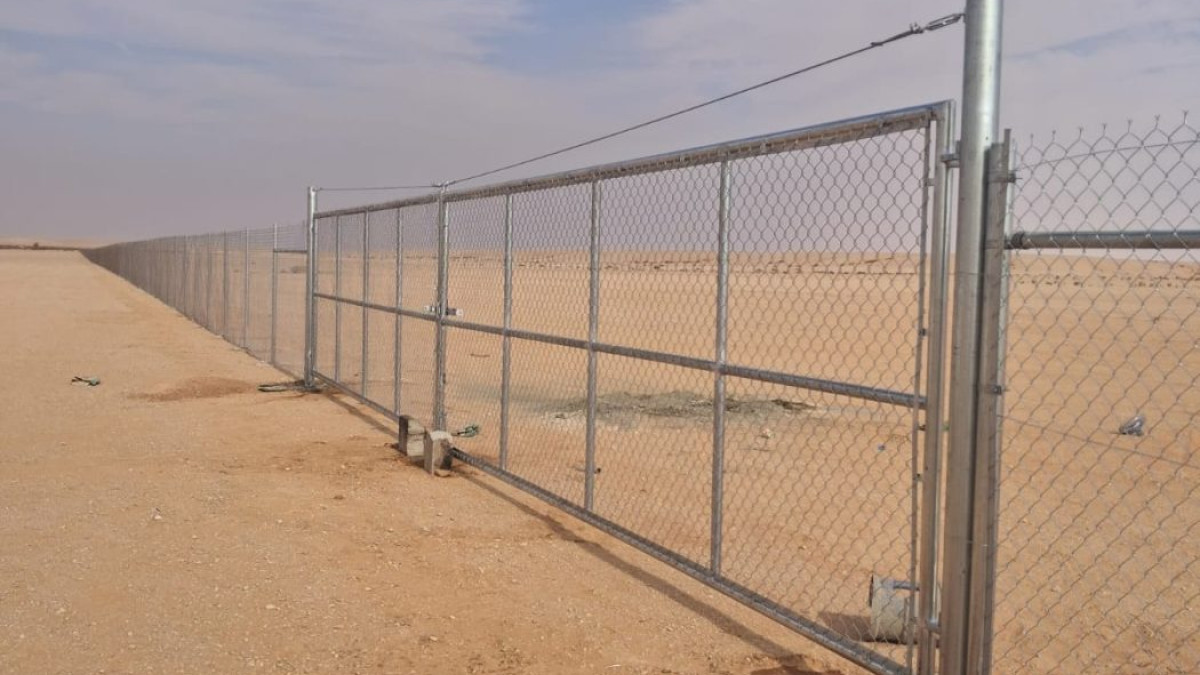
To fence an outdoor equipment testing yard, identify the types of machinery being tested, establish approved operational boundaries, separate testing areas from pedestrian routes, and provide suitable access gates for equipment movement and authorized personnel. The fencing system must be selected according to the facility's risk assessment, testing procedures, equipment characteristics, and operational requirements.
Outdoor equipment testing yards differ from ordinary industrial storage areas because machinery may be operated, inspected, demonstrated, or subjected to controlled performance evaluations within designated spaces.
These activities create changing operational conditions that require careful separation between active testing areas and surrounding facilities.
This guide from Shbok Rayat Najd explains how industrial companies, machinery suppliers, maintenance contractors, manufacturing facilities, and equipment distributors can plan suitable fencing systems for outdoor equipment testing yards in Riyadh and across Saudi Arabia.
 Call Now
 WhatsApp
What Is an Outdoor Equipment Testing Yard?
What activities take place inside an equipment testing yard?
An outdoor equipment testing yard is a designated area used to evaluate, inspect, operate, demonstrate, or verify the performance of machinery and industrial equipment under approved conditions.
The specific activities depend on the facility's purpose, equipment categories, manufacturer requirements, and established testing procedures.
How does a testing yard differ from an equipment storage yard?
A storage yard primarily accommodates equipment when it is not being used. A testing yard may involve active machinery movement, controlled operating trials, functional inspections, and other activities requiring dedicated operational boundaries.
Consequently, fencing requirements must reflect the testing activities rather than simply the need to protect stored assets.
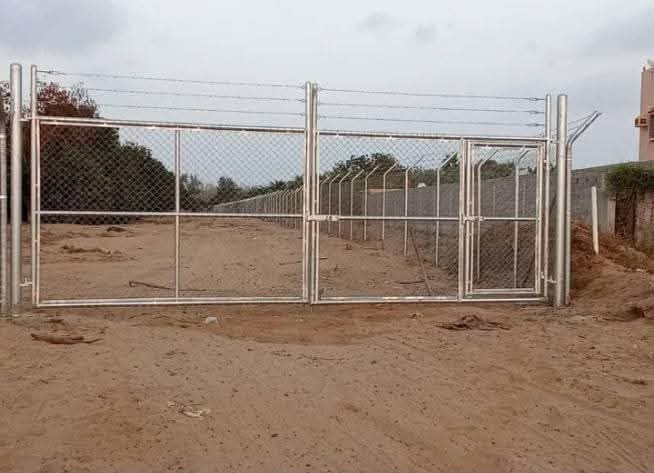
Why Do Industrial Equipment Testing Yards Need Fencing?
What is the primary purpose of testing yard fencing?
A suitable perimeter fencing system can help define the controlled testing area, discourage unauthorized entry, separate different operational spaces, and support the facility's access management procedures.
Does ordinary fencing eliminate machinery testing hazards?
No. Traditional mesh fencing does not automatically provide protection against moving machinery, flying debris, equipment failure, pressure release, fire, excessive noise, or other specialized industrial hazards.
Where these risks exist, the responsible engineering and safety specialists must determine whether independent engineered protective systems are required.
Which Businesses Require Outdoor Testing Yard Fencing?
Are testing enclosures useful only for manufacturing facilities?
No. Various industrial and commercial organizations may operate dedicated areas for equipment inspection, demonstration, and functional verification.
Which facility categories may require dedicated fencing?
| Facility Type | Typical Testing Activity | Primary Fencing Consideration |
|---|---|---|
| Industrial machinery supplier | Approved equipment demonstrations | Separation between demonstration areas and visitors |
| Manufacturing facility | Functional verification of manufactured equipment | Controlled operational boundaries |
| Equipment maintenance workshop | Authorized post-maintenance testing | Separation between repair and testing activities |
| Heavy equipment distributor | Approved machinery performance evaluations | Equipment movement and access requirements |
| Technical training facility | Supervised equipment demonstrations | Controlled separation of participants and active machinery |
| Equipment inspection facility | Scheduled functional inspections | Organized entry and authorized testing zones |
| Industrial research facility | Approved equipment development evaluations | Project-specific access and protective requirements |
Each facility requires an independent assessment because equipment types and testing conditions can differ substantially.
How Do I Determine the Required Testing Yard Boundary?
Can the fence be positioned according to the available land area alone?
No. The available property dimensions are only one consideration. The operational boundary must also account for the machinery's approved working area, movement requirements, surrounding facilities, and assessed risks.
What information should determine the fence layout?
- Approved testing facility drawings.
- Types of equipment being evaluated.
- Authorized operating areas.
- Equipment movement and access requirements.
- Existing buildings and infrastructure.
- Pedestrian circulation routes.
- Approved observation areas.
- Maintenance and inspection access requirements.
- Emergency access arrangements.
- Specialized protective systems identified by the risk assessment.
The final fencing layout should be approved by the responsible facility management, engineering, and safety representatives.
What Is the Difference Between a Perimeter Fence and a Machine Guard?
What is an industrial perimeter fence designed to do?
A perimeter fence generally defines the boundaries of an industrial site or operational area and supports controlled access.
What is a machine guard designed to do?
A machine guard is a protective system intended to address specified machinery-related hazards according to its design and applicable requirements.
An ordinary perimeter mesh fence should not be treated as an approved machine guard unless the complete system has been specifically designed, evaluated, and accepted for that protective function.
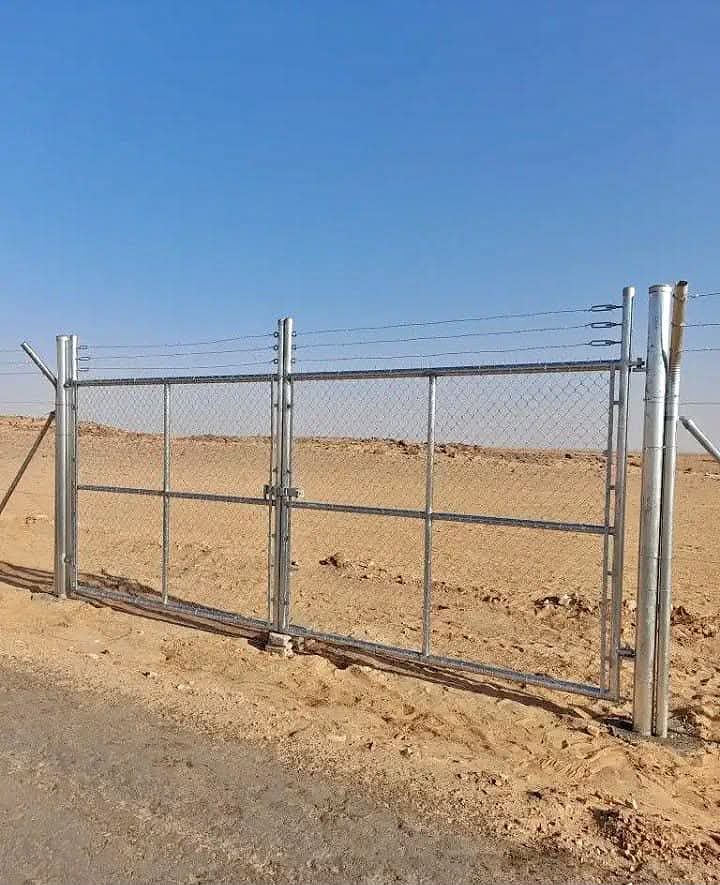
Which Types of Fencing Are Suitable for Equipment Testing Yards?
Can galvanized chain-link fencing be used around testing facilities?
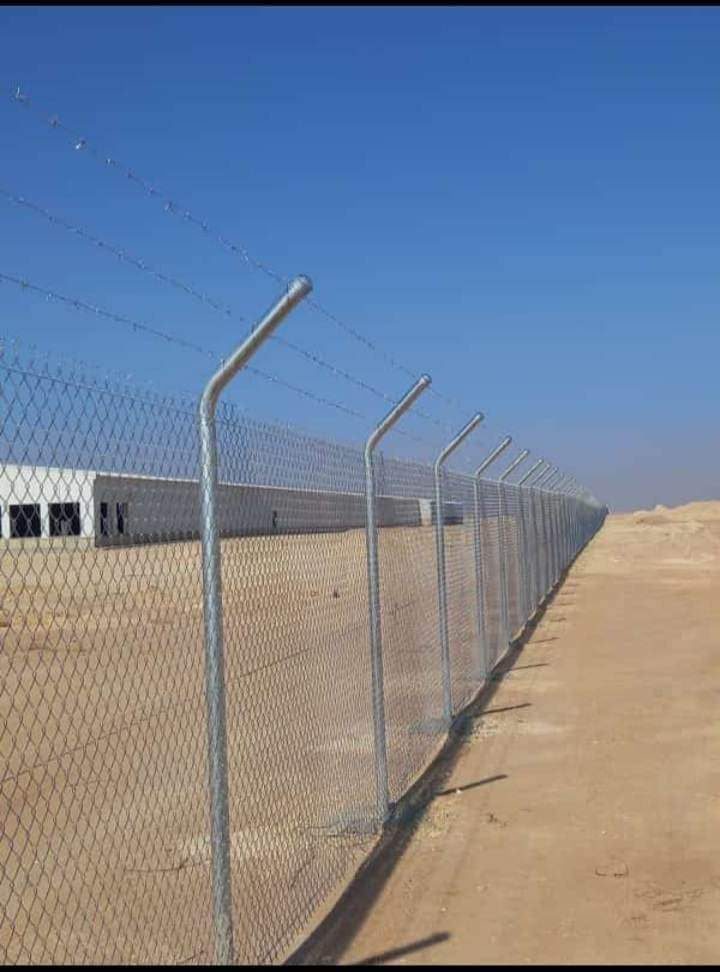
Galvanized chain-link fencing may be considered for approved perimeter definition and access management applications, provided its specifications meet the facility's requirements.
When might welded mesh fencing be appropriate?
Welded mesh systems may be considered where the facility requires a more rigid boundary or clearly defined separation between designated operational areas.
How do industrial fencing options compare?
| Fencing System | Potential Application | Important Limitation |
|---|---|---|
| Galvanized chain-link fencing | General perimeter definition and controlled access | Not automatically suitable for impact or machinery hazard containment |
| Welded mesh panel fencing | Defined separation between designated industrial zones | Protective performance depends on the complete approved system |
| Coated steel mesh fencing | Sites requiring a specified external finish or additional coating protection | Coating suitability must reflect the operating environment |
| Specialized machinery guarding | Protection against specifically assessed machinery hazards | Requires independent design and approval for its intended function |
| Engineered vehicle barriers | Locations requiring vehicle impact protection | Ordinary mesh fencing is not a substitute |
| Controlled access gates | Authorized personnel and equipment movement | Must comply with approved access and emergency arrangements |
The appropriate fencing system must be selected according to its required function rather than appearance alone.
How Do I Separate Active Testing Areas From Pedestrian Routes?
Why is pedestrian separation important?
Employees, visitors, suppliers, and inspection personnel may need to move through facilities containing active equipment testing areas.
Clearly defined boundaries can help support the approved circulation plan and reduce unintended access to restricted operational spaces.
How should pedestrian routes be incorporated into the fencing plan?
The facility's approved layout should identify authorized walking routes, access points, restricted zones, observation areas, and any locations requiring specialized protective arrangements.
Fencing should be coordinated with these designated routes without obstructing required emergency access or creating new operational conflicts.
How Do I Create Separate Testing Zones for Different Machinery?
Should all industrial equipment be tested inside one enclosure?
Not necessarily. Different equipment categories may have different movement characteristics, operating requirements, environmental conditions, and assessed hazards.
When is internal testing zone separation useful?
Separate testing zones may support more organized operations when several equipment categories require independent access arrangements or when the facility's approved procedures restrict simultaneous activities.
The need for internal fencing or specialized barriers should be determined through the facility's operational and engineering assessment.
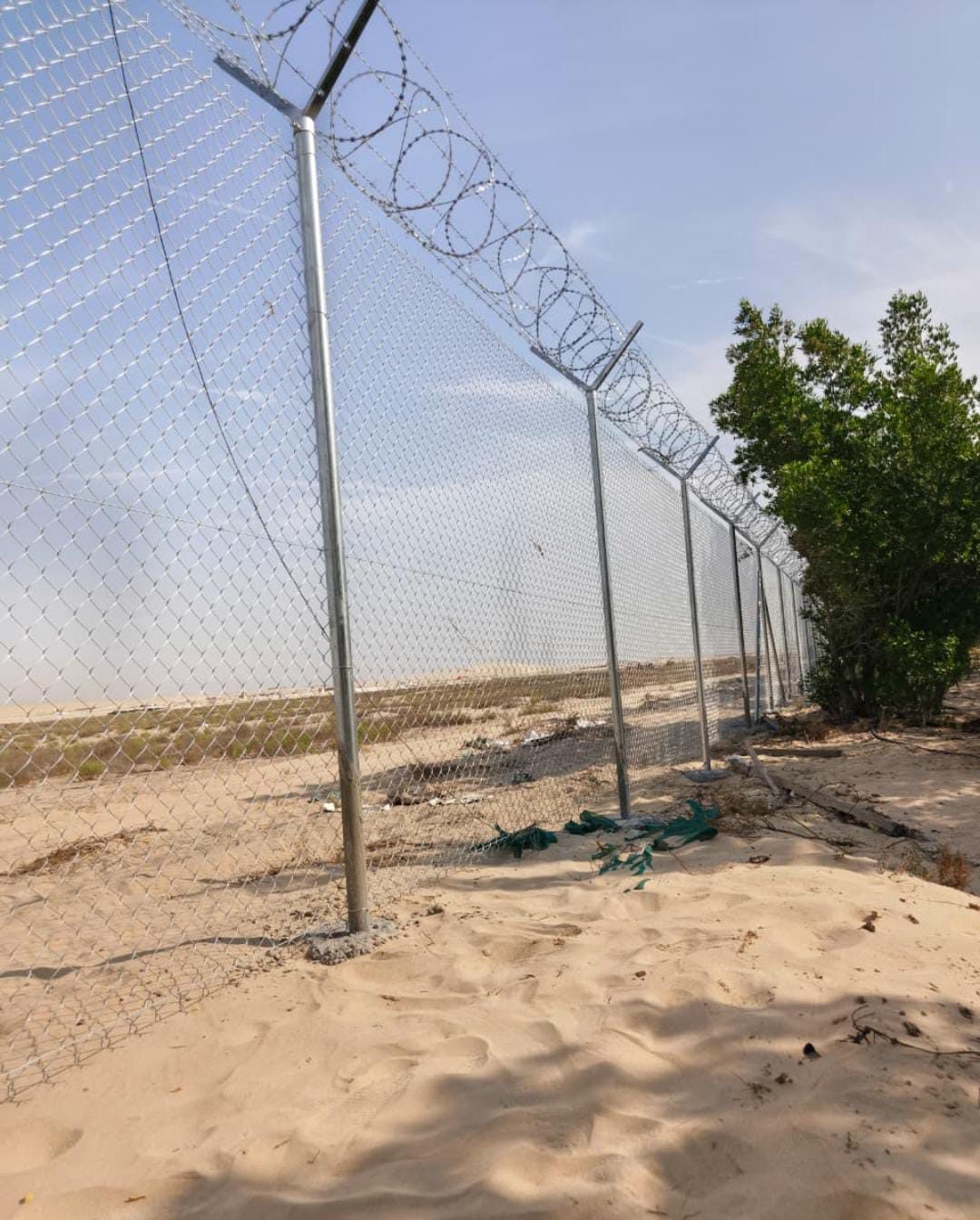
Can Mesh Fencing Be Used Around Moving Equipment?
Does a mesh fence provide automatic protection against machinery movement?
No. A conventional mesh fence may help define a restricted area, but it is not necessarily designed to stop or contain moving machinery.
What should be considered when machinery could approach the boundary?
The responsible engineering and safety specialists should assess equipment movement, possible contact with surrounding structures, and the need for independent protective barriers.
Any required impact protection must be provided by systems specifically designed and approved for the assessed conditions.
How High Should Equipment Testing Yard Fencing Be?
Is there a universal fencing height for industrial testing areas?
No. Appropriate fence height depends on the facility's access control objectives, assessed risks, site layout, surrounding activities, and applicable project requirements.
Can increased fence height replace specialized industrial protection?
No. Increasing the height of a conventional fence does not establish its ability to contain hazardous materials, withstand machinery impacts, or perform other specialized protective functions.
The complete system must be evaluated according to the intended purpose.
How Do I Select Mesh Opening Sizes for Testing Areas?
Why does mesh opening size matter?
Mesh opening size may influence visibility, accessibility, and the ability of certain objects to pass through the fencing system.
Can an ordinary mesh opening be selected as a machinery safety distance?
No. Where a fence is expected to prevent access to machinery-related hazards, the opening dimensions and separation distances require specialized assessment according to the applicable design requirements.
General perimeter fencing specifications should not be used as a substitute for engineered machinery guarding criteria.
How Do I Maintain Visibility Around Equipment Testing Zones?
Why might industrial facilities require visible testing boundaries?
Visibility can help authorized supervisors and facility personnel understand the general condition of an operational area and identify whether access points are open or closed.
Does visibility mean observers can safely stand next to the fence?
No. Observation locations must be selected according to the approved facility risk assessment and protective arrangements.
Where necessary, dedicated observation positions or specialized protective systems should be established independently of the ordinary perimeter fence.
How Do I Fence Outdoor Equipment Demonstration Areas?
What makes demonstration areas different from private testing zones?
Equipment demonstrations may involve customers, visiting representatives, or other authorized observers who are unfamiliar with the machinery and the facility's operational procedures.
What should the fencing design support?
It should support the approved distinction between demonstration areas, observation locations, authorized access points, and surrounding operational spaces.
Visitor protection must not depend solely on an ordinary mesh fence when the demonstration presents hazards requiring additional engineered controls.
How Do I Select Access Gates for Equipment Testing Yards?
Why should gate requirements be determined early?
Testing yards may accommodate machinery with different transport dimensions, vehicle requirements, inspection arrangements, and maintenance needs.
An unsuitable gate location or opening can create unnecessary access restrictions and interfere with the approved operational layout.
Which access requirements should be evaluated?
| Gate or Access Type | Intended Users | Planning Requirement |
|---|---|---|
| Personnel access gate | Authorized employees and inspectors | Coordinate controlled entry and approved pedestrian routes |
| Equipment access gate | Machinery entering or leaving the testing yard | Verify equipment dimensions and approved movement requirements |
| Service vehicle gate | Maintenance and authorized service vehicles | Review vehicle clearance and circulation arrangements |
| Visitor access point | Approved customers and observers | Connect only to authorized visitor areas |
| Emergency access gate | Authorized emergency responders | Comply with the approved emergency access plan |
| Internal testing zone gate | Authorized personnel and equipment moving between designated areas | Coordinate with testing procedures and access restrictions |
Gate dimensions, operating arrangements, locking systems, and emergency requirements should be confirmed according to the actual facility design.
Can Testing Yard Gates Be Connected to Access Control Systems?
What is the purpose of access control integration?
Access control integration may help a facility manage entry permissions and establish records of authorized access, depending on the selected technology and operational procedures.
Is an electronic access gate automatically a machinery safety interlock?
No. Ordinary access control and safety-rated machinery interlocking perform different functions.
Any system intended to prevent machinery operation under unsafe access conditions must be designed and validated by appropriately qualified specialists.
The fencing contractor, access control provider, and responsible machinery safety specialists should coordinate their separate project requirements.
How Do I Manage Temporary Testing Restrictions?
Why might access requirements change during particular tests?
Some approved equipment evaluations may involve temporary changes to the authorized operating area, personnel restrictions, or observation arrangements.
Can temporary fencing replace permanent protective systems?
Not automatically. Temporary boundary systems may support designated access arrangements, but they must not replace required engineered protection unless specifically evaluated and approved for that purpose.
Changes to testing boundaries should remain under the control of the responsible facility personnel.
How Do I Plan Fencing Around Equipment Inspection Stations?
Why should inspection stations have defined access arrangements?
Inspection activities may involve personnel examining equipment before or after approved functional tests. Clear boundaries can help distinguish inspection areas from active testing zones.
What should the layout include?
Identify approved inspection locations, access routes, equipment transfer areas, and the responsibilities associated with movement between testing and inspection spaces.
The layout should be coordinated with the facility's inspection and operational procedures rather than designed as an isolated fencing project.
How Do I Separate Equipment Preparation From Active Testing?
Why are equipment preparation areas important?
Before testing, machinery may require authorized inspections, documentation review, preparation, or other activities specified by the manufacturer or facility.
How can fencing support this distinction?
Internal fencing and controlled access points may help define designated preparation areas separately from operational testing spaces, where appropriate to the approved layout.
Physical separation should complement the facility's established procedures and independent hazard controls.
How Do I Fence a Testing Yard With Several Operating Stations?
Can several testing stations share a single external perimeter?
Potentially, provided the approved facility design supports that arrangement and internal separation requirements have been assessed.
What should be reviewed when several stations operate within one yard?
| Operational Area | Primary Function | Boundary Requirement to Review |
|---|---|---|
| Equipment preparation area | Authorized preparation before testing | Clearly defined access and equipment transfer arrangements |
| Active testing station | Approved functional equipment evaluation | Risk-based operational boundary and specialized protection where required |
| Inspection station | Authorized equipment examination | Separation from incompatible operating activities |
| Observation area | Approved supervisory or visitor observation | Risk-assessed location and appropriate protective arrangements |
| Equipment transfer route | Authorized machinery movement | Coordination with gates and surrounding circulation |
| Completed evaluation area | Temporary placement following approved testing | Clear distinction from equipment awaiting evaluation |
| Emergency access route | Approved emergency response access | Unobstructed access according to the facility plan |
The table illustrates possible facility zones rather than a mandatory layout for every industrial testing yard.
How Do I Coordinate Fencing With Machinery Movement?
Why is machinery circulation important when designing a fence?
Equipment may need to move between delivery, preparation, inspection, testing, and departure areas. The fencing layout must accommodate these approved movements without creating unnecessary operational conflicts.
What information should facility managers provide?
Provide the approved equipment movement plan, machinery transport dimensions, designated access points, operating restrictions, and relevant engineering drawings.
The fencing contractor should work from approved operational boundaries rather than independently determining machinery safety clearances.
How Do I Select Fence Materials for Saudi Industrial Conditions?
What environmental conditions may affect outdoor testing yard fencing?
Outdoor industrial facilities in Saudi Arabia may experience intense sunlight, temperature changes, airborne dust, wind exposure, and varying moisture conditions.
Depending on the industrial activity, certain facilities may also have specific environmental exposure requirements.
What should be reviewed when selecting fencing materials?
Review the material specifications, corrosion protection system, coating suitability, fixing details, maintenance requirements, and compatibility with the actual operating environment.
Where specialized chemical or industrial exposure exists, material suitability should be assessed according to the relevant site conditions.
Can Ordinary Mesh Fencing Reduce Industrial Testing Noise?
Does galvanized mesh provide effective acoustic insulation?
Ordinary open mesh fencing is not an acoustic barrier and should not be expected to provide meaningful noise isolation by itself.
What should facilities do when testing produces significant noise?
Qualified environmental and occupational safety specialists should evaluate noise exposure and determine whether dedicated acoustic systems or other approved controls are required.
Any acoustic panels or enclosures must be assessed separately for their structural, environmental, and operational implications.
Can Mesh Fencing Contain Debris From Equipment Testing?
Is industrial mesh automatically suitable for fragment containment?
No. A conventional fencing system is not automatically designed to contain flying fragments, released components, or materials produced during equipment failure.
What protection is required when testing creates such risks?
The appropriate protective system must be independently designed and validated by qualified specialists according to the assessed hazard characteristics.
Perimeter fencing may remain useful for access management, but it must not be represented as a substitute for specialized containment.
How Do I Coordinate Fencing With Emergency Access Requirements?
Can security fencing restrict emergency movement?
Yes. Poorly coordinated fencing or gate arrangements may obstruct required access routes or conflict with approved emergency procedures.
What should be confirmed before installation?
Confirm the required emergency routes, authorized access arrangements, gate operation requirements, and responsibilities with the facility's designated engineering and safety representatives.
Emergency provisions must comply with the applicable requirements for the individual facility.
Should Testing Yard Fences Include Warning Signs?
Why are warning signs useful around industrial testing areas?
Appropriate signs can communicate access restrictions, identify designated operational areas, and provide approved instructions to personnel and visitors.
Can signs replace physical protection?
No. Warning signs are supplementary communication measures and do not replace necessary physical barriers, machinery guarding, or other engineered safety controls.
Sign locations and content should be determined by the responsible facility personnel according to the assessed risks and applicable requirements.
How Do I Fence Testing Yards Near Existing Industrial Buildings?
What challenges can arise near existing structures?
Existing buildings may contain utility connections, emergency exits, service entrances, maintenance routes, loading areas, and other features that influence the available fencing layout.
How can these conflicts be avoided?
Review the proposed fence alignment against current facility drawings and approved operational requirements before establishing post locations, gate openings, or permanent boundaries.
Any fixing to existing structures should receive the appropriate technical approval.
How Do I Coordinate Testing Yard Fencing With Electrical Infrastructure?
Can fencing installation interfere with existing utilities?
Yes. Fence foundations, posts, and other installation activities may conflict with underground cables, communication lines, drainage infrastructure, or other services.
What should be checked before construction?
Obtain current utility information, verify the approved installation locations, and coordinate the work with the responsible facility and engineering representatives.
Any electrical bonding or earthing requirements for metallic fencing should be determined by qualified electrical specialists where applicable.
How Do I Maintain Testing Yard Fencing During Daily Operations?
Why is routine inspection important?
Daily industrial activity may expose fencing components to accidental contact, environmental conditions, gate usage, and changes in the surrounding operating environment.
What should routine inspections review?
- Visible damage to mesh panels.
- Changes in post alignment.
- Loose or damaged connections.
- Gate operating condition.
- Unauthorized alterations to the boundary.
- Obstructions near approved access routes.
- Visible corrosion or coating damage.
- Changes in nearby ground conditions.
Inspection frequency should reflect the facility's approved maintenance procedures, operating conditions, and assessed risks.
What Should Happen If Machinery Damages the Fence?
Is replacing the damaged mesh sufficient?
Not necessarily. Damage caused by equipment contact may indicate a conflict between the approved operating area and the fencing layout, or another issue requiring investigation.
What is the appropriate response?
The responsible facility personnel should assess the affected area, apply the approved operational restrictions, investigate the cause, and arrange suitable technical inspection and repair before restoring normal use.
Repeated fence damage should not be treated solely as a routine maintenance expense.
How Do I Allow for Future Testing Yard Expansion?
Why should future equipment categories be considered?
Industrial companies may introduce new machinery, testing activities, inspection procedures, or additional equipment demonstration areas as their operations develop.
How can the original fencing plan support future changes?
Where appropriate, coordinate the initial layout with approved development plans and consider how future operational boundaries may be modified without unnecessarily affecting existing infrastructure.
Any expansion or change in testing activity should receive a new assessment of the relevant fencing and protective requirements.
How Much Does Equipment Testing Yard Fencing Cost in Saudi Arabia?
Can the cost be estimated from the yard area alone?
No. Fencing costs depend on the actual boundary length, selected materials, internal separation requirements, gate specifications, foundation design, site conditions, and agreed installation scope.
What should a detailed fencing quotation include?
| Cost Component | Information Required | Commercial Purpose |
|---|---|---|
| External perimeter | Approved total fencing length | Determine external material quantities |
| Internal fencing | Approved lengths separating designated operational areas | Establish additional installation requirements |
| Mesh specifications | Approved material, dimensions, and protective finish | Define the required fencing system |
| Posts and foundations | Approved support and fixing requirements | Determine structural installation scope |
| Access gates | Quantity, dimensions, and approved operating requirements | Establish access-related material and installation costs |
| Site preparation | Existing surfaces, utilities, and access conditions | Identify required preparatory work |
| Transportation and installation | Project location and agreed execution conditions | Determine logistical and labor requirements |
| Additional engineered protection | Separately approved specialized barrier requirements | Identify independent systems outside ordinary mesh fencing |
Actual prices should be obtained through a project-specific quotation. No universal installation price can reliably represent every industrial testing yard.
How Do I Prepare a Fencing Request for an Industrial Testing Facility?
What information should be sent to the fencing contractor?
- Project city and location.
- Approved testing facility drawings.
- Purpose of the testing yard.
- External perimeter length.
- Required internal fencing lengths.
- Approved fencing material specifications.
- Required gate locations and dimensions.
- Existing ground and surface conditions.
- Known utility and infrastructure restrictions.
- Approved installation and fixing requirements.
- Required protective coating specifications.
- Expected installation schedule.
- Any additional contractual requirements.
Can fencing specifications be approved using photographs alone?
Photographs are useful for understanding general site conditions, but they cannot independently establish the required industrial protection, structural performance, machinery safety distances, or approved operational boundaries.
Technical documentation and appropriate professional assessment remain necessary.
How Do I Coordinate Fencing Installation With an Operating Testing Facility?
Can fencing be installed while the facility continues operating?
Potentially, when the responsible facility management has approved suitable work arrangements and assessed the interaction between installation activities and existing industrial operations.
What should be established before installation begins?
Define the approved working periods, access permissions, installation areas, contractor responsibilities, material delivery arrangements, and applicable site safety procedures.
Installation should not interfere with active machinery testing or approved emergency access arrangements.
How Do I Inspect a Completed Equipment Testing Yard Fence?
Is visual appearance enough to approve the installation?
No. Visual inspection can identify apparent workmanship problems, but technical acceptance must also consider the approved drawings, material specifications, fixing requirements, access arrangements, and intended system function.
What should the final inspection cover?
| Inspection Item | Review Requirement | Acceptance Objective |
|---|---|---|
| External fence alignment | Compare with approved facility drawings | Confirm correct perimeter positioning |
| Internal zone separation | Review designated operational boundaries | Confirm approved testing area organization |
| Posts and fixing systems | Review against approved installation specifications | Confirm compliance with the required support design |
| Mesh panels and connections | Inspect materials and visible workmanship | Identify missing or defective components |
| Gate operation | Verify operation against approved access requirements | Confirm appropriate authorized access |
| Emergency routes | Review with the responsible facility representatives | Confirm required emergency access remains available |
| Specialized protective systems | Obtain separate technical verification where required | Confirm the intended protective functions independently |
| Project documentation | Review approved records and installation information | Support formal project acceptance and future maintenance |
Final acceptance should be completed by the authorized project representatives according to the contractual and technical requirements.
What Are the Most Common Equipment Testing Yard Fencing Mistakes?
Which planning mistakes should industrial companies avoid?
- Designing a testing yard fence as though the facility were an ordinary storage area.
- Establishing operational boundaries without an approved risk assessment.
- Ignoring differences between equipment categories and testing activities.
- Assuming traditional mesh fencing can contain machinery failures.
- Confusing perimeter fencing with engineered machinery guarding.
- Failing to coordinate authorized pedestrian and equipment routes.
- Locating gates without reviewing actual access requirements.
- Ignoring existing emergency routes and industrial infrastructure.
Which installation and operational mistakes should be avoided?
- Installing fence foundations without reviewing underground utilities.
- Using unapproved material or fixing specifications.
- Assuming ordinary mesh can stop moving industrial vehicles.
- Allowing unauthorized changes to testing zone boundaries.
- Attaching additional panels without appropriate structural assessment.
- Ignoring repeated machinery contact with fencing components.
- Failing to document gate and access responsibilities.
- Accepting completed fencing without technical review.
- Operating machinery in areas where required protective systems have not been approved.
What Is the Equipment Testing Yard Fencing Checklist?
What should be confirmed before requesting a quotation?
- ☐ Identify the facility's approved testing activities.
- ☐ Obtain relevant engineering and operational drawings.
- ☐ Review the facility's risk assessment.
- ☐ Define approved external perimeter boundaries.
- ☐ Identify required internal testing zones.
- ☐ Confirm authorized pedestrian routes.
- ☐ Confirm approved equipment movement arrangements.
- ☐ Identify designated observation areas.
- ☐ Establish required personnel and equipment access gates.
- ☐ Confirm emergency access requirements.
- ☐ Identify specialized protective systems separately.
- ☐ Determine approved mesh and material specifications.
- ☐ Review environmental exposure conditions.
- ☐ Identify existing underground utilities.
- ☐ Confirm foundation and fixing requirements.
- ☐ Establish the expected installation schedule.
- ☐ Request a detailed project-specific quotation.
What should be confirmed before the facility accepts the fencing installation?
- ☐ External fence alignment matches approved drawings.
- ☐ Internal operational boundaries are correctly established.
- ☐ Materials comply with the approved specifications.
- ☐ Posts and fixing systems have received appropriate inspection.
- ☐ Mesh panels and connections are free from unacceptable visible defects.
- ☐ Access gates meet the approved operating requirements.
- ☐ Emergency routes remain available.
- ☐ Required warning signs and access information are coordinated.
- ☐ Specialized protective systems have received separate approval where applicable.
- ☐ Maintenance and inspection responsibilities are established.
- ☐ Required project documentation has been completed.
- ☐ Authorized representatives have approved the installation.
What Are the Frequently Asked Questions About Equipment Testing Yard Fencing?
1. What is outdoor equipment testing yard fencing?
It is a fencing system used to define approved equipment testing boundaries, organize authorized access, and separate designated industrial activities. Its specifications must reflect the actual facility layout and assessed operational requirements.
2. Is galvanized chain-link fencing suitable for testing yards?
It may be suitable for approved perimeter definition and access management applications. However, it should not automatically be considered suitable for machinery guarding, impact protection, or hazardous fragment containment.
3. Can welded mesh fencing separate several testing stations?
Welded mesh fencing may be considered for approved internal zone separation, provided the system meets the relevant design requirements and specialized hazards are addressed independently.
4. How high should industrial equipment testing yard fencing be?
The required height depends on access control objectives, site conditions, assessed risks, and approved project requirements. There is no universal fencing height appropriate for every testing facility.
5. Can ordinary mesh fencing stop moving machinery?
Ordinary mesh fencing should not be assumed capable of stopping moving industrial equipment. Where impact protection is required, a separately designed and approved protective system must be considered.
6. Do equipment testing yards require separate pedestrian gates?
Separate personnel access may be appropriate when the approved facility layout requires separation between pedestrian and machinery movements. Gate arrangements should follow the assessed operational and emergency requirements.
7. Can testing yard fencing be connected to electronic access control?
Potentially, when compatible systems are selected and the required access arrangements are approved. Ordinary electronic access control must not be confused with safety-rated machinery interlocking.
8. Can mesh fencing reduce equipment testing noise?
Ordinary open mesh is not designed to provide effective acoustic insulation. Significant industrial noise requires separate assessment and suitable approved noise control measures.
9. How much does industrial testing yard fencing cost in Riyadh?
Costs depend on the approved perimeter length, internal fencing requirements, material specifications, access gates, site conditions, and installation scope. Contact the fencing contractor for a customized quotation.
10. How can I request equipment testing yard fencing from Shbok Rayat Najd?
Contact Shbok Rayat Najd on 0555987614 or through WhatsApp. Provide the project location, approved fencing layout, required perimeter lengths, material specifications, gate requirements, and expected installation schedule to discuss the project.
How Can Shbok Rayat Najd Help With Industrial Testing Yard Fencing?
Why should industrial fencing be coordinated with the actual testing facility design?
Equipment testing yards have operational requirements that differ from conventional industrial storage and general property fencing. The fencing layout must reflect designated testing areas, authorized access, equipment movement, inspection activities, and surrounding infrastructure.
Shbok Rayat Najd provides metal mesh fencing and gate installation solutions for industrial, commercial, agricultural, and other projects in Saudi Arabia.
Industrial customers can discuss their approved testing yard perimeter requirements, internal fencing arrangements, access gates, material specifications, and installation conditions directly with the company.
Specialized machinery guarding, impact-resistant barriers, acoustic protection, hazardous material containment, and other engineered safety systems require independent technical assessment and confirmation of the relevant service scope.
How should you start planning your equipment testing yard fence?
Prepare the approved facility drawings, external perimeter dimensions, internal separation requirements, gate specifications, site photographs, and relevant technical documentation. Contact Shbok Rayat Najd to discuss the proposed fencing installation and obtain a quotation based on the actual project requirements.
Conclusion: Fencing an outdoor equipment testing yard requires more than enclosing an industrial property. The system must support approved operational boundaries, organized equipment movement, controlled access, and separation between different facility activities. Traditional mesh fencing can provide useful perimeter definition, but it must not be confused with specialized machinery guarding or engineered hazard containment. Begin with the approved facility risk assessment, establish the required boundaries, coordinate gate arrangements, select suitable materials, and obtain appropriate technical acceptance before incorporating the fencing into normal testing operations.